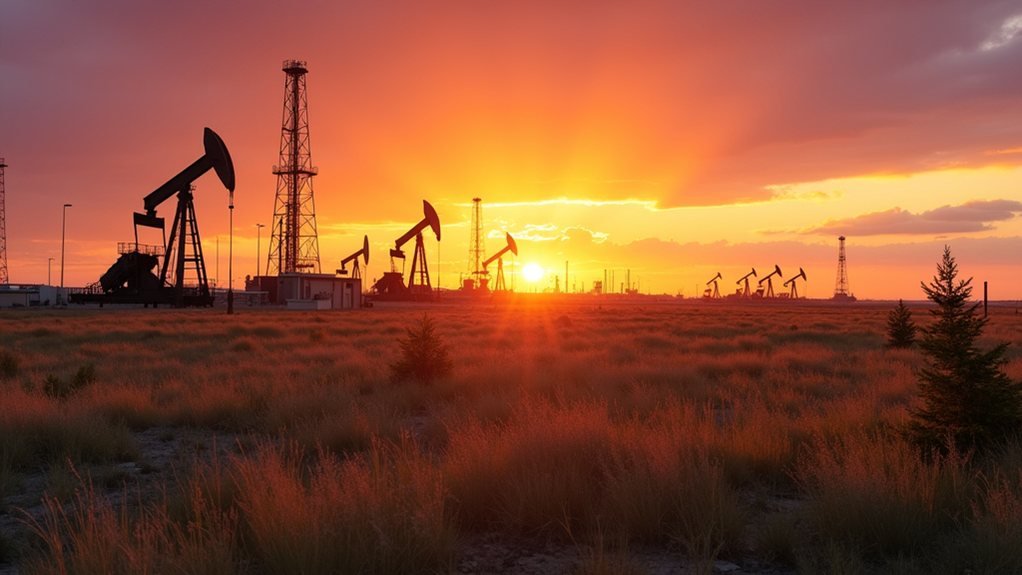

Canada’s Oil and Gas Emissions Cap Law is set to shake things up starting in 2026. This law requires a hefty 27% reduction in greenhouse gas emissions by 2030-2032, targeting large operators producing over 365,000 barrels annually. That’s like asking a giant to go on a diet! With potential benefits like 34,000 new jobs and nearly $4 billion in avoided climate change costs, this is more than just a trend; it’s a game changer. Stay tuned for the juicy details!
Quick Overview
- Canada’s Oil and Gas Emissions Cap Law mandates a 27% reduction in emissions from 2026 levels by 2030-2032.
- Operators producing over 365,000 barrels annually must register with the federal Minister by January 1, 2026.
- Large operators must submit their first emissions reports by June 1, 2027; small operators by June 1, 2029.
- The law aims for cumulative GHG emissions reductions of 13.4 million tonnes and creates approximately 34,000 new jobs.
- Flexibility mechanisms, like tradable compliance units, support companies in meeting emissions targets while managing risks.
What You Need to Know About Canada’s Oil and Gas Emissions Cap Law
In the ever-evolving world of environmental policy, Canada’s Oil and Gas Emissions Cap Law stands out like a shiny new trophy on a shelf of outdated relics.
This law mandates a 27% reduction in emissions from 2026 levels by 2030-2032, making it equivalent to a 35% drop from 2019 emissions. It’s like telling operators, “Hey, no more slacking!”
Covered activities range from oil sands to LNG production, with operators producing over 365,000 barrels annually required to comply. Operators must register with the federal Minister by January 1, 2026, to emit GHGs under this new regulation. The oil and gas sector is responsible for 31% of Canada’s GHG emissions, highlighting the significant impact of these regulations. This framework introduces risk management expectations for companies to identify and address climate-related impacts on operations and strategy.
With flexibility mechanisms like tradable compliance units, it’s both a challenge and an opportunity—a balancing act that even acrobats would admire!
Canada’s Oil and Gas Emissions Cap Law: Key Compliance Dates
While the clock is ticking down to the implementation of Canada’s Oil and Gas Emissions Cap Law, operators must navigate a landscape filled with important compliance dates that could easily turn into a game of environmental hopscotch. By January 1, 2026, all existing facilities must register, or face a prohibition on greenhouse gas emissions. Large operators will need to submit their first reports by June 1, 2027, detailing 2026 emissions, while small operators have until June 1, 2029. The first compliance period runs from 2030 to 2032, marking the start of a significant shift in the industry’s emissions landscape. The emissions cap is set to be 27% below reported emissions for 2026, estimated to be 35% below 2019 levels. This regulation is part of Canada’s 2030 Emissions Reduction Plan, which aims for net-zero emissions by 2050. The policy emphasizes the distinction between mitigation and adaptation to clarify how limits target emissions reductions while other measures prepare for climate impacts.
Projected Economic and Environmental Benefits of Emission Reductions
Projected economic and environmental benefits from Canada’s emissions reduction efforts are nothing short of impressive, with cumulative greenhouse gas (GHG) emissions reductions expected to reach 13.4 million tonnes by 2032. This initiative is set to save nearly $4 billion in avoided climate change damages while creating around 34,000 new jobs. Methane regulations alone could prevent $36.3 billion in impacts, proving that reducing emissions not only helps the planet but also bolsters the economy. Moreover, achieving the legal upper bound will necessitate purchasing decarbonization units and offset credits totaling 32 Mt, further supporting the transition to a more sustainable energy sector. The government’s reliance on carbon capture and storage (CCS) technologies highlights its commitment to achieving these ambitious targets while navigating the complexities of the oil and gas sector. Policymakers are emphasizing sector-specific strategies to cut emissions across different parts of the energy system.