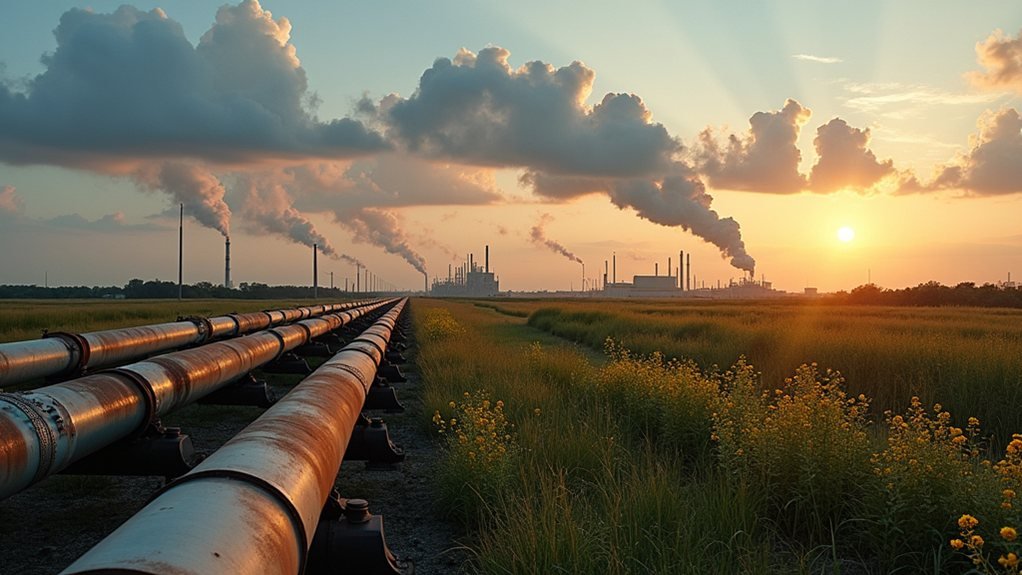

The 2026 explosion at the Delfin LNG terminal in Louisiana serves as a harsh wake-up call for communities near LNG infrastructure. With a massive fireball and legal fallout, safety concerns are front and center. A ruptured pipeline can release enough gas to fill several homes—yikes! Regulatory bodies are now on high alert, enforcing stricter safety measures. While LNG promises economic boost, the reality is often risk-laden. Curious about how this impacts the future of LNG safety?
Quick Overview
- The February 2026 explosion at the Delfin LNG terminal created a disaster zone, highlighting severe safety risks in LNG infrastructure.
- Community safety is threatened by pipeline ruptures, which can release massive quantities of gas and cause significant environmental damage.
- Legal actions are increasing against Delfin Midstream for gross negligence, emphasizing the need for strict adherence to safety protocols.
- Regulatory bodies have mandated corrective actions following the explosion, reflecting the importance of maintaining safe infrastructure for community protection.
- Ongoing investigations into the incident may lead to reforms aimed at improving LNG safety practices and addressing environmental justice disparities.
LNG Buildout Risks for Communities
As communities along the Gulf Coast brace for the LNG (Liquefied Natural Gas) buildout, they are caught in the crosshairs of both opportunity and risk—a bit like walking a tightrope while juggling flaming torches.
The expansion of LNG infrastructure, including a 28-mile pipeline to the Delfin LNG terminal, poses serious threats. Significantly, pipeline ruptures can release 56 million cubic feet of gas, as seen in a recent Holly Beach explosion. Moreover, controlled burning procedures can help mitigate explosion risks during incidents, yet they highlight the precarious balance communities must navigate. Inspections for corrosion and aging pipes are critical yet often neglected, leaving communities vulnerable to environmental dangers while chasing economic promises that often fizzle like a poorly brewed soda. Implementing emission reduction strategies across such infrastructure projects is vital to protect both the environment and public safety.
Immediate Aftermath of the Delfin LNG Explosion
On February 3, 2026, the quiet coast of Johnson Bayou transformed into a disaster zone, leaving behind the remnants of a pipeline explosion that released a staggering 56 million cubic feet of natural gas. The blast created a massive orange fireball, with thick gas clouds billowing into the sky, while the ground was left marred by a significant crater. One injured worker, Laman Gutierrez, faced serious consequences, filing a lawsuit against Delfin Midstream for alleged negligence. An operator on site sustained severe injuries as emergency responders rushed to the scene, implementing shelter-in-place orders for nearby residents as authorities began investigating the cause of this terrifying event. The 28 miles affected by the explosion may exacerbate existing safety concerns regarding LNG projects in the area, highlighting growing disparities in environmental justice.
Legal and Safety Implications of the Incident
The aftermath of the Delfin LNG explosion has sparked a whirlwind of legal and safety discussions, highlighting the precarious balance between industrial ambition and the necessity of safety protocols. Understanding the regulatory frameworks governing such infrastructure helps clarify the responsibilities involved.
Regulatory bodies, like the PHMSA, are stepping in with corrective orders, demanding thorough tests and restart plans. Meanwhile, injured contractor Laman Gutierrez has filed a civil lawsuit, claiming gross negligence. The lawsuit shines a light on alleged safety oversights, particularly during routine maintenance that should have been foolproof. As part of the investigation, a series of safety and operational protocols have been outlined by PHMSA to address the incident.
With operators responsible for safe infrastructure, the incident underscores the critical importance of diligence in the energy sector—after all, safety isn’t just a suggestion; it’s a requirement. Ongoing investigations are expected to examine adherence to safety protocols before the rupture.