In January 2026, weather extremes wreaked havoc across the globe. A fierce heat dome scorched Australia, fueling catastrophic wildfires, all while relentless storms drenched Europe, causing severe flooding. It was a time when Mother Nature seemed to be having a mood swing. The Northern Hemisphere faced record snowfall, while the Southern Hemisphere battled intense heat. These events highlighted the urgent need to understand climate change’s impact on our world. Curious minds will find even more fascinating details ahead!
Quick Overview
- January 2026 experienced extreme weather with record temperatures, marking it as the fifth-warmest January on record globally.
- Severe wildfires erupted in Australia and Chile due to unprecedented heat, causing significant destruction and loss of life.
- Europe faced its coldest January since 2010, with relentless storms leading to widespread flooding and transportation disruptions.
- The contrast in weather patterns highlighted the impact of climate change, with the Southern Hemisphere suffering from wildfires while the Northern Hemisphere dealt with heavy rainfall.
- The global temperature was 2.02°F (1.12°C) above the 20th-century baseline, driven by rising greenhouse gas concentrations and climate change effects.
Winter Storms and Flooding Across North America and Europe
As January rolled in like a freight train packed with icy surprises, both North America and Europe found themselves bracing for a wild weather ride.
Winter Storm Fern wreaked havoc, stretching nearly 2,000 miles and dumping up to two feet of snow from Texas to Maine, disrupting 230 million lives. Meanwhile, Europe faced its coldest January since 2010, with relentless storms causing flooding and strong winds across the continent. Global temperatures were 1.47°C above pre-industrial levels, reminding communities that winter isn’t just a season; it’s a force of nature. Transport systems crumbled, and power outages peaked at a million in the U.S. As communities battled snow and sleet, the weather reminded everyone that winter isn’t just a season; it’s a force of nature. Page visibility issues can complicate the dissemination of crucial weather updates, leaving many unaware of the impending dangers. Improved air quality monitoring can help public health officials better assess risks during prolonged pollution episodes associated with wildfires and stagnant winter inversions.
Devastating Wildfires in Australia and Chile’s Catastrophic Fires
Wildfires danced through the landscapes of Australia and Chile in January 2026, releasing a fiery spectacle that was as devastating as it was dramatic.
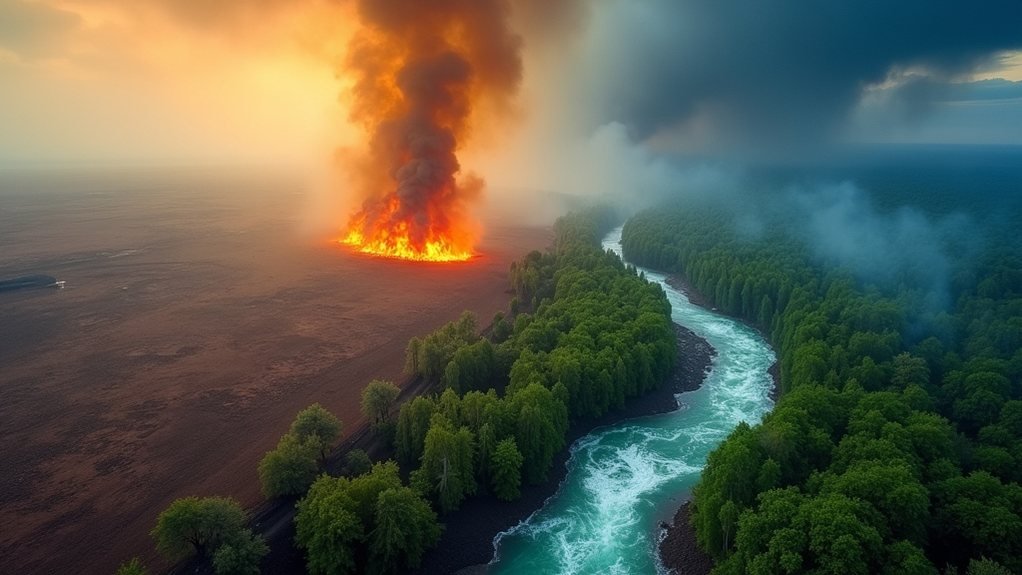
In Australia, record temperatures soared near 50°C, igniting bushfires across multiple regions. Meanwhile, Chile battled catastrophic fires that consumed nearly 46,000 hectares, marking one of the most severe wildfire seasons and leaving thousands homeless and tragically claiming lives. The intensity of these wildfires was exacerbated by human-caused climate change, which has increased the frequency and intensity of heatwaves since the 1950s.
As firefighters fought valiantly, the devastation raised urgent questions about resilience and recovery. The aftermath was not just ashes; it was a wake-up call for a planet on fire. Additional measures to reduce emissions and build clean energy systems are critical to limiting future extreme-weather risks.
How January 2026 Heatwaves Changed Weather Around the World
While climate change often feels like an ominous cloud hanging over our heads, January 2026 demonstrated just how dramatically heatwaves can reshape weather patterns across the globe.
This month marked the fifth-warmest January on record, with notable temperature spikes in the Arctic and Australia that felt like nature’s own version of a hot flash. Global surface temperature was 2.02°F (1.12°C) above the 20th-century baseline, highlighting the unprecedented warmth experienced this January. Additionally, the impacts of climate change were starkly visible as severe wildfires ravaged parts of South America, threatening ancient tree populations and local ecosystems. These extremes are consistent with how rising greenhouse gas concentrations enhance radiative forcing and change climate system energy balance.
Meanwhile, Europe froze, experiencing its coldest January since 2010.
The stark contrasts led to devastating wildfires in the Southern Hemisphere and record rainfall in the Northern Hemisphere, proving that when heatwaves hit, they can stir up a chaotic cocktail of weather extremes worldwide.