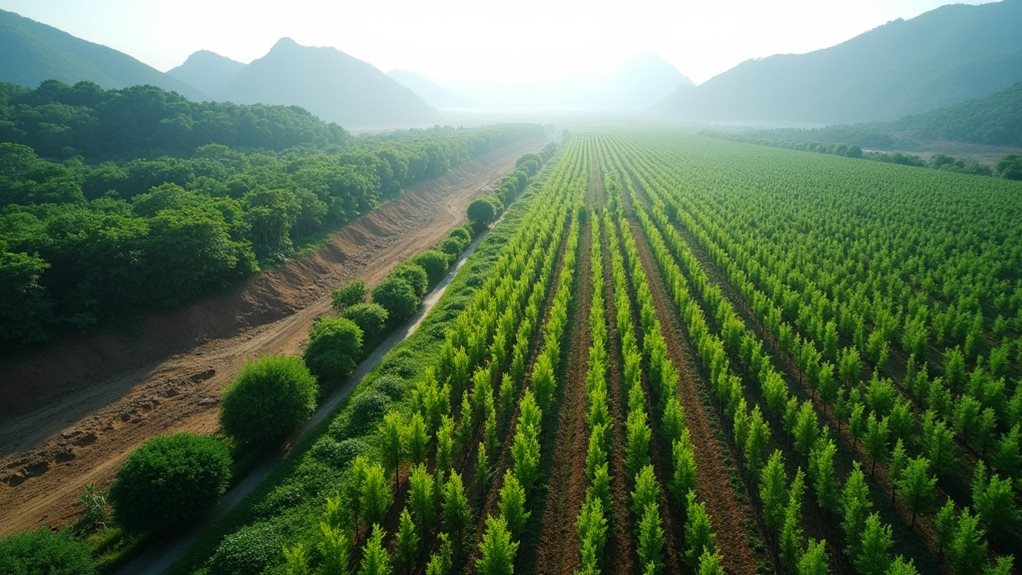

The Guinan Afforestation Project in Guizhou, China, stands as a shining example of real environmental progress, generating 470,000 carbon credits each year while employing over 24,000 locals, many of whom are women. This initiative emphasizes transparency in sustainable development, leaving little room for greenwashing claims often seen from corporations like Apple. With effective monitoring and community involvement, Guinan raises the bar for credibility in environmental projects, hinting that there’s much more to discover about sustainable practices in today’s world.
Guinan Project Highlights Scrutiny of Green Claims
In the vibrant tapestry of environmental initiatives, the Guinan Afforestation Project stands out like a well-timed plot twist in an enthralling novel.
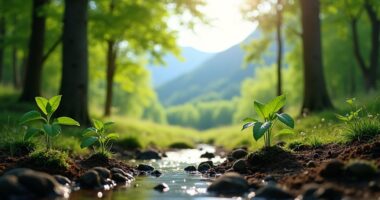
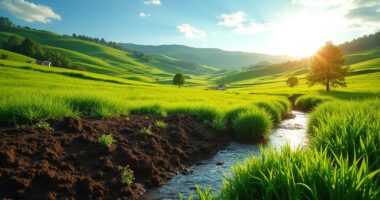
Nestled in Guizhou province, southwest China, this project has taken on the monumental task of transforming 32,047 hectares of barren, erosion-prone land into a flourishing forest. This initiative is spearheaded by Guizhou Baiheng Fertiliser Co., Ltd, which emphasizes its commitment to sustainable development.
With its roots firmly planted in sustainability, the project not only aims to bolster carbon sequestration—generating a whopping 470,000 carbon credits annually—but also to restore the delicate balance of the local ecosystem through the planting of native tree species.
Rooted in sustainability, the Guinan project champions carbon credits and revitalizes the local ecosystem, showcasing nature’s resilience.
However, as the Guinan project shines a light on the importance of reforestation, it inadvertently casts shadows on other green claims, such as those made by tech giant Apple.
While Apple touts its environmental initiatives, critics often raise eyebrows, questioning the authenticity of such claims. Consumers should look beyond marketing to evaluate if these claims exhibit classic greenwashing tactics like vague terminology or selective disclosure of information.
After all, if a project like Guinan can be verified under the rigorous standards of the Verified Carbon Standard (VCS), shouldn’t all claims be held to a similar scrutiny?
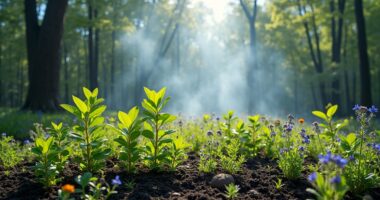
With an impressive array of native tree species like China Fir and Cypress planted to combat erosion and enhance biodiversity, the Guinan project proves that trees are more than just a pretty backdrop; they are the unsung heroes of our climate crisis.
Yet, the project’s success isn’t solely about carbon credits.
It’s about community empowerment, with 24,035 locals trained and employed, 70% of whom are women.
Now that’s a plot twist worthy of applause!
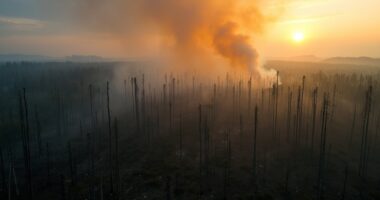
Yet, even in this tale of triumph, challenges loom.
Monitoring and verification concerns can cloud the credibility of various projects.
If the Guinan Afforestation Project can navigate these hurdles, it sets a gold standard that Apple and others must aspire to meet.
After all, in a world where green claims sprout like weeds, genuine initiatives must shine brightly to cut through the noise.