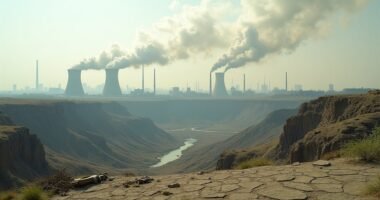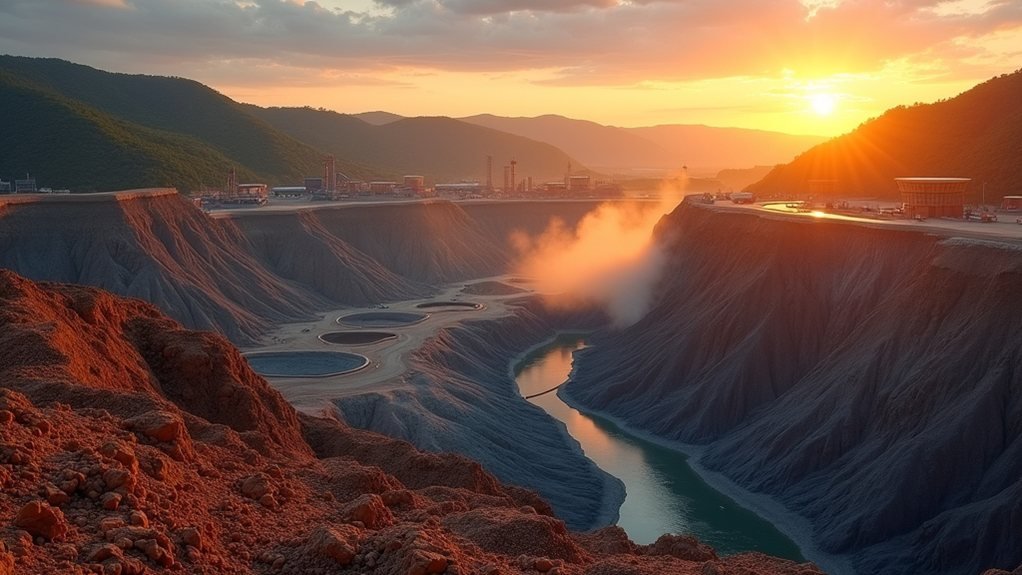

The Conference Board’s Non-Energy Mining Outlook for 2026 reveals a bustling world of minerals that are critical for our low-carbon future. Expect lithium demand to soar, fueled by increasing electric vehicle sales—over 25 million by 2026! Copper, the unsung hero of electrical infrastructure, will face a serious shortfall, potentially pushing prices through the roof. Meanwhile, global politics is reshaping mineral supply strategies. There’s plenty more in this mining treasure map, just waiting to be uncovered.
Quick Overview
- Non-energy mining is vital for supplying critical minerals like lithium and copper, with increasing demand projected through 2026.
- The lithium sector is expected to dominate consumption, driven by EV sales and energy storage needs.
- Copper demand is surging due to infrastructure expansion, leading to a projected global deficit by 2026.
- The U.S. is prioritizing critical mineral processing and international partnerships to enhance supply chain resilience.
- Emissions reduction initiatives are becoming essential in mining operations, balancing production needs with environmental sustainability.
Key Trends in Lithium for EVs and Energy Storage
As the world hurtles towards a greener future, one might wonder how lithium has become the star of the show, especially in the domains of electric vehicles (EVs) and energy storage.
As we embrace a greener future, lithium shines brightly in the electric vehicle and energy storage revolution.
With global EV sales projected to exceed 25 million by 2026, lithium demand is skyrocketing, accounting for a whopping 70% of total consumption. Furthermore, current global lithium stocks are estimated at only 350,000 tonnes LCE, which will not suffice to meet this soaring demand. This growing demand is partly due to lithium being recognized as critical for low-carbon energy transition.
Meanwhile, energy storage systems are not far behind, expected to capture 15% of global lithium use.
As vehicles require bigger batteries for greater range, lithium’s role only deepens.
The aviation sector is also exploring sustainable alternatives for reducing emissions, though these efforts focus more on fuel solutions than battery technology.
It’s like trying to fit a giant cake into a tiny box—more lithium, more power, more excitement!
Understanding Copper Demand and Supply Dynamics
Understanding the dynamics of copper demand and supply is like peering into a crystal ball that reveals not just the future of metal markets, but also the pulse of global industries.
With a projected global refined copper deficit of 330,000 tons in 2026, the stakes are high. Demand from data centers and power infrastructure is surging, while low inventories and supply constraints add tension. Additionally, copper prices could soar beyond $13,000 per ton if shortages persist. This looming structural deficit underscores the critical need for new production capacity to meet accelerating consumption growth.
Strategic emissions reduction initiatives in mining operations will be essential as the industry balances increased production with environmental responsibilities.
Picture a tightrope walker: one misstep, and the balance tips. As industries evolve, copper’s role as an essential component only becomes more pronounced in this electrifying narrative.
Global Politics of Critical Minerals: What You Should Know
In a world increasingly driven by technology and sustainability, the race for critical minerals has become as fierce as a high-stakes poker game, with countries betting big on their resources. The U.S. has shifted focus from climate to national security, aiming to break free from China’s grip on key mineral supplies. This new approach includes increased emphasis on critical mineral processing, signaling a transactional shift in U.S. policy. Partnerships and market interventions are essential for resilience in critical minerals supply, with international partnerships forming and supply chain diversification booming, nations are scrambling to secure their stakes. Evaluating the full lifecycle impact of mining operations has become crucial for balancing environmental concerns with mineral security needs. Trade policies are tightening, and geopolitical tensions simmer as the U.S. navigates sovereignty concerns. In this intricate game, every move counts, and the stakes have never been higher for securing critical mineral resources.