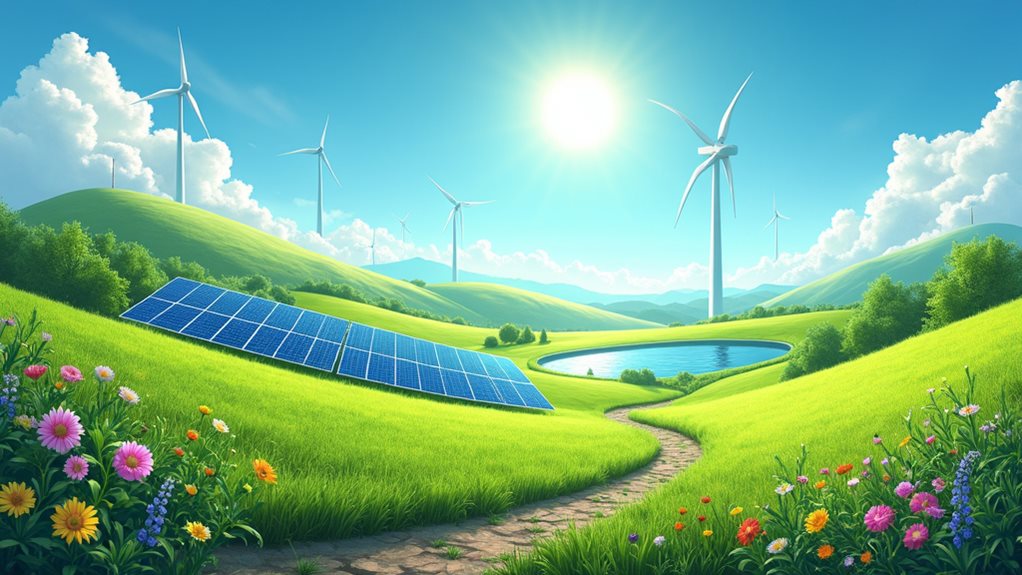

Modern economies face a thrilling conundrum: can they save the planet and prosper? Spoiler alert: they can! This isn’t a fairy tale; it’s where economic growth and environmental care brazenly shake hands. Picture regulations acting like superhero capes for innovation, transforming challenges into eco-friendly solutions. Renewable energy? It’s the winning horse that boosts job creation while saving the earth. Overcoming resistance from stubborn industries is tricky, but tackling these obstacles can lead to substantial economic gains. What other surprising paths lie ahead?
Balancing Prosperity and Sustainability
In the dynamic dance of modern society, the delicate balance between economic prosperity and environmental sustainability is akin to a high-wire act performed without a safety net. As countries grapple with the challenge of fostering growth while protecting our planet, they are discovering that the two are not mutually exclusive. In fact, the Environmental Kuznets Curve suggests that once a certain economic threshold is reached, environmental degradation can actually decrease. Think of it as reaching a point where a teenager finally cleans their messy room—sometimes, it just takes a little maturity.
The road to a greener economy, however, is paved with both challenges and opportunities. Initially, eco-friendly regulations might feel like a financial burden, but the Porter Hypothesis posits that these very regulations can lead to improved resource efficiency and innovation, resulting in greater economic performance in the long run. Public policies and technologies have played a crucial role in enabling pollution reduction alongside economic growth. Furthermore, the number of companies publishing sustainability reports has been rising, demonstrating a growing commitment to sustainable practices.
Navigating eco-friendly regulations may seem daunting, but they can spark innovation and boost economic growth in the long run.
The benefits of investing in renewable energy are clear—less dependency on fossil fuels not only helps the environment but also creates jobs and attracts market investments in green technologies. It’s like putting your money on a winning horse, but this horse also happens to save the planet. The transition to renewable sources offers a sustainable pathway that addresses both climate concerns and energy security needs.
Of course, the shift isn’t without its hurdles. Fossil fuel industries may resist the change toward sustainable practices, creating friction in the delicate dance of progress. Yet, as seen from 2000 to 2022, the environmental economy has outpaced broader growth, showing that sustainable practices can yield impressive returns, like finding a hidden stash of cash in an old jacket.
Moreover, the adoption of clean technologies and sustainable agricultural methods is revolutionizing industries. As we move toward circular economies—where recycling and reuse reign supreme—production costs drop, and environmental sustainability flourishes.
In this intricate balancing act, the challenge remains clear: can we save the planet and prosper? The answer may very well lie in our ability to blend innovation, investment, and a touch of collective will.