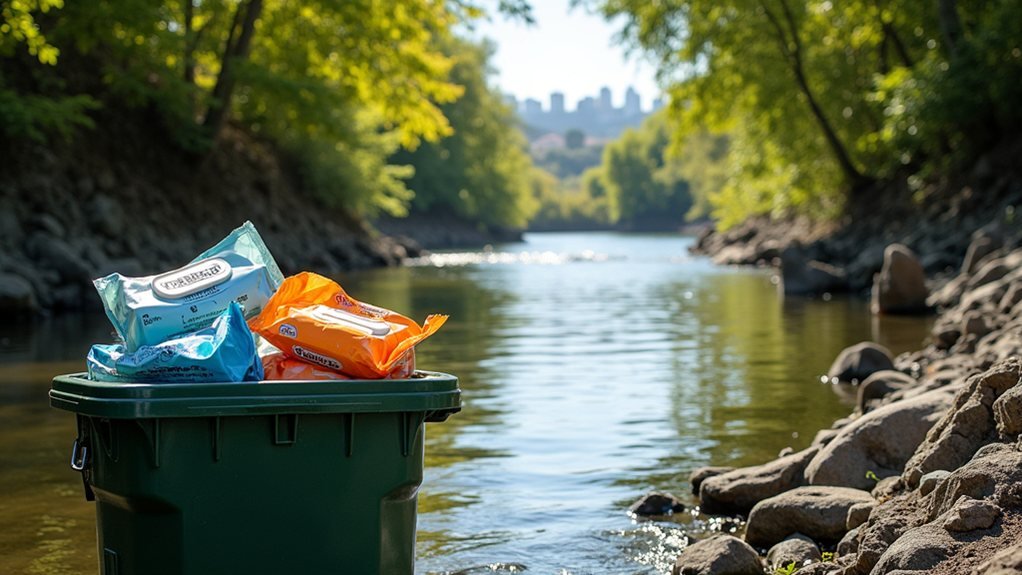

California plans to ban wet wipes in 2026, tackling the pesky problem of microplastics polluting its waterways. These little monsters are responsible for 94% of sewer blockages and can release thousands of microfibers into our rivers and oceans—talk about a party crash! The ban aims to protect aquatic ecosystems and reduce costly repairs for municipalities. Consumers will see clearer disposal guidelines, while manufacturers will face new regulations. Curious about the ripple effects of this ban? Read on!
Quick Overview
- California will ban wet wipes in 2026 to combat environmental damage and protect waterways from pollution.
- Wet wipes cause 94% of sewer blockages, leading to costly municipal repairs and waterway contamination.
- The ban aims to reduce microplastic pollution, which harms aquatic ecosystems and marine life.
- Manufacturers must comply with new flushability criteria and eliminate misleading “flushable” claims.
- Increased education campaigns will promote proper disposal methods to prevent environmental damage.
California’s 2026 Wet Wipes Ban: Key Facts
In a bold move that could reshape personal care habits across the Golden State, California is gearing up for a significant ban on wet wipes set to take effect in 2026. This decision follows a rocky path, including the veto of Assembly Bill 823, which aimed to eliminate plastic microbeads in personal care products. Despite concerns about innovation in biodegradable alternatives, the ban seeks to reduce the environmental havoc caused by wet wipes clogging sewers and polluting waterways. Plastic wet wipes cause 94% of sewer blockages, contributing to millions of gallons spilled and hefty costs for cleanup, making this legislation a vital step toward cleaner, healthier California waterways. The California Department of Toxic Substances Control (DTSC) is also moving to regulate microplastics in the environment, highlighting the growing concern about their impact on ecosystems. This initiative aligns with broader efforts to tackle plastic pollution, which threatens marine life and ecosystems worldwide.
Microplastics in Wet Wipes: Environmental Concerns
Microplastics are sneaky little intruders in the world of wet wipes, and their environmental impact is nothing short of alarming.
These wipes, often made from polyester, polypropylene, and polyethylene, release staggering amounts of microfibers—one single wipe can emit over a thousand particles into our waterways. The improper disposal of these wipes leads to costly municipal repairs and significant financial burdens for major cities. Additionally, synthetic plastic materials in wet wipes prevent natural breakdown, compounding the issue.
Imagine billions of these tiny, plastic villains infiltrating our rivers and oceans, disrupting ecosystems and harming marine life. They can cause digestive blockages and even mess with reproduction in aquatic species. These pollutants are part of a larger global crisis affecting ecosystems worldwide.
With wipes lingering in landfills for centuries, the clock is ticking on our planet’s health, and these microplastics are not making the wait any easier.
Impacts of the 2026 Ban on Wet Wipes for Consumers and Manufacturers
The impending 2026 ban on wet wipes in California is set to shake up both consumer habits and manufacturing practices in unexpected ways.
Consumers will now find clearer “Do Not Flush” labels, making it easier to avoid plumbing disasters. As wipes usage spikes and education campaigns flourish, trash bins may become the new throne for these products. This shift aligns with the waste management hierarchy, prioritizing prevention of environmental damage over disposal methods. Additionally, this legislation comes in response to ongoing issues with pollution in public wastewater infrastructure. The new regulations will require wipes manufacturers to certify compliance with the International Water Services Flushability Group criteria, ensuring that only properly tested products can be marketed as flushable.
Manufacturers, on the other hand, face compliance costs and must rethink marketing strategies. Gone are the days of misleading “flushable” claims.
Instead, a new era of responsible disposal is on the horizon, transforming both the market and the relationship between consumers and wipes.