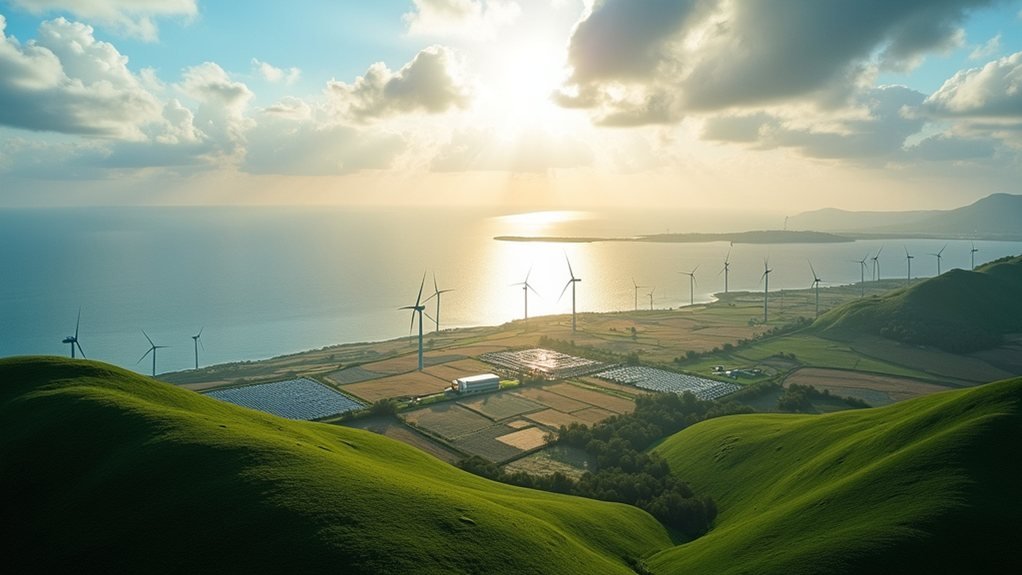

Britain has just hit a home run in renewable energy by approving a whopping 45 GW of clean energy projects—talk about a record-breaking milestone! This surge represents a major leap toward the green revolution, with initiatives like offshore wind boosting capacity considerably. While challenges like aging infrastructure remain, the excitement in solar and wind technologies is palpable. Everyone’s buzzing about the fresh energy landscape, hinting that the journey toward a sustainable future is just getting started.
Quick Overview
- Britain recently approved 45 GW of clean energy projects, marking a significant milestone in renewable energy planning.
- This approval reflects streamlined regulations and technological advancements driving the renewable sector forward.
- Offshore wind capacity is set to double to 43–50 GW by 2030, enhancing the renewable energy landscape.
- The increased battery storage capacity from 14.9 GW to 28.6 GW ensures reliability during low generation periods.
- The clean energy projects aim to power 12.9 million homes, reducing reliance on fossil fuels and promoting economic growth.
Major Challenges in Clean Energy Grid Capacity and Project Delivery
As the world shifts toward cleaner energy, Britain’s clean energy grid faces a series of hurdles that would make even the most determined marathon runner contemplate a leisurely stroll instead.
With a staggering 765 GW in the connection queue, only 360 GW are deemed ready. The wait times for grid connections stretch into decades, leaving hundreds of solar and wind projects in limbo. Recent international commitments at COP29 underscore the urgency of accelerating clean energy deployment.
With 765 GW in the queue, only 360 GW is ready, leaving renewable projects stranded for decades.
Aging infrastructure struggles to keep pace with rising demand from electric vehicles and data centers. Increased demand from electric vehicles and data centers fundamentally, Britain’s grid is like a vintage car trying to keep up on a modern highway—charming but desperately in need of an upgrade. As the country aims to increase offshore wind capacity to 50GW by 2030, the challenges of grid capacity become even more pressing.
Insights From the 45GW Clean Energy Approval Milestone
With the recent approval of 45GW in clean energy projects, Britain is poised on the brink of a renewable revolution that could light up homes and hearts alike. This milestone reflects a significant shift, driven by streamlined regulations and impressive technology advancements. Battery storage is booming, leaping from 14.9GW to 28.6GW—almost a double take! Meanwhile, offshore wind approvals skyrocketed sevenfold. It’s like watching a turtle suddenly sprint. The government’s commitment to clean energy not only aims to power 12.9 million homes but also shields the economy from fossil fuel volatility. In fact, this record surge in planning approvals highlights the strong momentum behind the renewable energy transition. Additionally, the doubling of offshore wind capacity to 43–50 GW by 2030 demonstrates a robust strategy to enhance the renewable energy landscape. In short, Britain is gearing up for a greener future, and it’s about time! The shift also creates opportunities for expanding solar and wind deployment across diverse sites and scales.
Key Clean Energy Technologies Driving Growth
Britain’s clean energy future isn’t just a flicker of hope; it’s a blazing bonfire fueled by innovative technologies that are sparking growth across the renewable landscape.
Offshore wind leads the charge, generating over half of the nation’s green power and aiming for up to 50 GW by 2030. This growth is supported by the Clean Power 2030 Action Plan, which is driving significant investments in renewable technologies.
Solar PV isn’t far behind, with ambitious targets and installations sprouting like daisies, as solar panel installations reached 1.73 million in the UK in 2025. The rapid deployment is helping reduce reliance on fossil fuels and expand clean electricity generation.
Energy storage guarantees that when the sun sets and the wind calms, the lights stay on.
Heat pumps are the unsung heroes, helping businesses cut down on carbon.
Together, these technologies are turning Britain into a renewable powerhouse.