
Bitcoin mining has hit a remarkable 52% clean energy usage, but here’s the catch: it’s guzzling water like there’s no tomorrow! In 2021 alone, it drained over 1,600 gigaliters—imagine filling 660,000 Olympic swimming pools! While nations like Switzerland are innovating in water management, Bitcoin’s thirst raises alarms, especially in drought-prone areas. Sustainability isn’t just about clean energy; it’s also about precious water. Curious to find out how Switzerland’s clever strategies can reshape the mining landscape?
Quick Overview
- Bitcoin mining has achieved 52% reliance on clean energy, primarily from renewables and nuclear sources, reflecting a shift towards sustainability.
- However, Bitcoin mining’s water consumption poses significant challenges, reaching over 1,600 gigaliters in 2021, equivalent to 660,000 Olympic-sized swimming pools.
- Water usage for each Bitcoin transaction is approximately 16,000 liters, exacerbating water scarcity in regions where mining operations are located.
- Switzerland’s innovative water management practices, including AQUA4D technology and decentralized strategies, could serve as a model for improving Bitcoin mining’s water efficiency.
- The adoption of sustainable water management in Bitcoin mining could align the industry with clean energy initiatives and enhance overall environmental impact.
Bitcoin Mining and Clean Energy: The Current State
In the electrifying world of Bitcoin mining, the shift towards clean energy is more than just a trend—it’s a revolution.
As of May 2025, a striking 52% of Bitcoin mining operations harness renewable and nuclear energy, up from 37% in 2022. Renewable sources like hydro, solar, and wind now account for 42.6% of mining power, while nuclear contributes nearly 10%. This growth reflects Bitcoin’s increased reliance on renewable energy, which has risen significantly over the years. Despite progress in clean energy adoption, the industry faces scrutiny as geopolitical tensions continue to influence global energy markets and policy decisions. The coal-dominated past is fading, with natural gas stepping in as the largest energy source. This evolution signals a commitment to sustainability, promising a greener future for Bitcoin mining as technological advances pave the way for even greater efficiency. The crypto mining industry’s shift towards renewable energy is expected to enhance long-term investor sentiment.
How Does Bitcoin Mining Impact Water Resources Worldwide?
While the allure of Bitcoin mining often centers on its financial gains, the hidden cost to global water resources is a conversation worth having.
In 2021 alone, Bitcoin mining gobbled up over 1,600 gigaliters of water—enough to fill 660,000 Olympic-sized swimming pools. As miners flock to hydropower regions, they strain local water supplies, using as much water annually as a city like Washington, D.C. Each transaction consumes about 16,000 liters, making it a water hog compared to traditional banking. With projected consumption hitting 2,300 GL by 2023, the impact on water resources is both staggering and troubling. Moreover, Bitcoin mining’s water footprint increased by 166% from 591.2 GL in 2020 to 1,573.7 GL in 2021, underscoring the urgent need for sustainable practices. This situation is exacerbated by the fact that bitcoin mining exacerbates water access issues in regions already facing scarcity, highlighting the critical need for innovative resource management strategies. Cities could benefit from implementing rain garden solutions that naturally manage excess water while creating sustainable urban environments.
What Can We Learn From Switzerland’s Water Management in Mining?
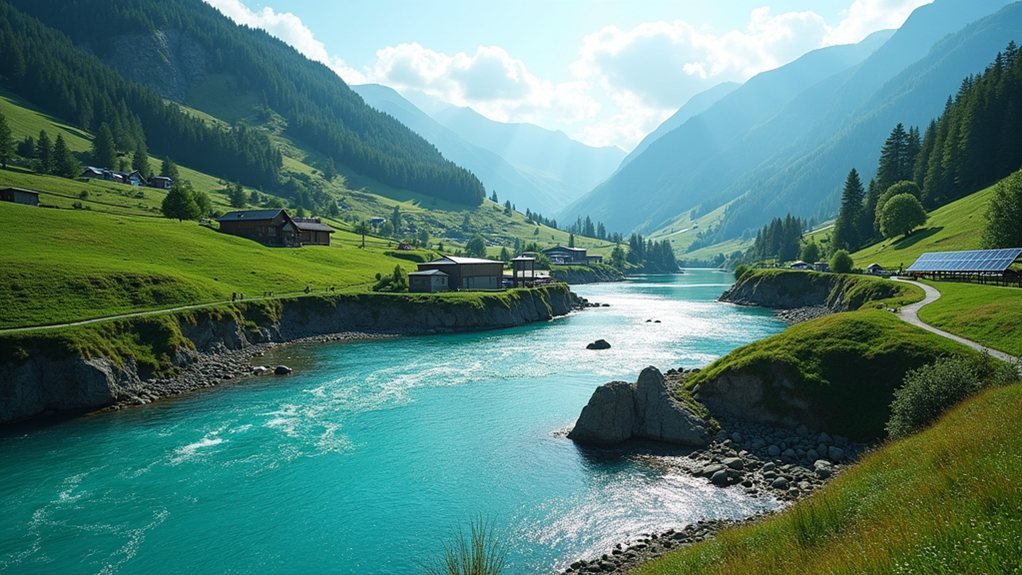
How can Switzerland’s innovative approach to water management in mining provide lessons for the rest of the world? By using AQUA4D technology, Switzerland transforms water structure to enhance mining efficiency while tackling water scarcity. This method optimizes processes like flotation, all while reducing costs—like finding money in your couch cushions! Furthermore, Switzerland’s decentralized management allows communities to tailor water strategies suited to local needs, promoting responsibility. Coupled with strict regulations and cutting-edge technologies, such as mobile filtration systems, Switzerland sets a high bar. Sustainable irrigation techniques from Switzerland’s approach could revolutionize water conservation in mining operations globally. Additionally, the AQUA4D technology significantly improves water use and reduces costs in mining, which could greatly benefit other industries as well. If Bitcoin mining were to adopt similar practices, perhaps it could join the clean energy party too! Moreover, the cobalt production in the Democratic Republic of Congo highlights the importance of sustainable water management to support local communities and minimize environmental impact.