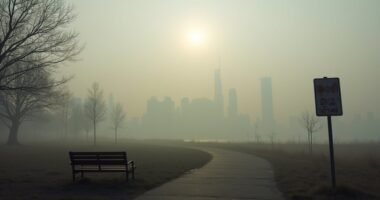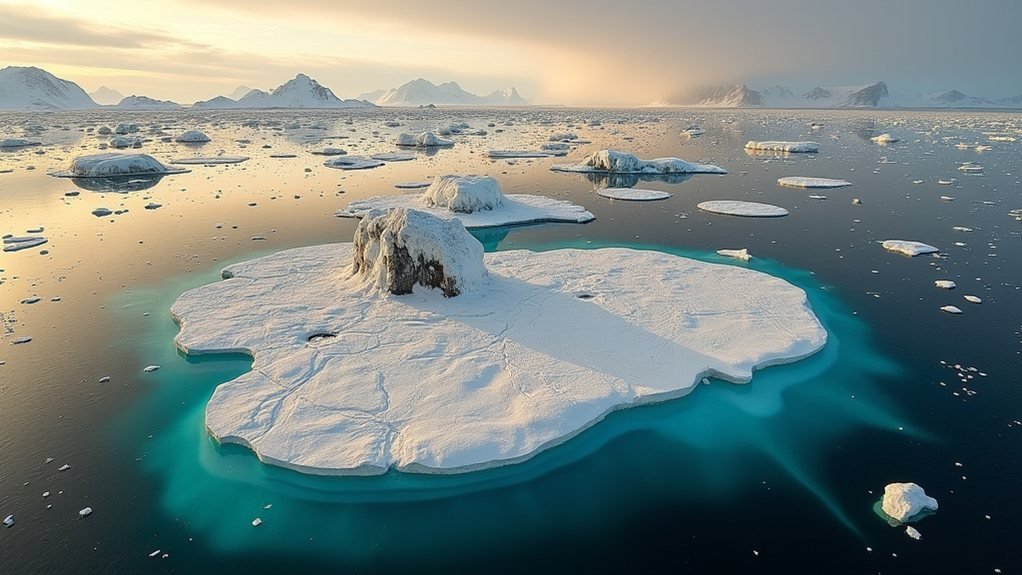
The Arctic black carbon crisis is heating things up—literally. When black carbon, or soot, lands on snow and ice, it darkens these surfaces, making them soak up more sunlight instead of bouncing it back. This trickles down to amplified warming and accelerated ice melt. As the ice vanishes, it reveals darker ocean waters, which swallow even more heat. To tackle this, concerted efforts to curb emissions are desperately needed. Stick around to find out how we can make a difference!
Quick Overview
- Black carbon particles darken ice and snow, reducing albedo and accelerating heat absorption in the Arctic.
- Increased black carbon from shipping has more than doubled, contributing significantly to local warming.
- Melting summer sea ice leads to further warming, as it exposes darker ocean surfaces that absorb more sunlight.
- The Arctic is warming three to four times faster than the global average, intensifying climate change impacts.
- Reducing black carbon emissions can slow ice melt, protect ecosystems, and improve global climate health.
How Does Black Carbon Accelerate Arctic Warming?
As the planet warms, a little-known villain emerges in the Arctic: black carbon.
These sneaky particles settle on snow and ice, transforming pristine white into a shadowy gray, reducing their reflectivity—think of it as ice wearing a stylish but dark winter coat.
This darkening accelerates solar absorption, heating the region like an unexpected sauna. Black carbon reduces the albedo of snow and ice, intensifying the warming effects even further. Black carbon emissions from ships have more than doubled alongside increased activity, further exacerbating the situation.
When ice melts, darker surfaces beneath soak up even more sunlight, perpetuating a warming feedback loop that’s harder to break than a bad habit.
With black carbon responsible for significant warming, tackling it could be the most effective short-term climate strategy, making the Arctic a hot topic indeed! Greenhouse gases
What’s the Impact of Ice Melt on Global Climate and Sea Levels?
Ice melt in the Arctic doesn’t just signal the end of polar bear picnics; it sends shockwaves through global climate systems and sea levels that everyone should pay attention to.
As summer sea ice vanishes, less sunlight is reflected back, causing the darker ocean to soak up heat like a sponge. This albedo effect boosts Arctic warming, which could exceed 1.5°C from complete summer ice loss. Furthermore, the melting ice weakens the Arctic’s cooling effect, leading to further warming that impacts global climate patterns. Notably, the decline in summer sea ice is approximately 12.4% per decade, highlighting the urgency of addressing this crisis.
Additionally, melting glaciers contribute to rising sea levels, threatening cities worldwide. With the Arctic warming three to four times faster than the global average, the stakes have never been higher for our planet’s climate stability. Targeted measures to cut emissions across sectors, including energy system changes, are essential to slow these trends.
How Can We Reduce Black Carbon Emissions in the Arctic?
Reducing black carbon emissions in the Arctic is not just a noble endeavor; it’s an urgent necessity that could yield remarkable benefits for both the region and the planet.
Reducing black carbon emissions in the Arctic is critical for a healthier planet and a sustainable future.
By implementing existing technologies and regulatory measures, Arctic Council member states could slash emissions considerably. For example, reducing gas flaring and improving domestic heating can target pesky black carbon sources.
Additionally, enforcing shipping regulations and using better fuels for vehicles can work wonders. It’s like giving the Arctic a much-needed spa day—cleaner air, cooler temperatures, and a healthier environment! Localized reductions in Arctic Council states can decrease BC deposition by 30%, demonstrating the significant impact of targeted actions on mitigating climate change.
Protecting marine ecosystems through sustainable fisheries and habitat conservation complements black carbon reduction by improving overall Arctic resilience. With cooperation and dedication, a brighter future is within reach.