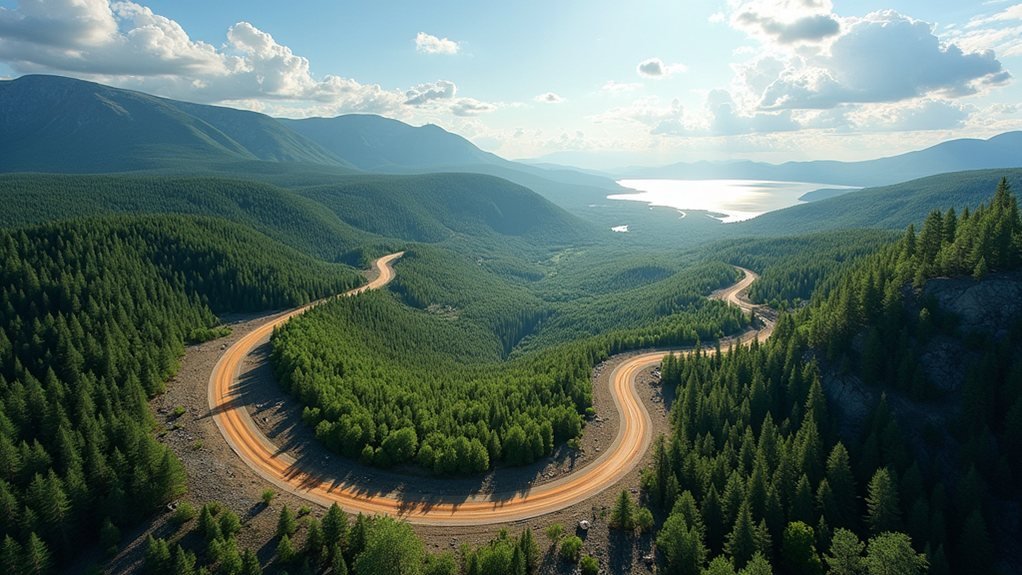
The Ontario Ring of Fire Road Plan, kicking off construction in March 2026, is all about jump-starting the region’s economy. With over 500 kilometers of all-season roads, it aims to boost Ontario’s GDP by $25 billion and create around 70,000 jobs. Indigenous communities are front and center, sharing in the economic pie while fostering sustainable practices. Think of it as opening a treasure chest of critical minerals for the electric vehicle boom! Stay tuned for more intriguing details.
Quick Overview
- The Ontario Ring of Fire Road Plan aims to enhance GDP by $25 billion over 32 years, with construction starting in June 2026.
- Over 500 km of all-season roads will be built, improving access to critical minerals for economic growth.
- The accelerated plan will create approximately 70,000 new jobs, particularly benefiting Indigenous communities through equity participation.
- Initiatives emphasize environmental stewardship, with comprehensive impact assessments to mitigate biodiversity effects during development.
- Long-term partnerships with Indigenous communities are central to ensuring sustainable and inclusive community development.
Why the Ontario Ring of Fire Road Plan Is Important
When pondering why the Ontario Ring of Fire Road Plan holds immense significance, one realizes that its impact reaches far beyond mere road construction.
This ambitious initiative is expected to enhance Ontario’s GDP by a staggering $25 billion over the next 32 years, with the mining industry raking in up to $16.7 billion.
Envision this: 70,000 new jobs over three decades, transforming lives and communities.
Plus, Indigenous partnerships promise long-term prosperity, while critical minerals are set to power the electric vehicle revolution.
Ensuring equitable transitions to sustainability requires careful planning to protect workers and vulnerable communities as the economy shifts toward green technologies.
Fundamentally, this isn’t just building roads—it’s forging pathways to economic and social vitality for generations to come.
What Are the Key Features of the Ontario Ring of Fire Road Plan?
Though it might sound like just another construction project, the Ontario Ring of Fire Road Plan is actually a complex tapestry of initiatives that promise to reshape the region’s economic landscape.
With construction starting in June 2026, the plan accelerates road completions by five years, including over 500 km of all-season roads.
These upgrades are more than just pathways; they enable access to critical minerals and create essential economic partnerships with Indigenous communities.
Upgrades pave the way for critical mineral access and foster vital economic partnerships with Indigenous communities.
Additionally, streamlined regulations fast-track approvals, ensuring smoother progress.
Think of it as revving up the engine for an economic road trip—with no traffic in sight!
Developers involved in the project should conduct comprehensive impact assessments to understand and mitigate potential effects on the region’s biodiversity.
How Do Indigenous Partnerships in the Ontario Ring of Fire Enhance Economic Opportunities?
Indigenous partnerships in the Ontario Ring of Fire are not just a footnote in the story of economic development; they are the headline act, headlining a transformative concert of opportunity.
By embracing equity participation, First Nations gain access to essential projects like the Northern Road Link, translating into real ownership and influence.
With over 70,000 jobs forecasted, Indigenous-led initiatives are poised to boost the economy while fostering sustainability.
Plus, local firms, such as Wasaya Airways, are busy bridging logistics gaps.
These partnerships exemplify how sustainable and inclusive communities can be built through collaborative economic development that balances environmental stewardship with social equity.
In this symphony of collaboration, success resonates not just for Indigenous communities, but for Ontario as a whole, creating harmony through shared prosperity.