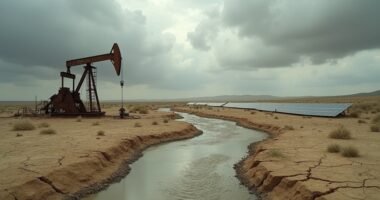

The UK’s journey to a net-zero economy by 2050 is looking a bit shaky, especially with the 2026 reset looming. While emissions in the power sector have dropped by a whopping 79% since 1990, challenges like methane emissions and regulatory hurdles threaten to derail progress. The country needs innovative policies and investment in renewables – think solar panels and electric cars – to hit a 68% reduction target by 2030. Curious about the path ahead? There’s more to uncover!
Quick Overview
- The UK has made progress towards Net Zero but faces challenges such as regulatory burdens and measurement issues that could hinder further reductions.
- Significant reliance on methane emissions from sectors like oil and gas complicates the UK’s overall emission reduction strategy.
- Economic compliance pressures necessitate a reassessment of clean energy policies to meet interim carbon budgets effectively.
- Investment in renewable energy and clean technologies is critical for achieving the ambitious 2030 climate targets of a 68% reduction in emissions.
- Building a skilled workforce is essential to support the growth of the low-carbon sector and ensure sustainability in job creation.
How’s the UK Doing on Its Net Zero Journey?
As the UK begins its ambitious quest to achieve Net Zero by 2050, one might wonder just how far along the nation really is on this environmental marathon. A clear frame for measurement comes from the Sustainable Development Goals, guiding how businesses align with long-term environmental targets.
Recent strides are impressive: the power sector slashed emissions by nearly 79% since 1990, all while the economy flourished, GDP growing by 75%. In 2022, the low-carbon sector alone generated £69.4 billion and employed over 272,000 workers. Moreover, the Net Zero economy is projected to be worth up to £1 trillion by 2030. However, it’s worth noting that the UK set a legal net-zero target for 2050, with interim carbon budgets established to guide progress.
Yet, intimidating challenges loom, with only six years left to meet the 2030 emission reduction target of 68%. If the UK wants to don that Net Zero medal, it will have to pick up the pace considerably.
What Major Challenges Face UK Emission Reduction Efforts?
Despite the UK’s impressive progress on its path to Net Zero, a myriad of challenges loom ahead, casting shadows on the ambitious goal of reducing emissions. This ongoing evolution underscores the importance of robust climate risk management to align business strategy with evolving regulatory landscapes.
Regulatory hurdles are a significant obstacle, with the expansion of the UK Emissions Trading Scheme burdening operators. Mandatory sustainability data integration will also intensify the scrutiny of environmental claims, adding another layer of complexity for organizations striving to remain compliant. Furthermore, the UK’s methane emissions from oil and gas production remain a substantial challenge, accounting for a significant percentage of overall emissions and necessitating immediate regulatory action.
Meanwhile, measurement and reporting issues complicate emissions tracking, especially in the notoriously tricky Scope 3 emissions.
A looming skills shortage could stall clean energy job growth, and supply chain emissions lack the transparency needed for effective reductions.
Add evolving economic compliance requirements, and the path to Net Zero suddenly looks more like maneuvering through an elaborate maze than a straight road.
What Solutions Can Help Achieve the 2030 Climate Targets?
Achieving the 2030 climate targets in the UK requires a multifaceted approach, much like assembling a complex puzzle where each piece plays an essential role. Effective policy incentives can accelerate investment and deployment.
Key strategies include expanding renewable energy to over 95% by 2030, considerably ramping up onshore wind and solar projects. Given that the UK has already met all emissions reduction targets, including the Third Carbon Budget, this sets a robust foundation for future progress. Furthermore, the progress seen with greenhouse gas emissions falling 2.6% between 2021 and 2023 highlights the importance of continuous efforts in decarbonization.
Tackling methane emissions, particularly in agriculture and waste, is critical—think of it as trimming the fat for a leaner carbon footprint.
Carbon capture and storage must also take center stage, paired with a push for electric vehicles and clean heating systems.
Together, these solutions form a promising blueprint, turning ambitious goals into tangible reality.