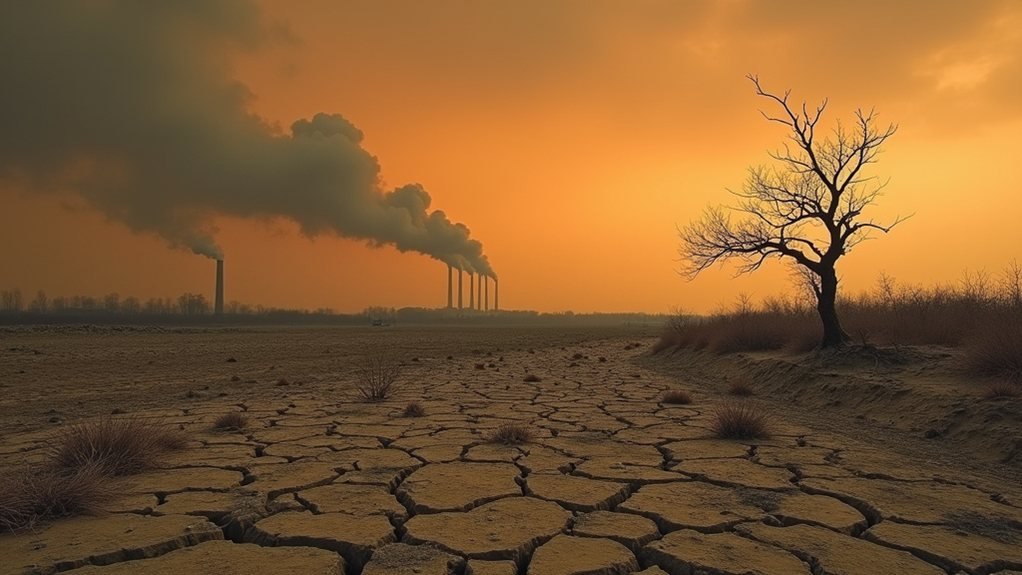

In March 2026, the Trump administration scrapped the climate change endangerment finding, a cornerstone of federal climate regulation. This repeal opened the floodgates for greenhouse gas emissions, much like an uncapped soda fountain that just won’t quit. Experts warn that this change could lead to a surge in fossil fuel use, jeopardizing public health and the environment. Legal battles are brewing, with states and activists poised to challenge this decision. Curious about the potential fallout? Stick around!
Quick Overview
- In March 2026, the Trump administration officially repealed the 2009 Endangerment Finding on greenhouse gas emissions.
- The repeal removes federal standards, leading to increased greenhouse gas emissions without regulation.
- Critics argue that the decision poses risks to public health and the environment.
- Legal challenges from states and environmental groups cite neglected scientific evidence and federal responsibilities.
- The repeal underscores the urgent need for comprehensive climate policy amid rising emissions and climate concerns.
Understanding the Endangerment Finding: Impacts on Climate Regulation
Although some may believe climate change is just a buzzword tossed around at conferences, the Endangerment Finding reveals it’s a serious concern with real implications for public health and welfare.
Issued by the EPA in 2009, it declared that greenhouse gases, like carbon dioxide and methane, pose health risks. This ruling empowered the EPA under the Clean Air Act to regulate these gases, impacting vehicle emissions and power plant standards.
Think of it as handing the EPA the referee whistle in a tense game against air pollution—without it, the game could get ugly, risking public health and our planet’s future.
Understanding how to reduce your carbon footprint can help individuals take meaningful action even as federal climate policies shift.
Key Repeal Changes and Emission Impact
As the ink dried on the EPA’s announcement to repeal the 2009 Endangerment Finding, the landscape of U.S. climate regulation was poised for a seismic shift.
This historic move eliminated federal greenhouse gas (GHG) standards for vehicles and plants, leaving emissions uncapped, much like an unchecked soda fountain at a summer picnic.
With projected taxpayer savings of $1.3 trillion, the administration argued that this repeal reduced burdens, yet it paves the way for increased emissions—making fossil fuels feel like the party’s main attraction again.
Projected savings of $1.3 trillion come at the cost of rising emissions, giving fossil fuels the spotlight once more.
Methane regulations now shift to local oversight, downplaying their global warming implications.
Without federal standards, facilities will need to rely on direct monitoring and calculation methods to voluntarily track their greenhouse gas outputs.
Cheers to deregulation!
Legal Challenges: Will the Repeal Be Overturned?
The repeal of the 2009 Endangerment Finding left a gaping hole in federal climate regulations, but it also sparked a legal wildfire, with various states and environmental groups racing to challenge the decision.
Lawsuits targeting the EPA’s actions cite a mountain of scientific evidence ignored, like California’s upcoming case which leans heavily on established facts.
Challengers argue the EPA trampled on its Clean Air Act duties, fundamentally skipping over a classroom of well-qualified scientists.
The D.C. Circuit will hear these cases, and with the stakes this high, the U.S. Supreme Court is poised to be the final referee in this hot-button debate.
Beyond legal arguments, experts note that effective climate policy requires both mitigation and adaptation strategies to address the crisis comprehensively.