
UK water companies are facing sharp criticism for allegedly misusing £10.5 billion raised through green bonds. As pollution incidents soar— with a staggering 60% rise in serious cases—concerns about greenwashing tactics grow. These companies, like Thames Water, divert funds meant for sustainability to projects that often dodge accountability. It’s as if they’re dressing up sewage plants as “water recycling centers,” while shareholder profits soar. But there’s more to uncover about the tension between profits and real environmental change.
Quick Overview
- UK water companies raised £10.5 billion in green bonds since 2017, but concerns about greenwashing have surfaced.
- Serious pollution incidents rose by 60% in 2024, with Thames Water being a major contributor to environmental issues.
- Many companies diverted funds from green bonds to carbon-reduction projects, while untreated wastewater discharges remain significant.
- Regulatory scrutiny is intensifying as calls for transparent reporting on environmental performance and accountability increase.
- The potential for stricter regulations could force water companies to align financial practices with genuine environmental responsibilities.
The Rise of Green Bonds in the UK Water Sector
As the world increasingly turns its gaze towards sustainability, the UK water sector has emerged as an unexpected champion in the domain of green finance, particularly through the surge of green bonds.
Since 2017, water companies have issued a staggering £10.5 billion, accounting for 19% of all UK corporate green bonds. This sector has raised more green finance than almost any other, peaking at over 25% of all UK corporate green bonds market share in recent years. Water firms account for nearly 20% of all UK corporate green-bond issuance.
Water companies have raised £10.5 billion in green bonds since 2017, capturing 19% of the UK market and leading in sustainable finance.
Major players like Anglian Water and Thames Water have led the charge, utilizing these funds for projects like solar installations and energy efficiency.
It’s a financial splash that’s hard to ignore!
Pollution Records and Environmental Performance
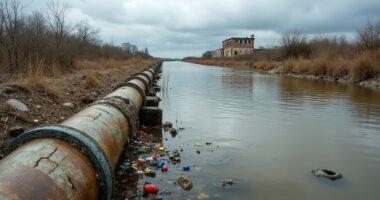
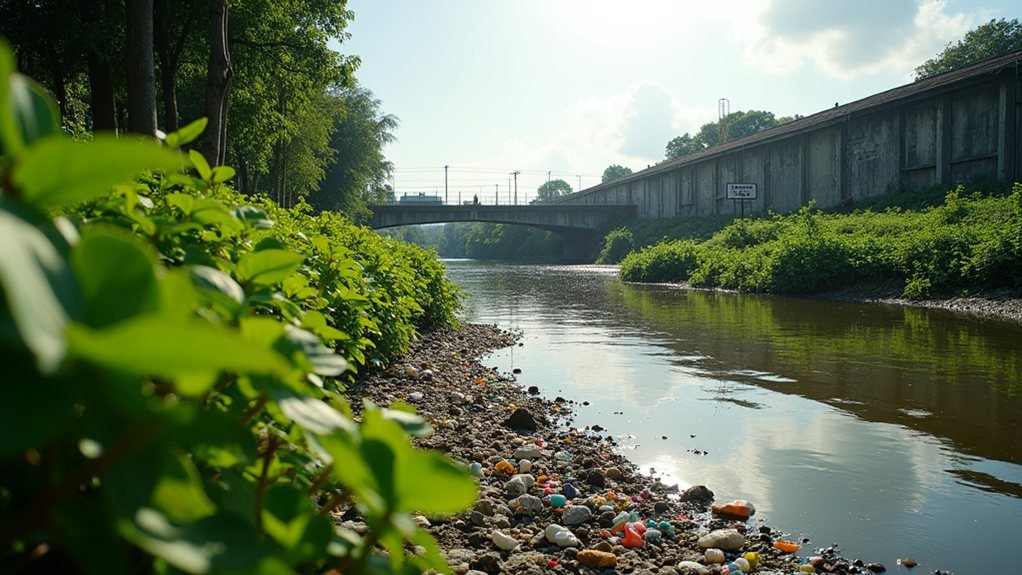
Pollution incidents in the UK water sector have surged like a tidal wave, leaving industry leaders scrambling for answers. In 2024, total pollution incidents reached 2,801, the highest since 2011, with a shocking 60% increase in serious incidents. Serious pollution incidents rose dramatically, highlighting the urgent need for companies to address root causes and improve their practices. Thames Water alone accounted for 33 of these serious cases, proving that some companies can’t quite keep their sewage in check. With only two out of nine companies reporting improvements, the situation resembles a sinking ship rather than a buoyant industry. As fines pile up and health concerns rise, the water sector’s performance is raising eyebrows—and not in a good way. Increased inspections by the Environment Agency in 2024 have aimed to hold water companies accountable for their environmental impacts. water management practices water governance and regulatory oversight remain critical in driving sustained improvements across the sector.
Understanding How Major Water Companies Are Greenwashing
While the allure of green bonds might make it seem like UK water companies are riding the eco-friendly wave, a closer look reveals a different story—one that’s more about marketing than meaningful change.
With £10.5 billion raised, these firms divert funds into carbon-reduction projects, often neglecting urgent wastewater improvements. In fact, 12.7 million hours of untreated wastewater have been discharged into English waterways between 2019 and 2023. Nine companies analyzed employ 28 greenwashing tactics, they rebrand sewage facilities as “water recycling centres” and downplay the impacts of spills.
Despite hefty dividends flowing to shareholders, crucial infrastructure remains underfunded.
As calls for regulation grow, the charming green facade starts to peel, revealing not a sustainable future, but a profit-driven mirage. Regulatory pressure could force more transparent reporting on environmental claims and actual outcomes.