
February is setting the stage for record-breaking flood alerts in the UK, thanks to the aftermath of Storm Chandra. With river levels soaring to critical highs, communities are on high alert. Over 67 flood warnings and 152 alerts are active, particularly in South England, where roads are becoming impassable and rivers like the Severn are under scrutiny. Residents are advised to stay vigilant and prepare for potential inundation, as the situation could get more exciting—or alarming. Curious about how to stay safe?
Quick Overview
- February has seen record-breaking rainfall, leading to critical river levels and increased flood risks across the UK.
- The current situation includes 67 flood warnings and 152 alerts, predominantly affecting South England.
- Communities near the rivers Severn and Trent are under close watch due to their dangerously high water levels.
- Residents are advised to stay informed about flood alerts and develop emergency plans for potential evacuation.
- Effective flood management and community preparedness are essential to mitigate impacts from ongoing heavy rainfall.
Understanding Flood Risks From Storm Chandra
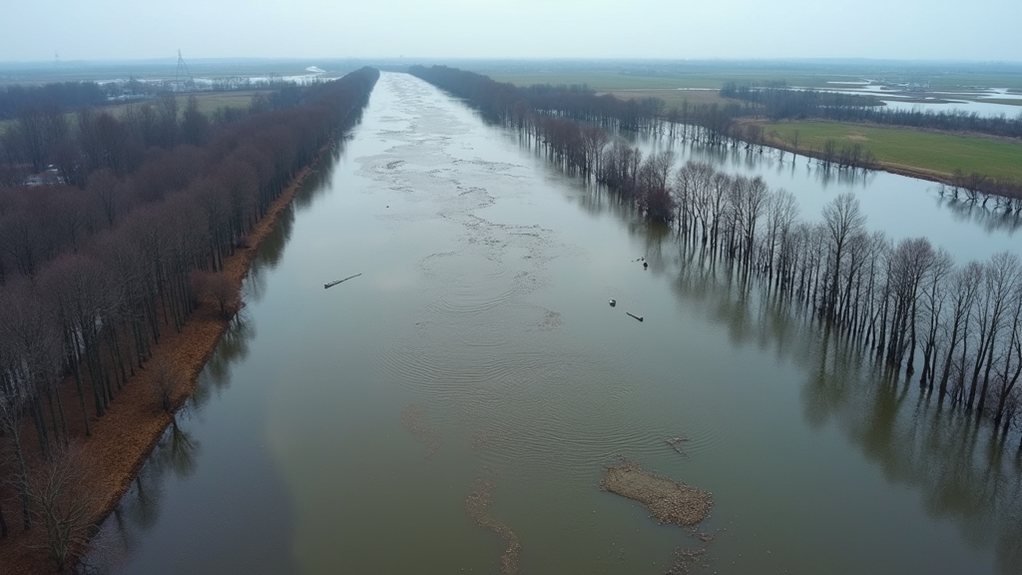
As Storm Chandra rolled into the UK like an uninvited guest who just couldn’t take a hint, the stage was set for a showdown between nature’s fury and the already beleaguered landscape. Weeks of relentless rain had left the ground saturated, akin to a sponge at capacity, unable to soak up more moisture. With river levels high and drainage systems overwhelmed, heavy rains transformed into rapid runoff, leading to inevitable localized flooding. This was no single-day disaster; it was the culmination of prolonged wet weather that turned tranquil streams into roaring torrents, as the UK braced itself for another watery onslaught. The major flooding reported during the storm compounded the already critical situation, further threatening communities across the region. The yellow weather warnings issued for rain highlight the ongoing risk of additional flooding as Storm Chandra continues to unleash its wrath. Additionally, persistent precipitation can stress urban drainage networks, underscoring the need for resilient flood management strategies and community preparedness.
Current Flood Warnings and Alerts Across the UK
With the weather throwing curveballs that would make even the most seasoned meteorologist raise an eyebrow, flood warnings and alerts are currently echoing across the UK like a town crier with a particularly urgent message.
A staggering 67 flood warnings and 152 alerts are active, primarily in South England, where over 90 warnings have been issued post-rain. Flash flooding on the Isle of Wight and road closures in Dorset are just the tip of the iceberg. Meanwhile, rivers such as the Severn and Trent are under close watch, reminding everyone that nature’s unpredictability can turn a simple rain shower into a deluge. The recent heavy rainfall has left critical river levels in the UK alarmingly high, making vigilance essential for residents living near major waterways. It is crucial to understand how flood risk is assessed and managed in real time, including how gauges and forecasting contribute to timely alerts scope of monitoring.
How to Prepare for Flooding Risks in February
Flooding can feel like an unwelcome guest crashing a party, showing up unannounced and causing chaos. To tackle this unpredictable intruder, one must create a flood plan that outlines essential actions and evacuation routes. Assemble an emergency kit stocked with necessities—think of it as your survival snack pack for life’s unexpected curveballs. Protect your property by elevating furniture and installing flood barriers; it’s like giving your home a water-resistant superhero cape. Additionally, consider pre-risk assessments to identify vulnerable areas in your property. Familiarizing yourself with government flood alerts will also help you stay informed about the changing conditions. Finally, check your insurance and keep crucial documents safe. Staying proactive turns panic into preparedness, ensuring that when the flood comes knocking, you’re ready to open the door… cautiously!