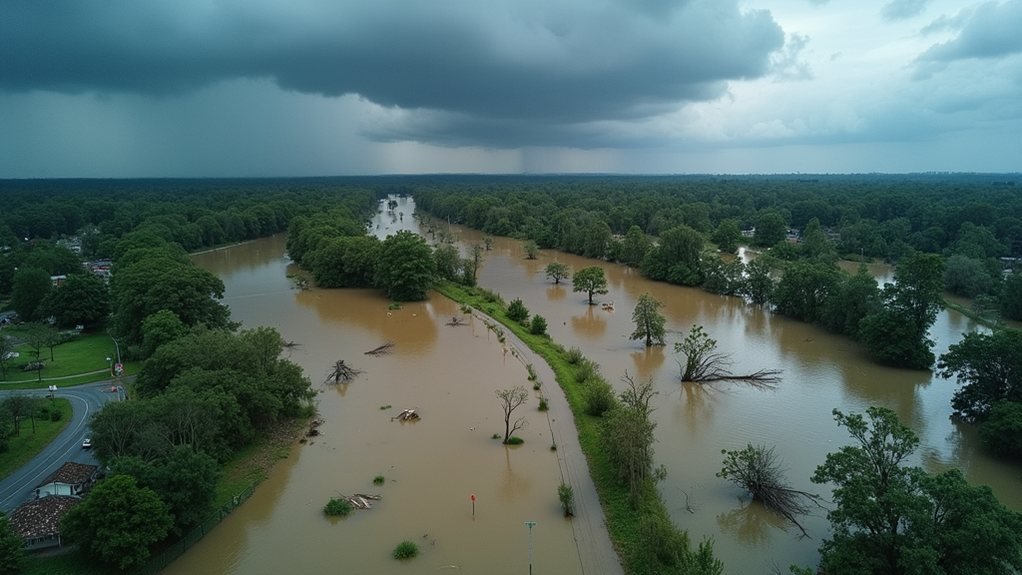

Storm Chandra swept across South East England and Ireland, bringing a deluge of rain and chaos that triggered major flooding and the issuance of 150 flood alerts. Communities faced serious challenges as streets turned into rivers and saturated soils struggled to absorb even more water. Emergency services sprang into action, coordinating multi-agency efforts to protect residents. With ongoing flood risks looming, the storm reminded us all that nature doesn’t do umbrellas. Learn more about how communities managed this tempestuous event.
Quick Overview
- Storm Chandra caused severe flooding across South East England and Ireland, transforming streets into rivers and threatening homes.
- A total of 76 flood warnings and 180 alerts were issued, with Hampshire and Dorset facing the most significant impacts.
- Somerset declared a major incident and established a multi-agency response to manage the crisis effectively.
- Emergency services conducted welfare checks for vulnerable residents, and volunteers provided essential supplies in hazardous conditions.
- Financial aid programs and claims services were initiated to support affected individuals and businesses during the recovery process.
Overview of Storm Chandra’s Impact
As Storm Chandra rolled across the region like an uninvited guest who brought too much rain and chaos, communities in South East England and Ireland braced for a deluge that seemed to have no end in sight. Saturated soils, already waterlogged from prior storms, transformed streets into rivers across the east coast of Ireland, where homes faced destruction. Meanwhile, residents in South East England readied themselves for 30-50mm of additional rain, with higher elevations bracing for even more. It was a storm not remarkable for a single day but devastating in its persistence, leaving many areas grappling with flooding and disruption. Local communities were urged to check their flood risk online as the threat of flooding loomed large. The storm was classified as a weather bomb due to its explosive cyclogenesis, leading to unprecedented wind gusts and flooding.
Key Flood Alerts and Warnings Issued During Storm Chandra
Flood alerts and warnings began pouring in like rain from Storm Chandra itself, leaving communities in a state of heightened vigilance.
Across England, a staggering 76 flood warnings and 180 alerts were issued, with Hampshire and Dorset bearing the brunt. More than 80 flood warnings remain active in these areas, while Somerset declared a major incident as dozens of warnings persisted.
Wales and Scotland saw their share of alerts too, due to saturated grounds and high river levels. Meanwhile, Ireland faced yellow rain warnings as rivers threatened to overflow. Recent rainfall has led to significant rises in river levels, increasing the risk of flooding across many regions.
This storm was no small drizzle; it was a deluge that caught everyone’s attention, making umbrellas feel like inadequate shields against nature’s fury. Storm Chandra continues to complicate efforts for emergency services and local authorities, who are coordinating response and risk communication to protect communities.
How Communities Responded to the Storm
Communities sprang into action as Storm Chandra released its fury, demonstrating a remarkable blend of resilience and resourcefulness. Emergency services coordinated efforts from Bridgwater Police Station, while multi-agency partners, including volunteers, united to tackle flooding incidents. A major incident cell was established at Bridgwater Police Station to streamline the response efforts. Somerset Council staff shifted roles to support response operations, conducting welfare checks on vulnerable residents. Meanwhile, British Red Cross volunteers braved treacherous conditions to deliver essentials. With claims adjusting offerings detailed on the services page, Crawford’s 24/7 claims intake service is prepared to assist storm-affected individuals and businesses. Financial aid programs sprung up, easing the burden on affected homeowners and businesses. With local officials sharing safety guidance, communities rallied together, proving that when disaster strikes, teamwork can turn chaos into a hopeful symphony of support.