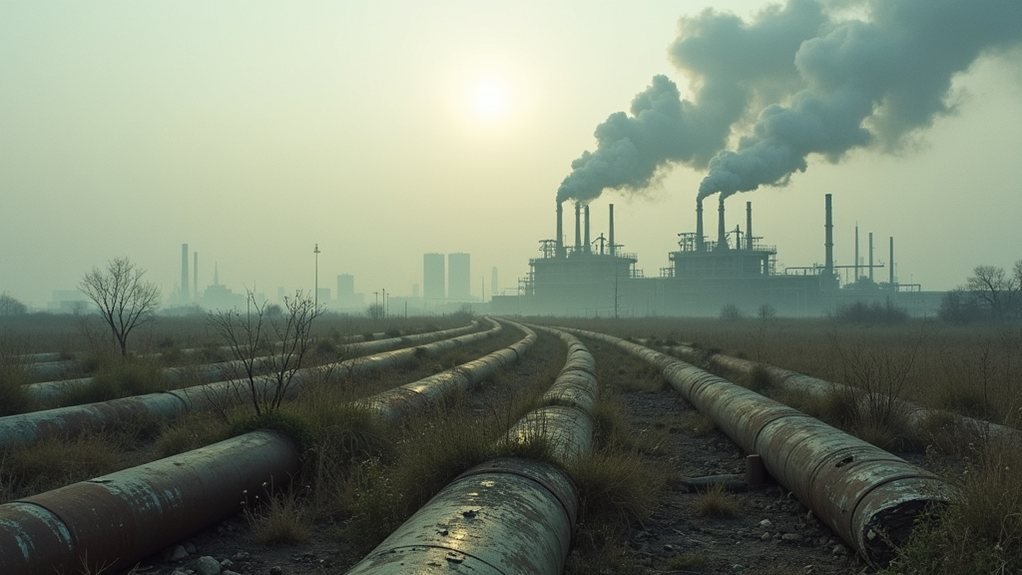

The Trump administration’s recent decision to finalize weakened pollution rules for gas plants is raising eyebrows. These new guidelines may save families some cash, but they come with serious risks to air quality and public health. With higher emissions of harmful substances like nitrogen oxides and mercury, implications for asthma and respiratory issues are alarming. As the EPA shifts focus, communities are left to wonder what this means for their environmental future. Curious to see how this plays out?
Quick Overview
- The Trump administration finalized weakened pollution rules for gas plants, reversing stricter standards previously in place.
- The EPA’s new regulations could lead to increased emissions of harmful pollutants like nitrogen oxides and mercury.
- Health risks, including respiratory issues and asthma attacks, are expected to rise among vulnerable populations due to the relaxed rules.
- The rollback of pollution standards is part of a broader shift in environmental oversight and enforcement under the Trump administration.
- Communities are concerned about the long-term health effects and the adequacy of digital compliance methods replacing traditional inspections.
Impact of Trump Administration’s Pollution Standards Rollback
As the Trump administration rolled back pollution standards, it was as if they hit the reset button on environmental regulations, leaving many to wonder what fresh air actually smells like.
The timeline of these rollbacks began with an executive order in 2017, directing the EPA to rewrite essential carbon emission rules. Subsequent proposals to repeal the Clean Power Plan and weaken emissions standards for gas plants followed. While some hailed lower energy costs—averaging $2,500 saved per family—others questioned the long-term impacts on air quality. The administration’s(carbon emissions) approach stirred a debate between economic benefits and environmental responsibilities, proving that balance is no easy feat. Meanwhile, the rollback occurred despite the fact that the U.S. carbon emissions dropped to the lowest level in 25 years.
Environmental and Public Health Consequences of Weakened Gas Plant Regulations
Weakened pollution limits mean higher emissions of harmful substances like nitrogen oxides and mercury, leading to more asthma attacks and respiratory issues. The EPA’s proposal to repeal 2024 Carbon Pollution Standards for fossil-fuel-fired power plants could exacerbate these health risks significantly. Furthermore, the delayed stricter wastewater discharge standards for coal-fired power plants may result in even more pollutants entering our waterways, compounding the environmental challenges we face. Vulnerable populations, particularly children, are left to bear the brunt of these decisions, facing increased neurological and cardiovascular risks. The rollback of standards fundamentally hands a loaded dice to communities already struggling, making it clear: the stakes are high, and the consequences could be devastating. A 1-4 word phrase
What Comes Next for Environmental Oversight?
What Comes Next for Environmental Oversight?
Despite the whirlwind of changes swirling around environmental oversight, the future landscape is beginning to take shape, and it’s a curious mix of opportunity and concern.
With budget cuts looming and enforcement shifting focus, the Environmental Protection Agency (EPA) is poised for a transformation.
Expect a roll-back of regulations and a hefty reliance on digital compliance—think of it as the EPA’s version of switching from paper to an app. While some may cheer the newfound “flexibility,” the implications for public health and safety remain troubling. Additionally, the EPA is expected to prioritize the rollback of vehicle emission rules as part of its deregulation efforts.
As the dust settles, communities will watch closely, hoping for a balance between regulation and protection. However, the reduced frequency of inspections does not equal reduced responsibility for corporations, making proactive compliance essential.
A shift toward digital compliance can also affect data transparency and public accountability, influencing how environmental performance is tracked and reported. digital compliance and the public’s ability to scrutinize environmental outcomes may shape future regulatory expectations.