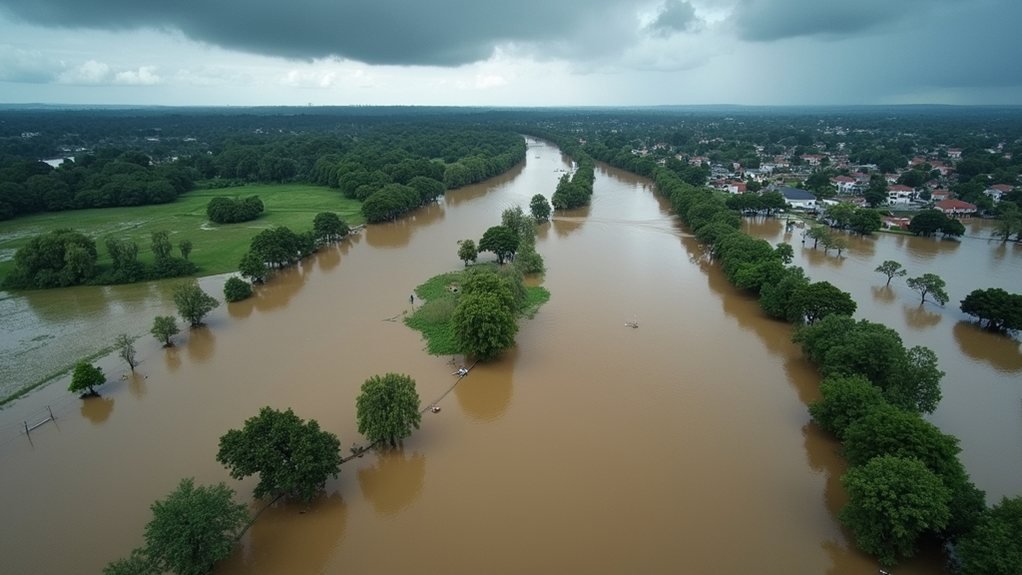

Storm Chandra has caused significant chaos in Southwest England, with rivers overflowing and severe flooding prompting a major incident declaration. In areas like Ilminster and Taunton, about 50 properties are submerged. Roads resemble rivers, stranding vehicles in Axminster. With over 112 flood warnings issued, safety is paramount. Communities are urged to steer clear of swiftly flowing water, as hidden dangers lurk beneath. If you’re curious about how agencies are responding or what’s next, there’s more to uncover!
Quick Overview
- Severe flooding has impacted Somerset, submerging approximately 50 properties in Ilminster and Taunton due to Storm Chandra.
- Roads in Axminster are impassable, resembling rivers, and vehicles are stranded as floodwaters rise.
- The Environment Agency has issued 112 flood warnings across England, highlighting the severe weather’s impact.
- Local authorities are responding with temporary barriers, drainage clearance, and community safety measures to mitigate flooding effects.
- A £10.5 billion investment in flood defences is planned to enhance future resilience against similar weather events.
Impact of Storm Chandra on Flooding in Southwest England
Storm Chandra swept through Southwest England like an unwanted guest at a party, leaving behind a trail of chaos and flooding that even the most seasoned emergency services found challenging to manage.
With a major incident declared in Somerset, around 50 properties were submerged, particularly in areas like Ilminster and Taunton. The relentless rain, like a toddler with a juice box, turned roads into rivers, stranding vehicles in Axminster. Meanwhile, 112 flood warnings danced across England, warning residents of the impending deluge. All this flooding came on the heels of saturated ground, making matters worse—Mother Nature’s idea of a cruel joke. The yellow weather warning issued for Devon and Cornwall highlights the potential for homes and businesses to be flooded. Additionally, the Met Office has warned of potential for power cuts as the storm continues to wreak havoc across multiple regions. Emergency responders have been emphasizing the importance of water conservation during and after flood events to protect supplies and reduce additional strain on infrastructure.
Safety Tips for Flood-Affected Communities
As communities begin to recover from the aftermath of flooding, prioritizing safety becomes paramount, especially when traversing the treacherous waters that often linger long after the rain has stopped. Residents should avoid walking or driving through floodwaters, as depth deception can hide dangerous obstacles. It’s crucial to regard all flooded areas unsafe, regardless of how tranquil they may appear. Travel should be limited to emergencies only. Additionally, keep pets away from flooded zones to prevent tragic accidents. Following these simple guidelines will help guarantee the safety of both individuals and their furry companions as recovery efforts continue. The government’s recent £10.5 billion investment in flood defences aims to enhance community resilience and reduce the impact of future flooding events. With the RFG service set to run again in 2026, communities will receive timely updates to help navigate heightened flood risks. Communities should also monitor local air quality and particulate pollution levels, since flood-related debris and damp conditions can worsen respiratory hazards.
Government Actions and Agency Responses to Storm Chandra
In the wake of Storm Chandra’s relentless downpour, a symphony of government agencies sprang into action, harmonizing their efforts to mitigate the chaos that followed.
The Department for Infrastructure (DfI) responded to over 600 flooding reports, erecting temporary barriers in Newry and clearing drainage systems like a determined team of emergency plumbers. DfI’s Rivers division reports only “very minor localized rises” overnight.
Meanwhile, Somerset Council declared a major incident, coordinating multi-agency meetings faster than a coffee-fueled sprint. Emergency Response Coordination has been crucial in managing the complex situation. The council also emphasized the importance of flood risk assessments to guide longer-term resilience planning.
The Environment Agency joined the fray, pumping water and supporting flooded households.
Yet, fire chiefs urged for more resources, emphasizing that England’s flood response still lags behind, like a slowpoke in a race.