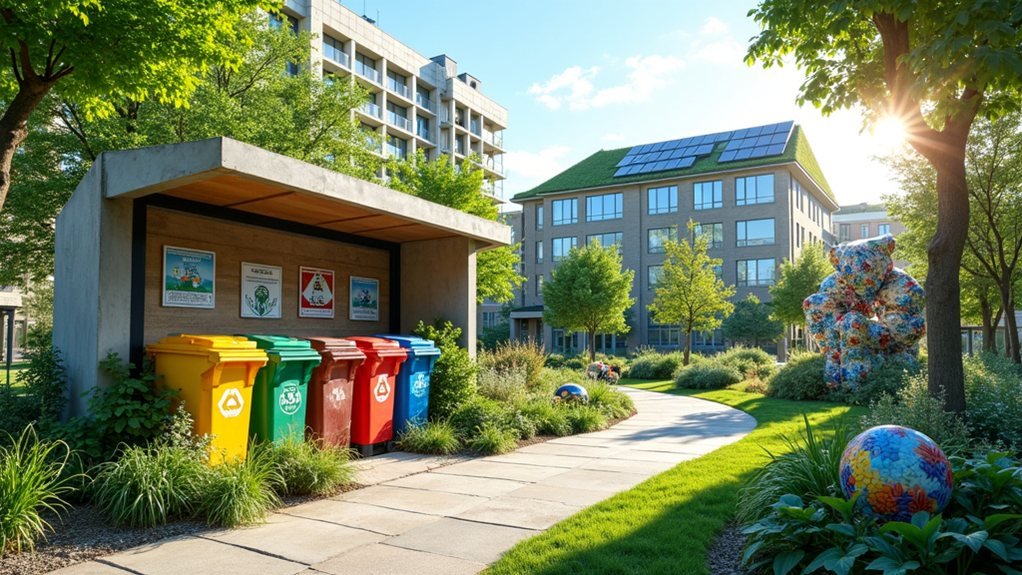

The UK Circular Economy Plan is on a mission to reshape waste management and kick the throwaway habit to the curb. With ambitious goals set for 2030—like reducing residual waste to 437kg per person—it focuses on five sectors: textiles, transport, construction, agri-food, and chemicals. Key milestones include simplified recycling guidelines and a nationwide deposit return scheme by 2027. It’s all about community involvement and innovation, paving the way for a cleaner, greener future. Curious about how it all unfolds?
Quick Overview
- The UK Circular Economy Plan focuses on reshaping waste management and reducing the throwaway culture by preventing and reusing materials.
- Key sectors targeted include textiles, transport, construction, agri-food, and chemicals to enhance resource efficiency and sustainability.
- Simplified recycling guidelines for businesses will be introduced by March 2025, followed by household guidelines by March 2026.
- A nationwide deposit return scheme for drinks containers is set to launch in October 2027 to encourage recycling and reduce waste.
- Community involvement is crucial, with public consultations and local authorities encouraged to adopt simpler recycling systems by 2026.
What You Need to Know About the Circular Economy Plan and Its Waste Reduction Goals
The UK Circular Economy Plan is more than just a trendy buzzword tossed around at sustainability conferences; it’s a roadmap aimed at reshaping how society thinks about waste. Set to culminate in a Circular Economy Growth Plan by early 2026, this initiative, led by industry experts, prioritizes five key sectors: textiles, transport, construction, agri-food, and chemicals. The government envisions a future where “throwaway culture” is a relic, making reuse and repair the norm. Following the waste hierarchy principle, the plan emphasizes prevention and reuse as superior strategies to recycling and disposal. With sector-specific roadmaps, the plan promises actionable steps, transforming the landscape of waste management into one that champions sustainability and resource efficiency. By December 2030, the plan aims for residual waste to be ≤ 437kg per capita, reflecting a commitment to measurable waste reduction. This commitment is part of a broader government vow to “end throwaway culture,” highlighting the urgency of this transition.
Milestones for Waste Reduction by 2027
Excitement buzzes in the air as the UK gears up for a transformative shift in waste management, with a series of milestones set to reshape the recycling landscape by 2027. By March 2025, businesses will see the introduction of simplified recycling guidelines, followed by households in March 2026, ensuring every core material—glass, metal, plastic, and more—finds its recycling home. This initiative aligns with the goal of a circular economy focused on minimizing waste and promoting reuse. Individuals can support these national efforts through conscious consumption practices that naturally reduce waste generation at its source. Additionally, the Scottish Government aims to strengthen the circular economy with a new strategy by 2026, including statutory circular economy targets to be set by 2027. Fast forward to October 2027, and a nationwide deposit return scheme for drinks containers will launch, aiming to reduce plastic pollution. These ambitious targets pave the way for a cleaner, greener UK, making waste reduction feel less like a chore and more like a community effort.
Get Involved in the Circular Economy Transition
As the UK commences its ambitious journey towards a circular economy, the call for community involvement echoes louder than a recycling truck on garbage day. The Circular Economy Taskforce, chaired by Andrew Morlet, invites everyone—from local authorities to environmental groups—to contribute to sector-specific roadmaps. Public consultations are on the horizon, making it easier for stakeholders to voice their thoughts. By 2026, local authorities will roll out simpler recycling systems, while businesses can get creative with waste management. This initiative aims to increase supply of high-quality recycled materials, ensuring that every community member has a role in this shift—because a circular economy isn’t just a fancy term; it’s a collective effort to rethink waste! The new approach focuses on continuous reuse of materials through innovative product design that eliminates waste from the outset. The taskforce, formed in November 2024, is crucial for supporting the government’s circular economy strategy.