
The UK’s Critical Minerals Strategy is like a safety net for the country’s future, aiming to lace up local supply chains and cut down on import risks. With domestic production currently at a mere 6%, plans are set to ramp it up to 30% by 2035. Recycling plays a crucial role too, potentially transforming heaps of mineral waste into fresh resources. It’s all about securing essential materials for green tech while keeping the economy robust and resilient. Curious about how this plays out in the real world?
Quick Overview
- The UK’s Critical Minerals Strategy aims to increase domestic production, reducing reliance on imports from foreign sources.
- Targeting 30% of critical minerals sourced domestically by 2035 enhances national security in mineral supply.
- Emphasizing recycling can convert mineral waste into valuable resources, mitigating import dependencies.
- Strengthening resilient supply chains ensures stability against climate disruptions and geopolitical tensions affecting imports.
- Boosting domestic production and recycling initiatives is projected to create jobs and stimulate the economy.
Overview of the UK’s Critical Minerals Strategy and Its Goals
In a world where technology and green energy collide, the UK’s Critical Minerals Strategy emerges as a beacon of foresight and ambition.
Launched in July 2022 and refreshed in March 2023, it outlines a ten-year vision to secure critical minerals essential for green industries and energy transformations. The strategy aims to address the anticipated demand increase for critical minerals, with copper to double and lithium projected to rise by 1,100% by 2035. This initiative is crucial as critical minerals are essential for the UK’s transition to net zero and digitalization.
With a focus on resilient supply chains, the strategy highlights the importance of midstream processing and recycling. Evaluating suppliers through sustainability metrics can further strengthen the environmental and social performance of the entire mineral supply chain. Targeting 23 critical minerals, such as lithium and nickel, it aims to meet at least 10% of domestic demand by 2035, ensuring the UK’s manufacturing sector thrives while reducing reliance on foreign sources.
Domestic Production’s Impact on Import Dependencies
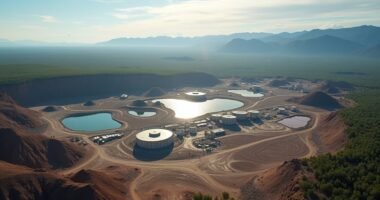
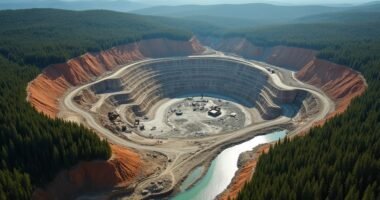
Boosting domestic production of critical minerals stands as a pivotal strategy for the UK, aiming to lessen its import dependencies. Currently, the UK only meets 6% of its critical mineral needs domestically, but with ambitious targets set for 2035, this figure could rise to 10%. Imagine that: a significant shift from relying on foreign suppliers to cultivating homegrown resources! With over 50 projects underway and a projected demand surge—lithium alone expected to skyrocket by 1,100%—the UK is gearing up. This strategy not only strengthens the economy but also promises to create jobs and enhance national security in mineral supply. Building resilient supply chains will be essential to withstand both climate-related disruptions and geopolitical tensions that could affect mineral imports. Notably, the UK plans to achieve 30% of critical minerals sourced domestically by 2035, which includes targets for production and recycling. As demand forecasts indicate that copper will require up to 1,996,000 tonnes for advanced manufacturing by 2035, the urgency for local supply becomes even more pronounced.
The Importance of Recycling for Mineral Supply
While the UK faces a formidable challenge in critical mineral supply, the importance of recycling is emerging as a beacon of hope on the horizon.
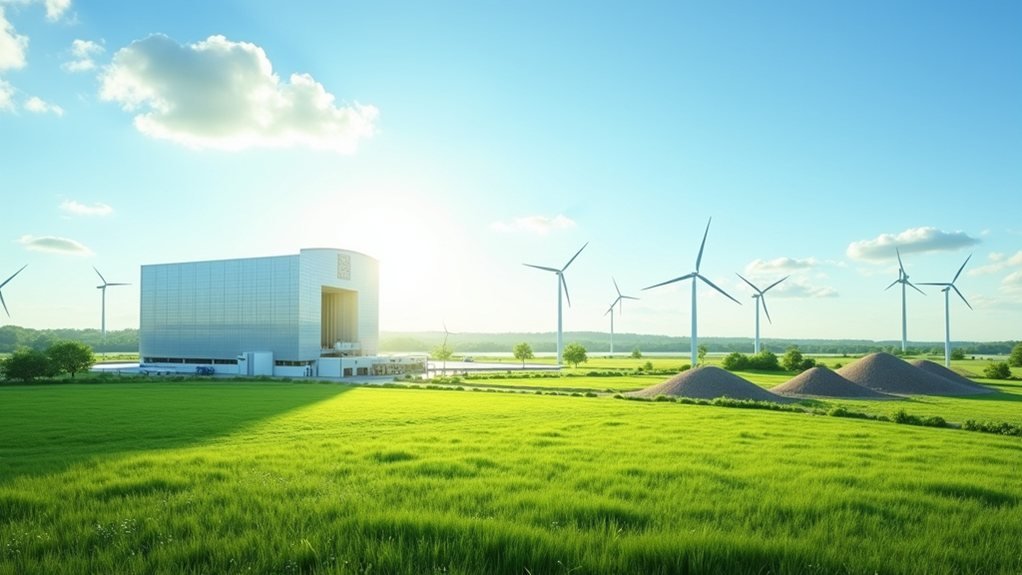
Currently, the UK produces a mere 6% of its critical mineral needs, leaving a gaping supply chain vulnerability. Recycling could transform mineral waste—around 47.4 million tonnes annually—into valuable resources. Recycled materials cover nearly one-third of the total aggregate demand, indicating a significant potential for resource recovery. In fact, Britain recycled 74.3 million tonnes of aggregates in 2023, showcasing the capacity for increased recovery efforts.
However, existing infrastructure is more focused on construction waste than on critical minerals. Similar to how plastic pollution solutions require dedicated systems and infrastructure, critical mineral recycling demands specialized technologies and processing facilities. With robust data and investment in recycling technologies, the UK could turn these challenges into opportunities.
Think of it as mining the past to fuel the future—talk about a win-win!