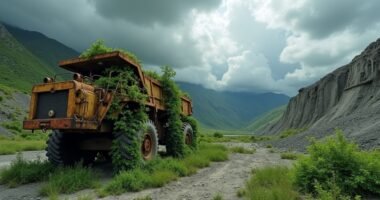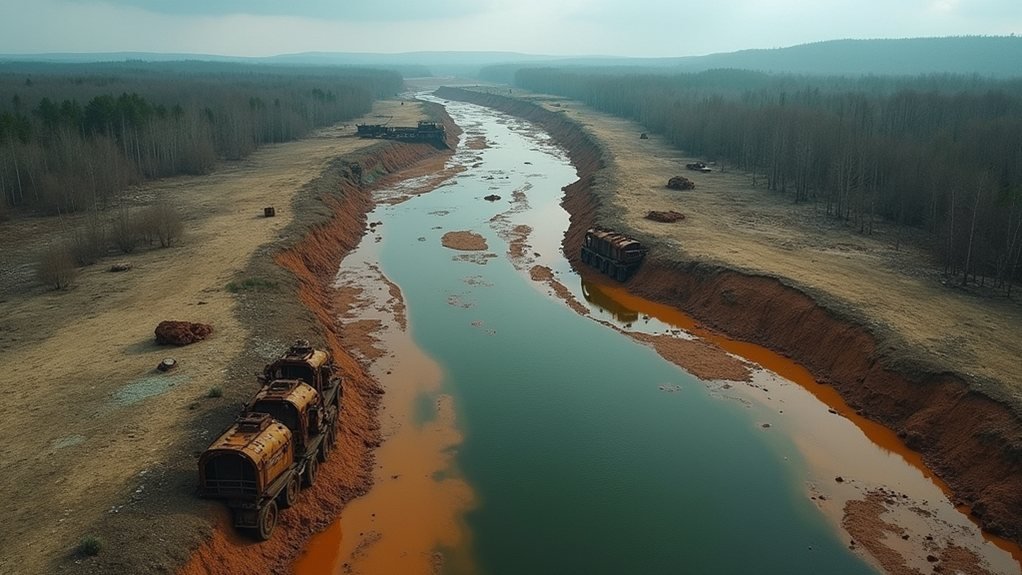

Across Canada, around 10,000 abandoned mines have turned into toxic time bombs, leaking heavy metals like arsenic and copper into waterways. These sites, particularly notorious for acid mine drainage (AMD), are the culprits behind the transformation of clear streams into murky sludge. This not only harms fish and other aquatic life but also poses serious health risks to humans. Tackling this issue requires maneuvering a complicated maze of regulations and community involvement, but the problem persists. Stay tuned for more on this pressing challenge.
Quick Overview
- Over 10,000 abandoned mines in Canada lead to severe water pollution, primarily through acid mine drainage (AMD) and heavy metal leaching.
- Toxic substances like arsenic and lead contaminate waterways, threatening both aquatic ecosystems and human health.
- The persistent pollution from these mines can last for decades, complicating remediation and recovery efforts.
- Regulatory challenges across provinces hinder effective cleanup, as each region has different mining laws and reclamation requirements.
- Continuous management is necessary for hazardous materials, with only a few sites showing no current contamination threats.
Heavy Metals and Toxins From Abandoned Mines Polluting Our Water Supply
While one might expect the serene beauty of Canada’s landscapes to be unmarred by human activity, the reality is that abandoned mines have left a toxic legacy that continues to pollute water supplies across the nation. Heavy metals like copper and arsenic spill out, creating a cocktail of contamination. Acid mine drainage, a fancy term for toxic runoff, is a persistent problem, especially in British Columbia. Imagine 261,000 tons of arsenic trioxide needing perpetual babysitting—no one wants that! From the Tulsequah Chief Mine to Mount Polley, these sites release pollutants that would make even the toughest fish reconsider their swimming routes. These environmental hazards represent just one stage in what experts call the full product lifecycle, which tracks environmental impacts from resource extraction through to waste disposal. Shockingly, only 2 sites show no current contamination threat, highlighting the widespread impact of mining pollution on the environment. Many of these sites, such as Type II mines in Yukon, require ongoing remediation efforts to manage the hazards they pose to water sources and local ecosystems.
How Abandoned Mines Affect Our Waterways
As the remnants of abandoned mines linger like unwelcome guests at a party, their impact on waterways becomes increasingly evident. Acid mine drainage (AMD) emerges as an uninvited villain, transforming once-clear streams into toxic sludge, lowering pH levels and obliterating aquatic life. Imagine fish trying to thrive in a hostile, acidic bath—it’s like trying to enjoy a soda gone flat! Contamination of water from heavy metals such as arsenic and lead poses an additional threat to both ecosystems and human health. Water pollution from mine waste can last for decades or even centuries, amplifying the ongoing damage to affected waterways. Just as microplastic particles infiltrate our ecosystems, these mining contaminants create persistent environmental challenges that resist easy solutions. Decades of pollution continue to disrupt ecosystems, with selenium levels in places like B.C.’s Elk Valley skyrocketing. With billions of liters pouring into tailings facilities, the risk of dam failures looms, leaving communities facing an ongoing water crisis.
Navigating Regulatory Hurdles in Mine Remediation
Maneuvering the labyrinth of regulations surrounding mine remediation can feel a bit like trying to solve a Rubik’s Cube blindfolded—daunting and complex.
Each province in Canada has its own mining laws, like British Columbia’s Mines Act, which can demand security for cleanup costs.
But wait, there’s more! The Northwest Territories insist on detailed abandonment plans, while Good Samaritan provisions allow volunteers to help without fear of liability. Closure and reclamation plans must also allow for adjustments based on new technologies and regulations, adding another layer of complexity. Companies remain liable for pollution throughout the reclamation process, which underscores the importance of responsible management.
The most effective remediation strategies follow a waste management hierarchy that prioritizes prevention of further contamination before considering recovery options.
It’s a patchwork quilt of rules, where planning, funding, and community consultation collide.
Steering through this regulatory maze requires both finesse and determination, ensuring that cleanup efforts don’t end up as mere wishful thinking.