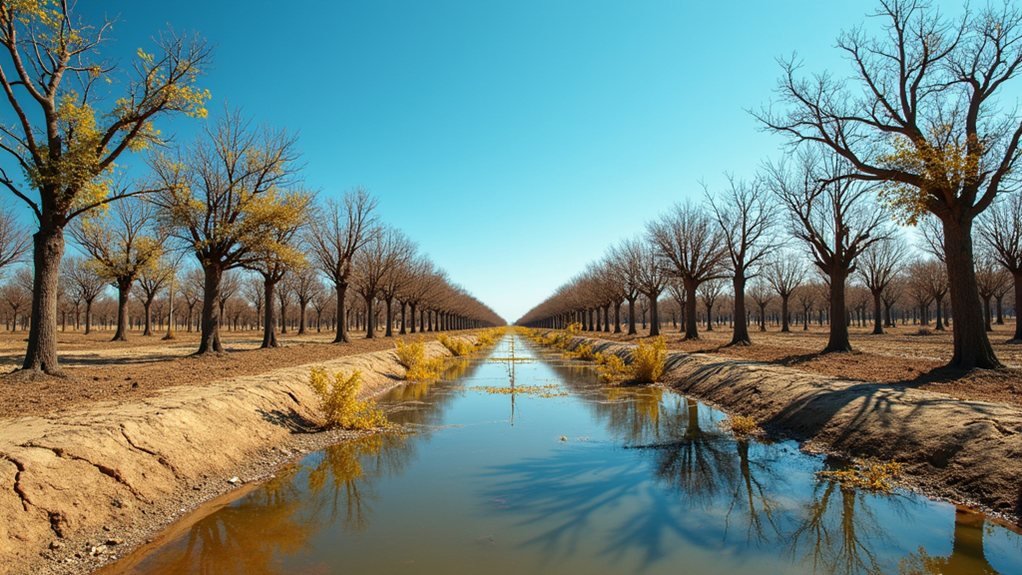

The lithium rush in California isn’t just a scramble for batteries; it’s draining rural water supplies and straining local communities. As lithium extraction guzzles water and contaminates rivers, farmers are left worrying about crop health. With around 25% of water samples showing toxic lithium levels, it’s not just a drop in the bucket—it’s a tidal wave of trouble. Who knew that our quest for greener energy could leave the ground dry and our crops in peril? Discover more!
Quick Overview
- Lithium extraction in California significantly depletes water resources, exacerbating local water shortages in rural communities like Imperial Valley.
- Approximately 25% of water samples in California contain toxic lithium levels, posing health risks to agricultural and human ecosystems.
- Citrus crops are particularly vulnerable to lithium contamination, with adverse effects noted at concentrations as low as 0.05 ppm.
- Current regulatory frameworks fail to adequately address lithium mining’s environmental impacts, leaving communities exposed to contamination and resource depletion.
- The anticipated surge in lithium mining proposals threatens already strained water supplies, heightening concerns about community health and agricultural viability.
Lithium Mining and the Hidden Water Crisis
While the world enthusiastically embraces the lithium boom, driven by the demand for electric vehicle batteries and renewable energy storage, a hidden water crisis simmers beneath the surface, ready to bubble over.
Lithium extraction is a thirsty endeavor; geothermal plants can guzzle up to 2,800 acre-feet of water annually, and the process of direct lithium extraction can drain rivers dry. Significant water usage is a pressing concern for local communities facing dwindling resources. In fact, communities in Imperial Valley face challenges related to childhood asthma rates that are more than twice the national average, which may be exacerbated by increased pollution from lithium extraction.
Communities in Imperial Valley are already feeling the pinch, as dwindling water supplies threaten their very existence. Implementing water conservation techniques could help mitigate the impact of extraction activities on local water availability.
Communities in Imperial Valley face a critical water crisis, jeopardizing their survival amid rising lithium demands.
With rising lithium demands, one must wonder: how much longer can California balance its mineral gold rush with the essential life source of water?
Regulatory Failures in Lithium Extraction
As the lithium boom charges ahead, it becomes increasingly clear that the regulatory framework surrounding lithium extraction is as outdated as a flip phone in a smartphone world.
With no federal water consumption standards, mines extract freely, while the General Mining Law of 1872 stands stubbornly intact. Environmental assessments often skim over essential factors, like the Hell’s Kitchen Project’s questionable water usage assumptions. Imperial Valley has been identified as a key region for lithium extraction, raising concerns about how this will affect local water supplies. Meanwhile, hazardous waste disposal plans remain laughably inadequate, generating toxic byproducts with no solid plan for cleanup.
It’s a regulatory free-for-all, leaving communities to wonder if anyone is actually minding the store—or the water supply, for that matter. The anticipated surge of new lithium mine proposals, especially in the driest state, raises concerns about water levels and availability, with 80% of these projects located on monitored water supplies. Following the waste management hierarchy would prioritize prevention of environmental damage before considering extraction methods that produce difficult-to-manage toxic waste.
How Lithium Contamination Affects Our Water and Crops
A staggering number of water sources across California are becoming unwitting hosts to lithium, a chemical element that’s drawing attention for all the wrong reasons.
With about 25% of water samples showing toxic levels, crops are feeling the pinch too. Citrus plants, for instance, can throw a tantrum when exposed to just 0.05 ppm of lithium—think of it as nature’s way of saying, “Not today!” Additionally, nearly a quarter of water systems reported lithium levels exceeding health risk values, raising alarms about safety. High lithium content can also correlate with low magnesium levels, further complicating the issue.
25% of water samples reveal toxic lithium levels, with citrus crops particularly sensitive to just 0.05 ppm.
The irony? Conventional treatment methods struggle to rid water of this pesky contaminant, leaving residents facing chronic exposure. Adopting sustainable practices in local food production could help mitigate some of these water quality challenges while supporting community resilience.
As lithium’s presence grows, the implications for both drinking water and agriculture become increasingly dire.