
On March 9, 2026, oil prices skyrocketed due to escalating tensions from US and Israeli military strikes on Iran. With the Strait of Hormuz, an essential oil transit route, effectively choked off, global markets faced severe disruption. Analysts noted prices surged past $120 per barrel, leading to inflation worries for consumers and manufacturers alike. As costs rise, the urgency for energy diversification becomes clear. Curious about how this impacts the larger economy? There’s much more to explore!
Quick Overview
- Oil prices surged over $120 per barrel due to heightened tensions from US and Israeli strikes on Iran’s fuel depots.
- The Strait of Hormuz blockage has critically disrupted global oil supply, causing tankers to queue extensively.
- Rising oil costs have led to increased inflation, burdening consumers with higher gas and heating expenses.
- OPEC+ implemented output reductions in response to the unprecedented supply shock and market instability.
- The crisis may accelerate the shift to renewable energy sources as industries seek alternative solutions amid geopolitical tensions.
Key Geopolitical Events Affecting Oil Supply in March 2026
As oil prices skyrocketed in March 2026, one couldn’t help but feel like they were watching a reality show where the stakes weren’t just dramatic but world-altering.
Essential geopolitical events took center stage, particularly the blockage of the Strait of Hormuz, a vital passage for 20% of the world’s oil. With shipping traffic frozen and tankers queued like cars on a Monday morning, panic ensued.
OPEC+ slashed output amid rising tensions and attacks on vessels, sending traders scrambling. It was a chaos-infused oil apocalypse, where even the most resilient markets felt a chill from an unprecedented supply shock.
Energy companies reassessed their operations against Sustainable Development Goals, recognizing that supply disruptions highlighted the urgent need for diversified and renewable energy sources.
Impact of US and Israel Strikes on Oil Prices
Tensions in the Middle East ignited a rollercoaster of chaos in oil markets when U.S. and Israeli strikes targeted Iranian fuel depots, a move that sent shockwaves rippling through the global economy.
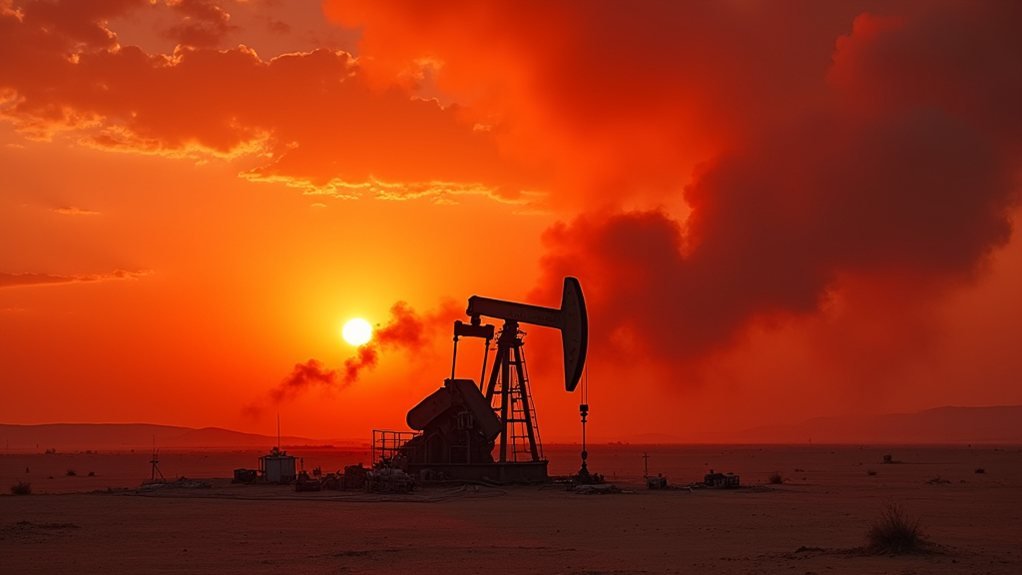
The attack lit up Tehran’s skyline, and oil prices reacted like they’d just seen a ghost—surging over $120 per barrel, a scene reminiscent of high-stakes poker gone wrong.
Tehran’s skyline ignited as oil prices spiked over $120, creating a chaotic scene akin to high-stakes poker gone awry.
With the Strait of Hormuz effectively choked off, and Iran’s threats echoing like a bad horror film, industry experts warn of a price spike that could push oil to $200.
Beyond the immediate economic turmoil, the strikes on fuel infrastructure have raised concerns about air pollution levels in the region, as burning oil facilities release massive quantities of harmful pollutants into the atmosphere.
Hang tight, folks; the gas pump could soon hurt your wallet.
How Rising Oil Costs Will Affect the Global Economy?
The recent surge in oil prices, ignited by military actions in the Middle East, presents a formidable challenge for the global economy. Higher oil costs ripple through inflation, pinching consumers at the pump and in their heating bills—like having your wallet probed by a secret agent.
Transportation expenses soar, straining supply chains and making shipping as costly as gourmet avocado toast. Industrial sectors feel the squeeze too, with refined fuel prices nudging margins and manufacturing costs higher than a giraffe on stilts.
Amidst this chaos, economic growth slows, threatening to turn vibrant markets into sluggish shadows of their former selves. However, this crisis could accelerate the transition to reducing carbon emissions by making renewable energy sources more economically competitive with fossil fuels.