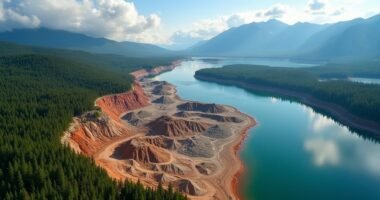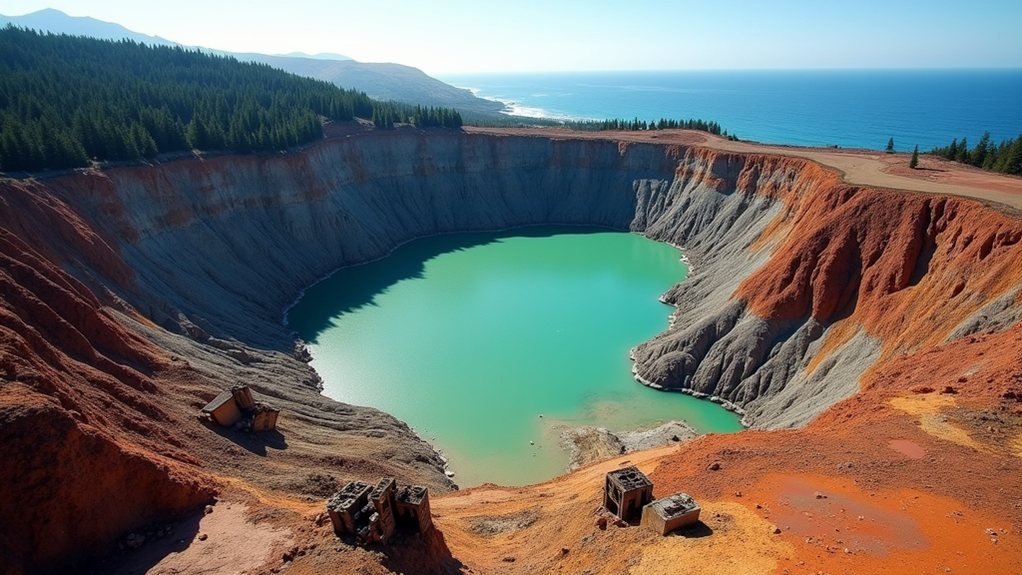

The Britannia Mine stands as a stark reminder of acid mine drainage, a phenomenon as lasting as an unwanted house guest. Over 60 sites in B.C. now leach toxic metals, a byproduct of generations of industrial oversight. This mining saga of copper, lead, and zinc teaches us that remediation isn’t just an afterthought; it’s essential. Innovative solutions and community efforts are making a difference, showcasing that while the past casts a long shadow, brighter days are ahead for our waterways. Want to discover how they’re making it happen?
Quick Overview
- Britannia Mine, closed in 1974, continues to leach heavy metals into Howe Sound due to acid mine drainage.
- The site exemplifies the long-term environmental impact of industrial activities, affecting 60 similar locations in B.C.
- Innovative remediation efforts have achieved a 99% reduction in pollution through effective groundwater management.
- Community collaboration and creative solutions are essential for successful environmental restoration and ongoing management of contaminated sites.
- Continuous vigilance and proactive measures are necessary to prevent future industrial contamination and protect ecosystems.
What We Learned From the Britannia Mine’s Toxic Legacy?
While the Britannia Mine may have closed its doors in 1974, its toxic legacy has continued to teach us valuable lessons about environmental stewardship and the long-term effects of industrial activity. The mine’s acid mine drainage problem, spewing heavy metals into Howe Sound for decades, serves as a cautionary tale. Imagine a leaky faucet, but instead of water, it’s contaminated sludge! The sheer volume of copper, lead, and zinc extracted highlights the environmental cost of greed. This legacy reminds us that what’s buried beneath the surface can surface later, demanding our attention and action to prevent similar disasters in the future. Furthermore, the acid mine drainage issue has prompted significant restoration efforts to mitigate its impact on the environment. The construction of the concentrator in 1923 marked a turning point for mining operations but also set the stage for future environmental challenges. The Britannia Mine situation demonstrates why waste prevention should be our highest priority when managing industrial byproducts, rather than dealing with toxic aftermath.
Transformative Remediation Solutions for B.C. Waters
As the world grapples with the consequences of industrial activities, innovative remediation solutions for British Columbia’s waters are emerging like superheroes in a splashy comic book. Engineers and scientists are employing techniques to control acid rock drainage at the source, using methods like wetting layers and geochemical analyses. They’re also harnessing the power of passive treatment systems, like anoxic limestone drains that naturally add alkalinity, without the need for chemical additives. Traditional treatment has significant environmental impacts, prompting the need for these innovative strategies. These approaches prioritize soil conservation practices that maintain long-term productivity while minimizing environmental harm. For a splash of fun, bioremediation is turning microbes into eco-friendly warriors, while algal-based methods tackle acidity head-on. Together, these approaches are rewriting the narrative of water healing in B.C.
Lessons Learned From Britannia Mine’s Remediation Efforts
The remarkable journey of remediation at Britannia Mine offers a treasure trove of lessons that could fill a book—or at least a very engaging blog post.
Collaboration emerged as a superstar, with stakeholders uniting to tackle North America’s largest metal contamination source. Funding was no small feat either; $30 million from former owners barely scratched the surface of the estimated $80 million total cost. The pollution reduction reached 99% by 2008 after optimization of groundwater management, showcasing the potential for recovery. This demonstrates how sustainable development principles can successfully balance economic interests with marine ecosystem protection.
Phased implementation guaranteed priorities were tackled systematically, while innovative technical strategies, like the water treatment plant, saved the day. The installation of an interim concrete plug helped to divert polluted water, further demonstrating the effectiveness of targeted remediation efforts.
Ultimately, Britannia’s success shows that community, creativity, and commitment can restore even the most beleaguered ecosystems.