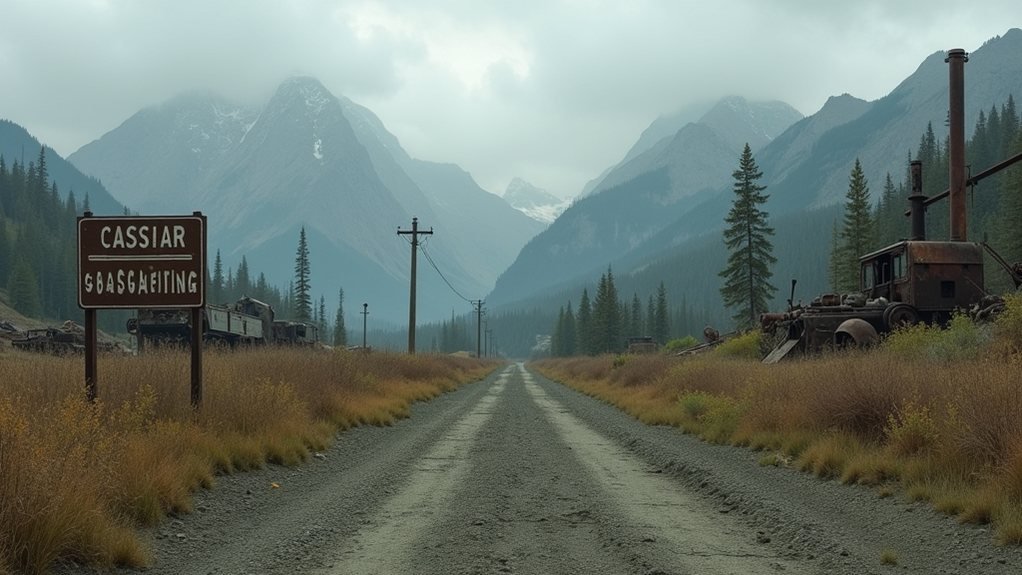

The Cassiar asbestos scandal reveals a troubling saga of health neglect in a small mining town. For 40 years, former residents have endured serious illnesses, primarily mesothelioma, from toxic asbestos exposure. This silent killer creeps in after years, like an unwanted party guest who just won’t leave. With complicated compensation processes and blatant corporate negligence, the fight for justice continues. As the community grapples with this haunting legacy, the story unfolds, revealing even more shocking truths.
Quick Overview
- Former residents of Cassiar suffer from mesothelioma and other asbestos-related cancers decades after mining operations ceased, highlighting ongoing health crises.
- Contaminated playgrounds with asbestos-laden “green dust” significantly impact children’s health and well-being in the community.
- The legacy of asbestos mining has created complex compensation challenges, leaving many victims without adequate support for their health issues.
- Employers and mining companies failed to provide necessary warnings and safety measures, leading to widespread health problems and liability claims.
- Continued advocacy for victims is critical to address the long-term health crisis and ensure justice and support for affected families.
Health Outcomes of Asbestos Exposure in Cassiar
While one might think that a mining town like Cassiar would simply fade into memory after the last shovel full of chrysotile asbestos was extracted in 1992, the reality is far more haunting. Decades later, former residents grappled with mesothelioma and other asbestos-related cancers, revealing a dark legacy. Green dust from the tailings pile settled on playgrounds, turning childhood sports into silent battles against contamination. Asbestos exposure affected not only the workers but also their families and children, amplifying the community’s struggle. A mill worker, after years of exposure, faced a grim diagnosis long after retirement. The long latency of mesothelioma suggests a continued increase in incidence in Canada, with regions historically associated with asbestos use showing alarming rates of related diseases. The environmental devastation caused by asbestos mining demonstrates how human activities can severely diminish ecosystem services that are essential for community health and wellbeing. Cassiar’s story is an unsettling reminder that even after the last mine closes, the true cost of asbestos lingers on, haunting families for generations.
Why Accountability Matters for Asbestos Victims?
The haunting aftermath of asbestos exposure in Cassiar extends beyond mere health statistics; it raises significant questions about accountability.
Employers, mining companies, and manufacturers are not off the hook. They have a duty to warn workers and communities about hazards and implement safety measures. When they neglect these responsibilities, they open the door to liability claims.
Think of it as a game of dodgeball—if you don’t warn your teammates about the flying ball, you’re responsible when they get hit. Occupational exposure significantly influences health problems, highlighting the urgent need for responsible actions. Asbestos work classifications are crucial for ensuring that safety measures are implemented appropriately to protect workers and the community.
A comprehensive lifecycle assessment of asbestos products would have revealed the environmental and health dangers long before they manifested as widespread disease.
Accountability matters because it guarantees that those who suffer from asbestos exposure have the chance to seek justice and prevent future negligence.
Compensation Struggles for Asbestos Victims
Maneuvering the compensation landscape for asbestos victims in Cassiar can feel like trying to find a needle in a haystack, especially when the stakes are so high. With the Cassiar Asbestos Company folding in the ’90s, victims face a labyrinth of bureaucratic hurdles. WorkSafeBC claims often vanish like socks in a dryer, leaving many denied support. Asbestos mining at Cassiar not only affected workers but also had a lasting impact on their families and the community. Victims’ advocates warn against companies that use false claims about environmental responsibility to deflect attention from the health crisis. While trust funds like Turner & Newall offer a glimmer of hope, steering through eligibility can feel like an obstacle course. Advocates push for easier access, arguing that victims shouldn’t need a PhD to claim what’s rightfully theirs. Many victims have received compensation amounts that exceed $150,000 for their suffering, but it remains a convoluted dance, and many are left sitting on the sidelines.