
The UK’s green investment boom is set to hit a whopping £60 billion annually, with wind energy leading the charge. By 2024, wind is expected to generate 29% of the nation’s electricity, helping to save over 39 million tonnes of CO₂. But it’s not all smooth sailing! Challenges like regulatory hurdles and grid bottlenecks loom large. Nonetheless, smart investments and collaboration could turn these speed bumps into stepping stones for a greener future. Curious about the opportunities that lie ahead?
Quick Overview
- The UK projects £60 billion annually for low-carbon initiatives, including significant investments in wind energy to bolster industrial growth.
- Wind energy is expected to generate 29% of the UK’s electricity by 2024, supporting the transition to a greener economy.
- Over 30 GW of wind capacity established, leading to annual CO₂ savings of 39.2 million tonnes, enhancing sustainability.
- Low-carbon renewables, primarily wind, now account for 37% of the UK’s electricity, crucial for reducing carbon emissions.
- Strategic investments and collaborations are essential to overcome regulatory challenges and ensure continued growth in the renewable sector.
Scale of Green Investment in the UK
In the vibrant landscape of the UK’s green investment scene, a staggering £60 billion per year is projected to flow into low-carbon initiatives by the mid-2020s.
A remarkable £60 billion annually is set to fuel the UK’s transition to low-carbon initiatives by the mid-2020s.
This impressive figure combines efforts across renewable energy, transport, buildings, and nature. £9.8bn allocated for CCUS and hydrogen to support the development of critical technologies will play a significant role in achieving these targets. Additionally, the UK government has aligned its bilateral ODA with the Paris Agreement since 2024 to further enhance its commitment to climate action.
To keep pace with 2030 targets, around £40 billion annually is earmarked specifically for clean power.
Meanwhile, the National Grid plans a hefty £35 billion for critical upgrades. Many companies are implementing direct air capture solutions as part of their comprehensive net-zero emission strategies.
With public spending on clean tech rising and carbon capture becoming a cornerstone, the UK is not just investing in a greener future; it’s gearing up for an economic renaissance powered by sustainability.
The Role of Wind Energy in Decarbonisation
How can something as breezy as wind play a monumental role in tackling climate change?
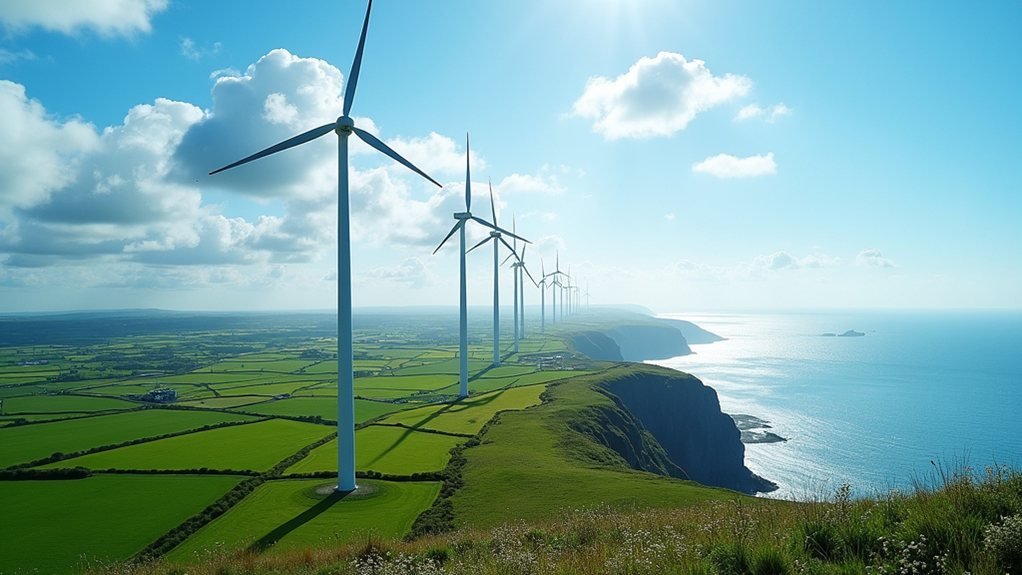
In 2024, wind is set to generate 29% of the UK’s electricity, edging ever closer to fossil gas.
With over 30 GW of capacity, it’s the heavyweight champion of renewables, saving 39.2 million tonnes of CO₂ emissions in just one year.
Each TWh of wind power acts like a superhero, displacing fossil fuel generation and reducing carbon footprints.
Wind energy offers long-term sustainability as it harnesses an inexhaustible natural resource without depleting environmental assets.
As the UK embraces more wind projects, the future looks bright—well, breezy, in this case—proving that harnessing nature’s gusts is indeed a game changer for decarbonisation.
This year, low-carbon renewables will account for 37% of the UK’s electricity, highlighting the significant shift towards sustainable energy sources.
Moreover, with a load factor average of 31.3% for all wind, the efficiency of wind energy continues to demonstrate its vital role in the transition to greener power.
Challenges and Opportunities Ahead
While wind energy has taken the UK by storm, generating nearly a third of its electricity and saving millions of tons of CO₂, the path forward is not all sunshine and breezes. Regulatory uncertainty, like an uninvited guest at a party, raises risks for developers, especially with the absence of a Green Taxonomy. Grid bottlenecks add to the challenges, leaving projects in limbo. Meanwhile, investors face a game of musical chairs with financing, where rising costs and mismatched risks threaten progress. Yet, with strategic investments and collaboration, these hurdles could transform into opportunities for a greener, more resilient future. Additionally, nature restoration bolsters economic resilience amid supply chain disruptions, further emphasizing the need for sustainable practices in the wind energy sector. As UK summers shift to drier, hotter conditions, adapting to climate change will be crucial for maintaining energy production and infrastructure stability. The transition to renewable sources represents a critical step toward reducing carbon emissions and creating a more sustainable energy landscape for generations to come.