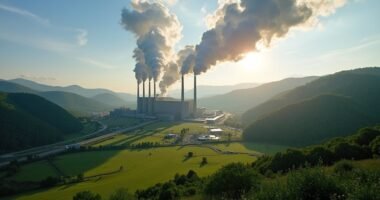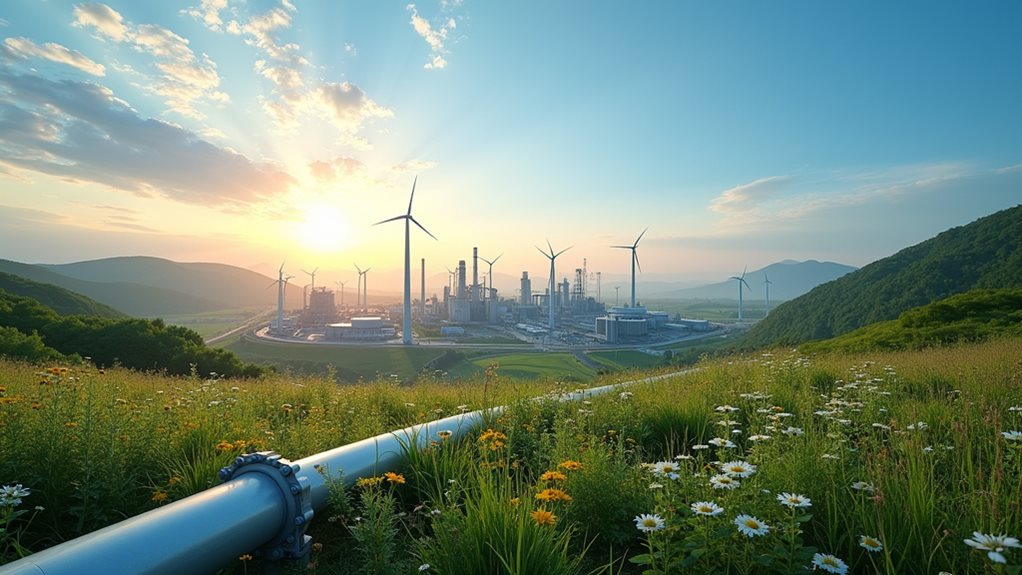

Natural gas is indeed a surprising hero in America’s emissions battle. It produces about 50% less CO2 than coal, contributing markedly to reduced greenhouse gas emissions. As a bridge fuel, natural gas aids the shift to renewables, while ongoing advancements tackle methane leaks—its less charming sidekick. Plus, with lower prices boosting our energy economy, it’s hard to ignore its role. Curious about how natural gas might continue to shape our energy future? There’s plenty more exciting info to uncover!
Natural Gas: A Key Player in Emissions Reduction
As the world grapples with climate change, natural gas emerges as a pivotal player in America’s emissions battle, often touted as the cleaner cousin of coal. While coal has long held the title of the environmental villain, natural gas has stepped up, boasting a remarkable ability to emit about 50% less CO2 when burned for power generation. This makes it a tempting option for energy producers looking to reduce their carbon footprint.
Natural gas shines as a cleaner alternative to coal, cutting CO2 emissions by 50% and aiding in the fight against climate change.
Since 1990, methane emissions, which are the sneaky little gremlins of the natural gas world, have seen a 21% decrease, thanks to advancements in technology and monitoring systems. The change from coal to natural gas has been the superstar in recent U.S. emissions reductions, accounting for a staggering 62% of cumulative CO2 savings in the electricity sector. Additionally, the Methane Emissions Reduction Program established under the Inflation Reduction Act specifically aims to mitigate these emissions from the oil and gas sector. Furthermore, carbon sequestration from LULUCF offset nearly 15% of total emissions in 2022, highlighting the importance of complementary strategies in the emissions battle.
Yet, despite its cleaner-burning reputation, methane leaks during production and transport remain a thorny issue. Think of it as trying to tidy up a room while your cat is busy knocking over your carefully arranged decorations. The transition to renewable sources represents the ultimate goal for sustainable energy production, with natural gas serving as an important bridge fuel.
To tackle this challenge, the Inflation Reduction Act has allocated $1.36 billion to reduce methane emissions from the oil and gas sector. Programs like the EPA’s Methane Challenge encourage companies to adopt technologies that reduce these pesky leaks. Meanwhile, advanced monitoring technologies, from satellites to sensor devices, help improve accuracy in tracking these emissions.
Natural gas isn’t just a climate warrior; it’s also economically savvy. With prices in the U.S. lower than global averages, it makes energy production cheaper and more competitive. Additionally, the natural gas delivery system enjoys a remarkable 92% energy efficiency.
While natural gas may not be the ultimate solution to climate change, it plays a significant role in evolving to a cleaner energy future. The ongoing investments in infrastructure and the development of renewable natural gas and hydrogen show that, with some careful management, natural gas can indeed be a surprising hero in America’s emissions battle.