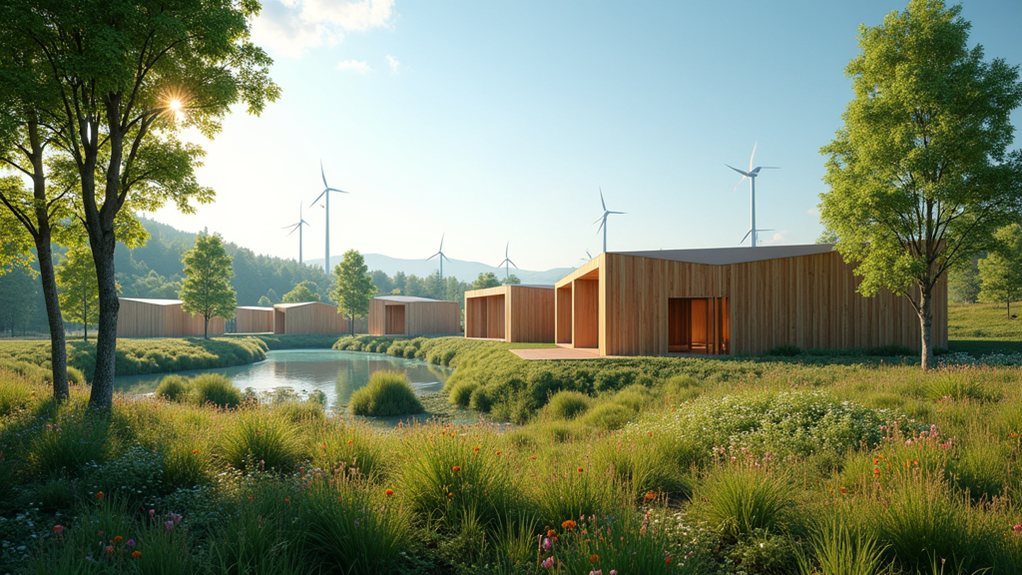
In 2025, wooden data centers are gaining traction, with trailblazers like Microsoft and Sweden’s EcoDataCenter championing sustainable technology. These eco-friendly hubs use cross-laminated timber, cutting carbon footprints by up to 65% compared to concrete. Imagine structures that not only house data but also act like sponges, soaking up CO₂! With a growing demand for data, this green innovation promises to reshape the industry’s landscape, proving that even tech can go a little green. Curious about what’s next?
Quick Overview
- Microsoft and EcoDataCenter are leading the shift towards wooden data centers, emphasizing sustainability and reduced carbon footprints in tech infrastructure.
- Wooden data centers, using cross-laminated timber, can reduce embodied carbon emissions by up to 65% compared to traditional materials like concrete.
- The modular design of wooden data centers allows for flexible scaling, making them ideal for the growing demands of data storage and processing.
- Sustainable sourcing from managed forests ensures ongoing carbon sequestration, making wooden data centers a carbon-negative solution for tech companies.
- The global data center market is expanding rapidly, with a projected 15% annual growth, highlighting the need for innovative and eco-friendly construction methods.
Environmental and Sustainability Benefits of Wooden Data Centers
As the world increasingly grapples with climate change, wooden data centers are emerging as an innovative solution that blends sustainability with cutting-edge technology.
These structures can reduce embodied carbon footprints by up to 35% compared to steel, acting like eco-friendly sponges that store CO₂. Sourced from sustainably managed forests, they guarantee that while data flows, nature thrives. Plus, their lighter weight means lower transportation emissions—think of it as a featherweight champion in the heavyweight boxing ring of construction. The modular building techniques used in wooden data centers also allow for faster construction and greater flexibility in design and expansion. Additionally, cross-laminated timber has been shown to achieve a 65% reduction in embodied carbon compared to typical precast concrete, further enhancing the environmental benefits of these data centers. Moreover, they can sequester thousands of tons of carbon during construction, significantly contributing to carbon-negative building practices.
With a potential carbon footprint reduction of three times that of steel, wooden data centers are paving the way for a greener digital future.
Construction Innovations and Design Features
In the domain of construction, wooden data centers are turning heads with their innovative design features that blend form and function seamlessly.
Utilizing cross-laminated timber (CLT) and glue-laminated timber (glulam), these structures offer remarkable strength—think of them as the superheroes of wood. Moreover, mass timber replaces steel in prefabricated modular data centers, contributing to their sturdiness. Prefabrication means modules arrive ready to rock, minimizing on-site fuss. With fire-resistant treatments, they meet safety standards like pros. The hybrid model, which includes cross-laminated timber (CLT), is revolutionizing data center construction by significantly reducing embodied carbon emissions.
Modular designs allow for flexible scaling, and don’t forget the eco-friendly touches, like solar roofs! These facilities also incorporate green rating systems to ensure compliance with the highest standards of sustainable construction and energy efficiency.
It’s a construction revolution where efficiency meets sustainability, making wooden data centers the trendy choice for tech-savvy environmentalists.
Economic Impacts and Market Trends in the Data Center Industry
The data center industry is experiencing a seismic shift, and it’s not just a minor tremor; it’s more like a full-on earthquake of innovation and investment.
With global data center capacity projected to grow 15% annually, vacancy rates are plummeting to 6.6%, signaling fierce competition. AI demands are driving multi-megawatt deployments, while cloud firms scramble for space. Northern Virginia has recently emerged as the largest global market amid hyperscale and AI demand, underscoring the competitive landscape. Furthermore, AI momentum builds in 2025, driving a surge in infrastructure requirements.
Investment is buzzing too, with $170 billion needed for new developments. Pricing has surged by 3.3% year-over-year.
As energy constraints loom, regions like Richmond and Mumbai emerge as new player hotspots, showcasing the industry’s dynamic evolution and the quest for sustainability. Companies are increasingly adopting sustainable growth principles from eco-friendly business models to minimize their carbon footprint while maintaining profitability.