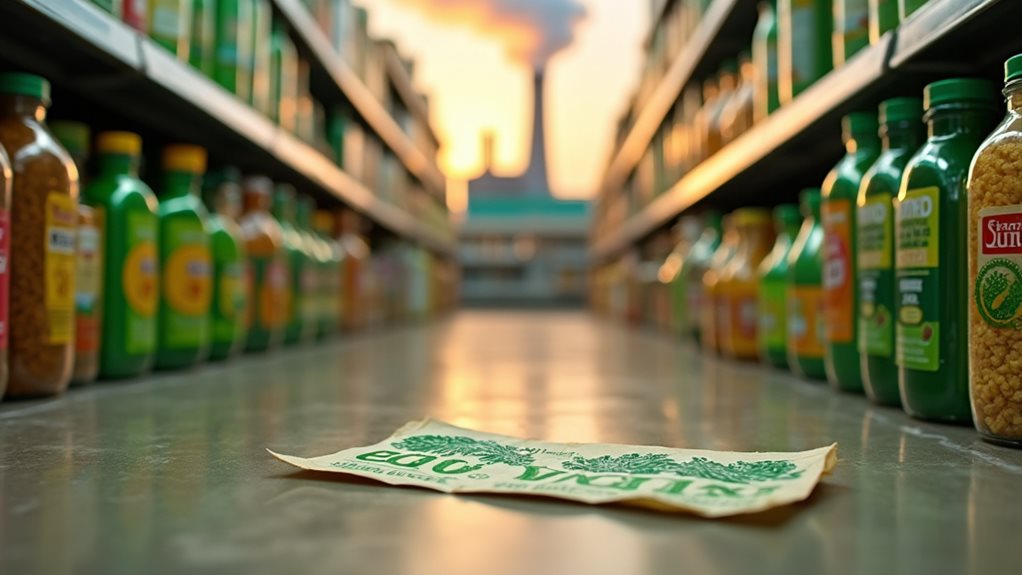

Green labels are losing their luster. Consumers are now skeptical, with many feeling misled by greenwashing—where companies inflate their sustainability claims. This confusion makes eco-shopping feel like maneuvering through a tricky maze. PR teams sometimes make it worse, misaligning their narratives with actual practices, which only deepens distrust. As eco-conscious shoppers seek authenticity, mixed messages and overloaded labels can alienate them. Who wouldn’t roll their eyes at that? Exploring how transparency can fix this mess might surprise you.
The Pitfalls of Green Marketing
As consumers become increasingly aware of environmental issues, green labels have emerged as the shiny badges of honor that promise eco-friendliness in products—yet, ironically, many people still find themselves reaching for the regular options instead. The allure of these labels draws in eco-conscious shoppers, but studies show that actual consumer behavior often tells a different story. While one might think a label proclaiming “green” would guarantee a sustainable choice, gaps between claims and reality can lead to skepticism and mistrust.
As eco-consciousness grows, many still opt for regular products, revealing a disconnect between green labels and consumer trust.
Enter the world of greenwashing, where PR teams sometimes inflate sustainability efforts like a hot-air balloon at a county fair. High-profile companies have been caught using slick marketing to obscure their environmental impact, leading to public outrage and a deepening distrust among consumers. Learning to identify false green claims can help consumers make truly sustainable purchasing decisions. Authentic storytelling, with a splash of transparency, could bridge this growing chasm. However, many remain unconvinced when confronted with overloaded labels that resemble a confusing game of Bingo rather than clear eco-indicators.
Consumers, it seems, often prioritize cost and product origin over sustainability claims. When faced with a choice between a pricey organic snack and a regular bag of chips, many will choose the chip that won’t break the bank. Yet, clear and recognizable labels can build trust, making consumers more willing to pay a premium for products that genuinely reflect their values. Unfortunately, inflated sustainability claims only erode this trust further. Interestingly, eco-labels seem to resonate more with those already tuned into environmental issues. Food production and distribution contribute to approximately 25% of CO₂ emissions, emotional connections and moral motivations can enhance the appeal of green products. However, without a solid foundation of truthful reporting and measurable outcomes, PR efforts run the risk of sounding like a catchy jingle without substance. Moreover, the growing need for corporate accountability drives the relevance of PR in sustainability.
As the conversation around sustainability evolves, it becomes increasingly clear that to regain consumer trust, both companies and their PR teams must align their narratives with authentic practices, or risk losing the eco-conscious audience they endeavor to attract.