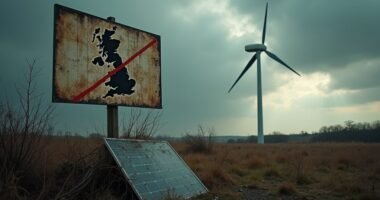

The U.S. has thrown down the gauntlet to the International Energy Agency (IEA), insisting it ditch its ambitious net-zero by 2050 plan or risk America’s exit from the organization. Energy Secretary Chris Wright labels these goals as “impractical fantasy,” stressing the need for strong eco-friendly transportation systems. Meanwhile, the IEA is trying to juggle U.S. pressures while maintaining support from European leaders who still value data-driven approaches. Curious about the repercussions for global energy security? Keep listening!
Quick Overview
- U.S. Energy Secretary Chris Wright labels net-zero by 2050 as an impractical fantasy and urges the IEA to abandon these goals.
- The U.S. threatens to exit the IEA if it does not prioritize competitiveness and re-industrialization over climate advocacy.
- The IEA is navigating U.S. pressure while showcasing expanding membership from emerging economies to demonstrate its strength.
- Mixed responses from member nations indicate skepticism and support towards the U.S. stance, emphasizing energy security over climate commitments.
- The absence of a final communique reflects the growing tension among IEA members on balancing climate ambitions with immediate energy needs.
The US Ultimatum: Implications for IEA’s Net-Zero Goals
U.S. Energy Secretary Chris Wright urged the IEA to abandon its ambitious net-zero by 2050 agenda, framing it as an impractical fantasy. Some experts argue that adopting eco-friendly transportation infrastructure is essential for resilience and energy security.
With a looming threat of a U.S. exit from the agency, the call for prioritizing competitiveness and re-industrialization over climate advocacy reshapes the IEA’s focus.
Such a pivot might not only alter the agency’s core mission but also challenge the very fabric of international energy cooperation. The assertion that current policy scenarios of the IEA fail to address fundamental energy security concerns adds weight to Wright’s argument.
How Is the IEA Responding to US Pressure?
Facing pressure from the United States, the IEA is commencing on a delicate balancing act that could reshape its future. Executive Director Fatih Birol cleverly sidestepped direct questions about abandoning net-zero scenarios, instead showcasing expanding membership from emerging economies as a sign of strength. European leaders rally behind the IEA’s commitment to data-driven analysis, dubbing it a “trusted pillar” amidst rising geopolitical tensions. As they emphasize the importance of rigorous analytical standards, there’s a sense that the IEA could adapt strategically without losing its essence. In the face of a storm, it seems the agency is determined to steer its ship wisely. Meanwhile, the threat of the U.S. to leave the IEA looms overhead, pushing the agency to navigate these turbulent waters carefully. The agency’s response may also influence industries like aluminium facing the CBAM phase-in rate adjustments amid changing policies. Additionally, market mechanisms are increasingly cited in policy discussions as tools to align climate and industrial goals.
Global Responses to the US Ultimatum: Consequences for Energy Security
While the United States pushes the International Energy Agency (IEA) toward a pivotal crossroads, member nations are responding with a mix of skepticism and support that may shape the future of global energy security. This shift underscores the growing emphasis on transparent disclosure in energy policy and sustainability reporting frameworks. The EU continues to champion the IEA as a “trusted pillar” despite US pressure to abandon net zero goals. Meanwhile, US Energy Secretary Chris Wright warns that pursuing net zero could lead to “economic suicide.” A one-year timeline has been given for the IEA to focus back on energy security, reflecting the urgency of US demands. In light of the recent discussions, concerns over the feasibility of achieving net zero emissions have emerged among various stakeholders. With dwindling consensus among IEA members, the absence of a final communique underscores the growing tension, leaving the energy landscape uncertain as countries weigh climate ambitions against immediate energy needs.