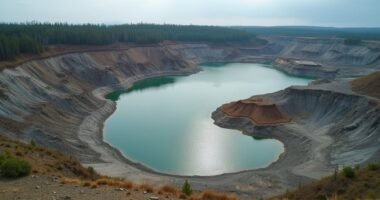

In the UK, mining projects have faced fierce opposition from local communities determined to safeguard their homes and identities. Historical events, like the miners’ strike of 1984-1985, show the power of collective action. Communities worry about losing their livelihoods and the ecological damage mining brings. The focus now is on balancing mineral extraction with community well-being. If these tensions aren’t addressed, projects may not just stall—they might collapse. Curious about the ongoing dynamics?
Quick Overview
- Community resistance to mining projects often stems from concerns over loss of livelihoods and local identities.
- Historical solidarity among miners fosters collective determination against corporate interests and project proposals.
- Grassroots organizing has proven effective in mobilizing communities to oppose detrimental mining initiatives.
- Community-led efforts align with conservation goals, emphasizing the importance of biodiversity and ecological health.
- Engaging locals in decision-making can transform opposition into collaborative efforts, ensuring both community well-being and mining viability.
Community Resistance: The Rise Against Mining Projects
As communities grapple with the shadow of mining projects looming over their landscapes, a spirited resistance is rising, reminiscent of a phoenix emerging from the ashes of a coal-fired past.
The opposition against proposed opencast mines, such as in Pont Valley and Derbyshire, underscores a collective determination to protect their homes. Local residents, armed with shared histories and values, view mining not just as an economic threat but as an invasion of their very identity. This collective effort echoes the historical solidarity among miners that was crucial for pushing back against economic pressures in the past. Furthermore, the decline in coal mining employment in the UK, with over 26 million person-days lost during the miners’ strike of 1984-1985, highlights the lasting impact of such struggles on communities. These community-led movements often align with broader conservation efforts to preserve biodiversity hotspots that could be irreversibly damaged by extractive industries.
With grassroots organizing, they challenge powerful corporations, proving that communities can indeed rise like a well-brewed cup of tea—strong, resilient, and ready to fight for their future.
Examples of Community Resistance Against Mining
What drives communities to stand up and resist the encroachment of mining projects? Often, it’s the fear of losing their livelihoods and local identities.
Communities often rise against mining projects, motivated by a deep-seated fear of losing their livelihoods and local identities.
For instance, during the 1984-1985 miners’ strike, Yorkshire miners rallied under the “Coal not dole” banner, showcasing their unity against pit closures. This strike was initiated in response to the closure of 20 collieries, resulting in 20,000 job losses. Meanwhile, in Nottinghamshire, dissent brewed as miners disagreed on strike legitimacy, leading to a breakaway union. Solidarity actions flourished, with women’s groups raising funds and railworkers threatening coal shortages. The historical significance of miners’ welfare initiatives emphasizes the importance of community bonds in resisting such encroachments.
These examples reflect how communities fiercely defend their economic foundations and social fabric, proving that unity can be a powerful force against mining incursions. Many mining-dependent regions now explore sustainable alternatives that balance economic needs while protecting biodiversity and forest resources for future generations.
Balancing Mining Needs With Community Concerns
Finding the right balance between mining needs and community concerns can be as tricky as walking a tightrope while juggling flaming torches.
Communities near former coalfields face a legacy of health issues and economic struggles, with life expectancy lagging behind the national average. As mining companies seek resources, they must acknowledge the scars left behind—poor health, high unemployment, and ecological risks. This is underscored by the significant decrease in coal mining effect on mortality rates over time, highlighting the long-lasting impacts of the industry. Additionally, knowledge of potential mining hazards allows for preventative measures to be implemented, which can mitigate risks to communities. Implementing site rehabilitation techniques can transform former mining areas into productive community spaces while restoring damaged ecosystems.
Engaging locals in decision-making can transform opposition into collaboration, ensuring that both mineral wealth and community well-being are prioritized.
After all, a thriving community is the real treasure, and nobody wants a minefield of discontent just for shiny minerals.