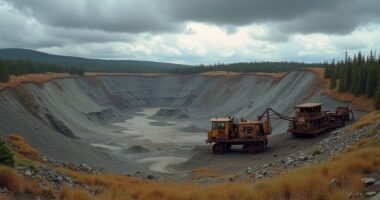

Abandoned mine waste heaps in the UK are like stubborn guests that just won’t leave, poisoning communities for decades. These toxic piles leach heavy metals and pollutants into the air and soil, causing serious health risks like respiratory issues and birth defects. It’s as if nature’s own version of a horror movie is playing out, with local residents stuck as unwitting extras. But fear not; innovative clean-up strategies are ready to tackle this mess and improve life for everyone involved.
Quick Overview
- Abandoned mine waste heaps release toxic heavy metals, causing long-term air and soil pollution in surrounding communities.
- Exposure to contaminants from mine waste increases health risks, including respiratory diseases and developmental issues in local populations.
- Acid mine drainage from these heaps severely degrades water quality, affecting drinking water sources and agricultural viability.
- Cleanup costs for abandoned mines often burden local communities, diverting funds from essential services and infrastructure.
- Ongoing remediation efforts are essential to mitigate pollution, improve community health, and restore local ecosystems.
How Do Abandoned Mines Affect Our Communities?
When one considers the impact of abandoned mines on communities, it becomes clear that these once-bustling sites can turn into ticking time bombs, ready to release a barrage of environmental and social issues.
Toxic waste piles and heavy metal dust linger like that awkward relative at family gatherings, polluting air and soil for centuries. Economically, these mines leave communities grappling with cleanup costs that could rival a small nation’s budget. Additionally, approximately two billion tonnes of metal consumed annually highlights the scale of the problem, as the residue from these mines continues to affect local ecosystems. The ongoing release of acid mine drainage exacerbates water quality issues, further threatening the health of surrounding communities.
Modern mining operations are increasingly implementing site rehabilitation techniques to prevent these long-term community impacts. Meanwhile, Indigenous populations often bear the brunt of this burden, facing environmental racism. As trust erodes and opportunities dwindle, the legacy of mining transforms vibrant towns into shadows of their former selves.
What Health Risks Does Mine Waste Pollution Pose?
Communities living in the shadow of abandoned mines often find themselves grappling with not just the remnants of industry but a host of health risks that can feel as insidious as a surprise guest at a party.
Exposure to heavy metals like mercury and lead can lead to serious issues, including brain damage and behavioral disorders. Industrial hardrock mining is the largest source of toxic waste in the U.S., and respiratory diseases soar in mining areas, with lung cancer rates climbing higher than a mountain peak. Moreover, dust generated from tailings impoundments can transport contaminants and pose significant health risks, especially for those living nearby.
Additionally, reproductive health takes a hit, with increased miscarriages and birth defects. The degradation of soil health near mine sites prevents sustainable agriculture, making it difficult for affected communities to grow safe food. Acid mine drainage adds yet another layer of danger, exposing residents to toxic elements that linger like unwanted house guests.
Remediation Strategies for Cleaner Rivers
Rivers are the lifeblood of ecosystems, but when they become tainted by mine waste, they turn into toxic ribbons, threatening both nature and human health. The UK’s Water and Abandoned Metal Mines Programme aims to halve polluted river lengths by 2038. Innovative solutions like the Force Crag scheme use compost and woodchips to naturally filter out metals, while chemical treatments like the Wheal Jane system tackle over 800 tonnes of pollutants annually. Despite being inactive since the early 1900s, these abandoned mines continue to contribute to water pollution in local rivers. The Barney Craig adit is a significant source of zinc and cadmium, adding to the urgent need for remediation efforts. These remediation projects align with global efforts to address water scarcity by ensuring clean water sources remain available for communities. These efforts not only restore water quality but also boost tourism and biodiversity, proving that cleaner rivers are the ultimate win-win for both people and nature.