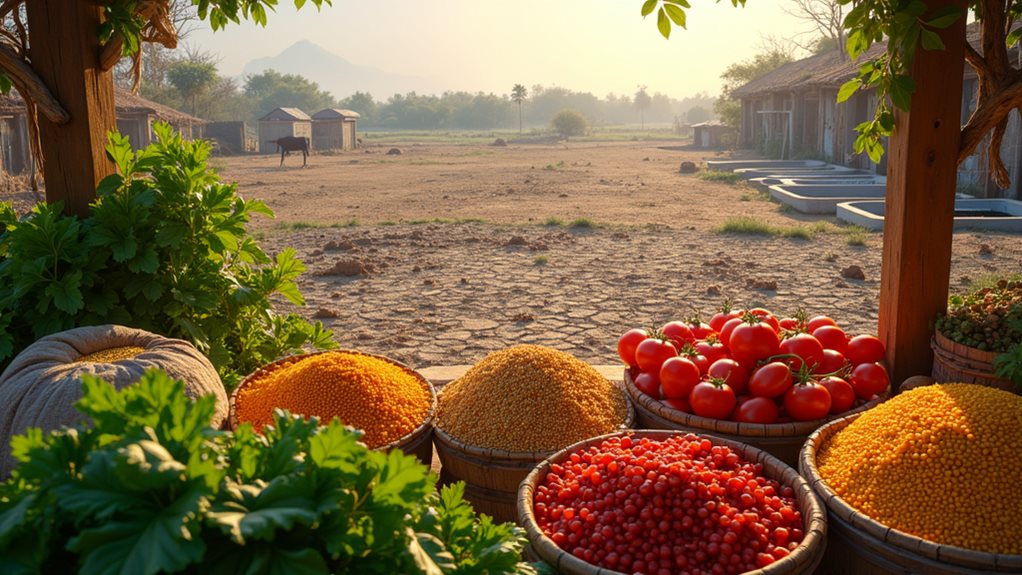

Shifting to healthy and sustainable diets in emerging economies means environmental gains, like cutting global water use by up to 14.73 percent—nature’s way of sipping instead of guzzling resources—but it kicks off affordability woes, with food costs spiking 13.06 percent initially. Picture it as a tightrope act: balancing planetary health against tighter budgets, where farmers juggle income from meat and dairy against their hefty environmental toll. Stick around for tips on turning these trade-offs into smart, long-term wins.
Environmental and Economic Trade-offs
As emerging economies grapple with the tantalizing promise of sustainable diets, one question lingers: How can we balance healthier eating habits with the planet’s finite resources? It’s like trying to juggle fresh apples while riding a wobbly bike—tricky, but doable with the right moves. By 2070, shifting to these diets could slash global water use by 1.21 to 14.73 percent, a win for parched rivers and thirsty farms. Yet, the early stages? A bit of a mess. Demand spikes, water use climbs up to 2.62 percent in developing nations, thanks to meat and dairy’s hefty toll—think methane burps from cows guzzling water and land like they’re at an all-you-can-eat buffet.
Economically, the shift stings at first, hiking food costs by up to 13.06 percent, leaving wallets thinner than a supermodel’s diet. But hang in there: long-term, affordability could soar by 9.29 to 63.23 percent globally, if we plan smart. Farmers face trade-offs, though—selling nutrient-packed animal products that boost incomes but wreck the environment. Picture a farmer torn between a juicy steak’s paycheck and the planet’s plea for veggies. Transitioning to food waste reduction practices could significantly offset these economic burdens while enhancing overall sustainability.
Nutritionally, the swap promises a 30.29 to 45.43 percent boost in dietary quality by 2070, proving that cheap eats can pack a nutrient punch without trashing the earth. Sure, those budget meals might skimp on vitamins, but with clever tweaks, they’re like a reliable sidekick—always there, culturally familiar, and less drama than ditching grandma’s recipes. Moreover, animal-sourced foods offer essential nutrients while posing environmental challenges, particularly in low- and middle-income countries where they provide vital social and economic benefits.
Socially, diets must mesh with local tastes and traditions, where livestock isn’t just food but a cultural lifeline in low-income spots. And governance? Governments need a “social contract” to realign power, ensuring ethical, affordable options through savvy policies. It’s like orchestrating a global potluck—everyone brings their dish, but we avoid the food fight. In the end, these trade-offs? Worth the enthusiastic push for a healthier planet. The findings are supported by grants from the National Natural Science Foundation.