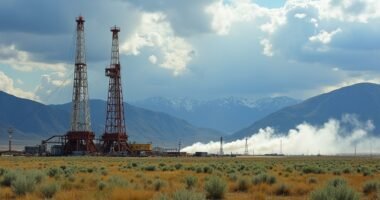

Shell is leading the carbon credit market, snagging millions of credits by focusing on nature-based projects like forestry. Think of it as buying eco-friendly band-aids for their emissions. However, critics argue that many of these credits are more about image than real climate impact, leading to accusations of greenwashing. With lofty goals like net-zero emissions by 2050, Shell’s strategy raises eyebrows about the balance between profits and planet-saving. Uncover more about the controversy brewing beneath the surface.
Shell’s Carbon Credit Strategy: A Double-Edged Sword
What happens when a giant oil company steps into the domain of carbon credits, promising to save the planet while still pumping fossil fuels? In a world where carbon credits are seen as the ticket to a greener future, Shell has taken the lead as the top buyer, snagging a jaw-dropping 14.1–14.5 million credits in 2024 alone.
That’s nearly three times more than Microsoft, which is like saying Shell’s football team is scoring hat tricks while others are still warming up on the sidelines. Yet, amidst this green parade, questions loom larger than the oil rigs themselves.
Shell’s strategy leans heavily on nature-based projects, specifically forestry and land-use, which accounted for 9.4 million of those credits. They also retired 2.4 million renewable energy credits, emphasizing cost-effectiveness.
While it sounds good—saving trees and all—that’s really just emissions avoidance, not the same as actually sucking carbon out of the air.
Saving trees may sound noble, but it’s merely emissions avoidance—not true carbon capture.
Think of it as putting a Band-Aid on a broken leg; it may look nice, but it won’t help you walk.
The average price of these credits was just $4.15, a bargain for a company looking to balance cost with a sprinkle of sustainability. Energy sector tied with financial sector as largest buyers of carbon credits shows that Shell is not alone in this strategy.
However, the integrity of Shell’s claims has been called into question. Critics argue that many of the projects they support lack real climate benefits, leading to accusations of greenwashing. The voluntary carbon market was designed to incentivize genuine emissions reductions, but without standardized verification, companies can exploit loopholes. It’s like trying to sell a diet soda as healthy while you’re still downing double cheeseburgers. Calls for more transparency have risen, especially as scandals in the voluntary carbon market unfold like a soap opera plot twist.
While Shell sets ambitious targets for net-zero emissions by 2050, their reliance on carbon credits raises eyebrows. Are these credits truly a responsible part of their climate strategy, or just a clever way to keep the fossil fuel engine running? Only time will tell if Shell can truly balance profit with planet-saving promises, or if they’re just mastering the art of looking good while doing bad.