
A recent science report has sounded the alarm: Earth has crossed a critical environmental boundary, marking a tipping point for ocean acidification and coral reef ecosystems. With increased acidity, marine life, especially coral, is in deep trouble—think of corals as the canaries in the ocean coal mine. Biodiversity loss is now a pressing concern, as these changes can ripple through food webs. The consequences are far-reaching, but there’s more to uncover about this complex issue.
Quick Overview
- Recent reports indicate that global warming has caused ecosystems, like coral reefs, to cross critical thermal thresholds, leading to severe biodiversity loss.
- Ocean acidification has increased dramatically, threatening calcifying organisms and disrupting marine food webs essential for global fisheries.
- The interconnected nature of environmental risks can trigger cascading failures across ecosystems, exacerbating the impacts of climate change.
- Coral reef degradation endangers over 25% of marine species and threatens the livelihoods of nearly one billion people relying on these ecosystems.
- Urgent restoration and sustainable practices are needed to prevent reaching irreversible tipping points in marine and coastal ecosystems.
Ocean Acidification: The Seventh Boundary Breached
Ocean acidification has officially taken the spotlight as the latest environmental drama, marking the seventh planetary boundary breached in our quest to understand Earth’s health.
Since the industrial era, ocean acidity has skyrocketed by 30-40%, primarily due to our good old friend, carbon dioxide.
Ocean acidity has surged by 30-40% since the industrial era, thanks to our old pal, carbon dioxide.
Cooler waters, like the Southern Ocean and Arctic, are the overachievers here, acidifying faster than their tropical counterparts. This shift threatens calcifying creatures, from pteropods to corals, leaving them in a shell of their former selves. Implementing sustainable fisheries practices is essential to reduce additional pressures on already vulnerable marine ecosystems. If we don’t act swiftly, we risk destabilizing entire marine ecosystems, and that’s no fishy business! International agreements are being developed to address ocean governance, which is crucial for ensuring the protection of vulnerable marine ecosystems amidst these changes. The ongoing biodiversity loss due to overfishing further exacerbates the challenges faced by these delicate marine systems.
Coral Reef Ecosystems: A Critical Tipping Point
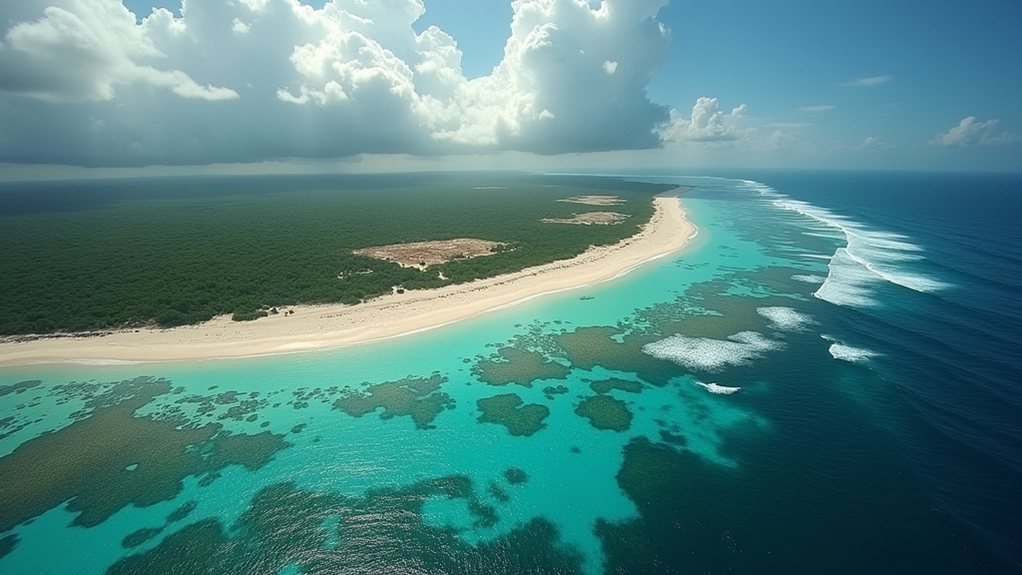
Coral reefs, often dubbed the “rainforests of the sea,” are reaching a critical tipping point as they grapple with the escalating impacts of climate change. With global warming now approximately 1.4°C above pre-industrial levels, reefs face a formidable probability of widespread loss, especially if temperatures stabilize at 1.5°C. A quarter of all marine life is endangered due to coral reef collapse, further exacerbating the crisis. Mass bleaching events, where corals expel their symbiotic partners, threaten over 25% of marine species reliant on these habitats. As the recovery window shrinks, the intricate web of life supported by reefs hangs by a thread, leaving nearly one billion people dependent on them for food and protection in jeopardy. The evidence of collapse profiles in large-scale ecosystems highlights the urgency of addressing the degradation of coral reefs. The loss of coral reefs represents a devastating blow to ecosystem services that support human wellbeing, including coastal protection, fisheries productivity, and biodiversity maintenance.
Interconnected Risks: Amplifying Environmental Challenges
As the climate continues to change, the interconnected risks faced by Earth’s ecosystems are becoming increasingly apparent, resembling a complex game of Jenga where every block removed threatens the entire structure.
Keystone ecosystems, like coral reefs, trigger cascading failures in food webs, amplifying species extinctions. Coral reefs have crossed a critical thermal threshold due to global warming, highlighting the urgent need for restoration efforts to prevent further ecological collapse. The report warns that nearly a billion people depend on these reefs for their livelihoods.
Forest loss can reduce rainfall, affecting distant regions with droughts. Habitat protection remains one of the most effective approaches to preserving biodiversity and maintaining forest ecosystem services.
Tipping elements, such as ice sheet instability, could lead to abrupt climate shifts.
Additionally, the degradation of coastal ecosystems exposes communities to storms and rising seas.
With these intertwined challenges, it’s clear: our environmental game of Jenga is precariously balanced, and one wrong move could spell disaster.