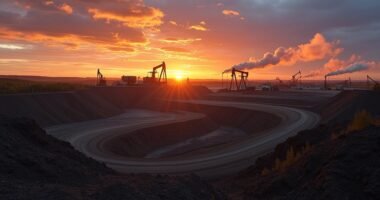

The Canada-Alberta Memorandum of Understanding (MOU) is a bold step in cutting methane emissions, aiming for a whopping 75% reduction by 2035. This plan’s got an April 2026 deadline that’s causing quite the buzz in Alberta’s oil and gas circles. Think of it as a high-stakes game of keep-up, where failure to comply could leave Alberta scrambling. With clever tech and funding to boot, the province’s future in energy production looks like a mixed bag; every move counts! Curious about the implications for Alberta’s economy?
Quick Overview
- The Canada-Alberta MOU aims for a 75% reduction in methane emissions by 2035, allowing Alberta to implement its own reduction strategies.
- Alberta achieved a 52% reduction in methane emissions from the oil and gas sector since 2014, demonstrating progress towards its goals.
- The April 2026 deadline is critical for compliance with federal regulations and impacts Alberta’s competitive positioning in the energy market.
- The equivalency agreement provides flexibility for Alberta in managing methane emissions while aligning with national reduction targets.
- Future strategies will focus on sustainable practices and digital solutions to ensure continued progress in methane reduction.
Understanding the Canada-Alberta MOU and Its Goals for Methane Reduction
While it might seem like just another bureaucratic agreement, the Canada-Alberta Memorandum of Understanding (MOU) is a significant step towards tackling methane emissions in the oil and gas sector.
Signed on November 27, 2025, this MOU paves the way for Alberta to replace federal regulations with its own, creating a streamlined approach to emission reductions. The ambitious goal? A 75% reduction in methane emissions by 2035, compared to 2014 levels. This MOU is crucial as it aligns with the federal government’s commitment to reduce methane emissions by 40% to 45% below 2012 levels by 2025. Additionally, the MOU aims to ensure that Alberta’s targets contribute to the national goal of a cumulative reduction of 304 megatonnes of CO2 equivalent from 2028 to 2040. The agreement also commits to sector-specific strategies that reflect best practices for monitoring and reducing emissions.
Key Approaches to Achieving 75% Methane Reduction by 2035
Achieving a 75% reduction in methane emissions by 2035 might sound like a lofty goal fit for a superhero movie, but Alberta’s strategy is all about harnessing technology and innovation to make it a reality. Engine optimizations and surface casing vent flow captures are just a few tools in this eco-friendly toolbox. With funding programs covering up to 50% of project costs, innovation is encouraged. Alberta’s commitment to meet federal regulations by 2026 adds incentive, while ongoing support for digital solutions guarantees progress. It’s like giving Mother Nature a high-tech makeover, proving that reducing emissions can be both effective and efficient! This approach has already led to a 52% reduction in methane emissions from the conventional oil and gas sector since 2014. Alberta is also aligning policy and investment to accelerate the deployment of renewable energy technologies alongside methane mitigation.
What the April 2026 Deadline Means for Alberta’s Oil and Gas Industry
As the clock ticks down to the April 2026 deadline, Alberta’s oil and gas industry finds itself at a pivotal crossroads, where regulatory agility meets the pressing need for sustainable practices. This deadline holds the key to an equivalency agreement, granting Alberta flexibility to manage methane emissions while dodging stringent federal rules. However, the five-year delay in compliance may leave Alberta’s competitive positioning in the dust as markets increasingly favor low-emission products. With methane’s potent warming potential, the stakes are high: Alberta must balance economic growth against environmental responsibility, or risk being the last car in a race for sustainability. As methane emissions contribute significantly to global temperatures, a 75% reduction in methane will be crucial for Alberta to meet its climate commitments. Carbon markets and offset projects could provide tools for Alberta to incentivize reductions while supporting industry transition. Alberta’s actions in the coming years will be critical in shaping its future in both energy production and climate commitments.