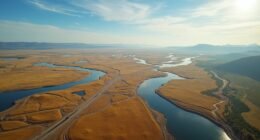

Peatlands are nature’s superheroes, storing more carbon than all forests combined and offering economic perks too—think flood protection and water filtration worth billions. Yet, they face threats from mining, climate change, and ineffective policies. Ottawa is urged to recognize peatlands as essential economic assets rather than just pretty green spaces. With strategies like sustainable farming and empowering Indigenous practices, we can protect these ecosystems. Curious about how to turn the tide for peatlands? There’s more to uncover!
Quick Overview
- Peatlands are vital for carbon storage, providing significant climate regulation and economic benefits, emphasizing their importance in national climate policy.
- Investing in peatland conservation can yield substantial economic returns, avoiding future costs associated with climate impacts and ecosystem degradation.
- Indigenous stewardship must be integrated into peatland management policies to enhance conservation efforts and respect traditional ecological knowledge.
- Sustainable management practices, such as paludiculture, can improve peatland health while providing economic opportunities and ecosystem services.
- Urgent action and stronger policies are necessary to protect peatlands, ensuring their role in climate mitigation and economic security for future generations.
The Critical Role of Peatlands in Climate Change Mitigation
While many might think of forests or oceans as the heavyweights in the fight against climate change, peatlands quietly steal the spotlight with their incredible carbon-sequestering prowess.
These wetland wonders store a staggering 550 gigatonnes of carbon, far surpassing even the most majestic forests. Functioning peatlands absorb 370 million tons of CO2 each year, acting like nature’s sponges. Restoration of peatlands can yield 2 to 6 CO₂-equivalent tons per hectare annually, highlighting their significant role in climate mitigation. Furthermore, effective restoration practices enhance biodiversity in these ecosystems, ensuring a healthier and more resilient environment. Protecting peatlands also preserves their role in providing ecosystem services that support livelihoods and water regulation.
When restored, they can trap carbon long-term, creating lush Sphagnum moss layers that serve as temporary carbon sinks. By rewetting drained areas, we can turn emission sources into carbon-holding heroes, greatly reducing greenhouse gas emissions and helping to stabilize our climate.
Current Threats Facing Peatlands and Their Climate Role
Peatlands, those unassuming yet powerful ecosystems, are not just sitting pretty as carbon sinks; they face a barrage of threats that could undermine their climate-saving potential.
From mining operations that drain these wetlands to make room for essential minerals, to the relentless advance of infrastructure projects across peat-rich areas, the stakes are high. Northern peatlands store 20-30% of the world’s soil carbon, making the protection of these ecosystems even more critical on a global scale. Sustainable management practices can help secure peatlands as long-term natural resources for future generations.
Mining and infrastructure encroach on peatlands, threatening their vital role as carbon sinks and raising the stakes for our climate.
Climate change adds fuel to the fire, causing permafrost to thaw and wildfires to rage, releasing stored carbon. Canada holds roughly a quarter of the world’s peatlands, making the protection of these ecosystems even more critical on a global scale.
Meanwhile, fragmented policies and insufficient protections leave these crucial habitats vulnerable.
Without immediate action, the climate benefits of peatlands could vanish faster than your favorite snack at a party.
Economic Strategies for Peatland Conservation
Recognizing the economic potential of peatland conservation is crucial, especially when considering the myriad benefits these ecosystems provide.
With over $225 billion in annual flood protection and water filtration services, peatlands are nature’s unsung heroes. Investing $28.3 billion in conservation could yield avoided mitigation costs exceeding $46 billion by 2050—think of it as nature’s best investment strategy! Additionally, peatlands store large amounts of carbon which plays a significant role in climate regulation. The importance of Indigenous-led conservation efforts further emphasizes the value of these ecosystems.
Policies supporting Indigenous stewardship and integrating peatland values into environmental reviews are essential.
Sustainable practices like paludiculture allow us to enjoy nature while keeping it healthy. A complementary approach is to incorporate natural infrastructure into planning to amplify ecosystem benefits.