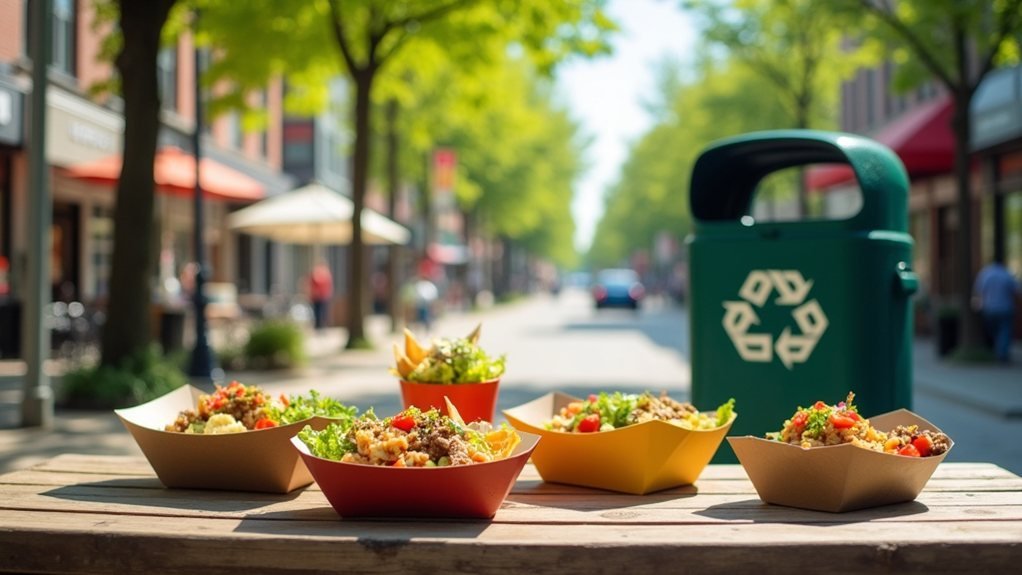

Ontario’s ban on polystyrene foam for foodservice containers kicks in 2026, aiming to clean up the planet one takeout order at a time. This means bye-bye to those clamshells, cups, and plates that stick around long enough to witness the next ice age. New recycling rules will help with the cleanup while businesses will need to switch to sustainable options like bagasse or bamboo, which are way better for Mother Earth. Curious about the details? There’s more to uncover!
Quick Overview
- Ontario’s ban on polystyrene foam for foodservice items will take effect on October 4, 2026.
- The ban includes clamshell containers, cups, and plates, prohibiting their manufacturing and sale.
- A new recycling program will be introduced alongside the ban, allowing clean foam packaging in blue bins.
- Sustainable alternatives like bagasse, molded pulp, and bamboo will replace polystyrene foam in takeout packaging.
- Growing consumer demand for eco-friendly products supports the transition to more sustainable packaging options.
Key Elements of Ontario’s 2026 Polystyrene Foam Ban
In 2026, Ontario is set to roll out a groundbreaking ban on polystyrene foam, a move that might just make takeout a little more eco-friendly. This ban targets both expanded and extruded polystyrene foam, specifically in foodservice items like clamshell containers, cups, and plates. Say goodbye to those foam leftovers! The prohibition includes manufacturing and selling these items, aligning with federal regulations that aim for zero plastic waste by 2030. The initiative addresses environmental consequences of foam products, which can persist in ecosystems for hundreds of years. With the new recycling program launching alongside the ban, clean foam packaging will finally find a home in the blue bin. Ontario is stepping up, making takeout greener—because who doesn’t want their meal served with a side of sustainability?
Compliance Essentials for the Polystyrene Foam Ban
As Ontario gears up to enforce its polystyrene foam ban, stakeholders in the foodservice industry find themselves at a pivotal crossroads.
By October 4, 2026, businesses must ditch polystyrene foam and comply with new recycling regulations. The introduction of standardized recycling lists on January 1, 2026, will simplify what’s accepted across the province, eliminating confusion. Producers will bear operational responsibilities under Extended Producer Responsibility (EPR), ensuring compliance with specific recovery targets. Starting in 2026, producers must also provide best efforts to meet management requirements for blue box materials, further emphasizing the need for compliance across all waste categories.
By October 4, 2026, businesses must eliminate polystyrene foam and adapt to new recycling regulations for a smoother transition.
This shift aligns with broader U.S. state regulations that are increasingly mandating sustainable packaging alternatives across North America.
With a phased approach to flexible plastics, it’s time for businesses to invest in proper processing infrastructure. After all, nobody wants to be the last one holding a foam container at the party!
Sustainable Alternatives to Foam Containers
While many might cling to the familiar comfort of polystyrene foam containers, a growing awareness of environmental impact has led to a delightful array of sustainable alternatives that are not only eco-friendly but also surprisingly practical. Bagasse, molded pulp, and PLA offer compostable solutions, while bamboo flaunts elegance in fine dining. Additionally, these alternatives significantly reduce landfill waste compared to traditional polystyrene foam, making them a responsible choice for businesses and consumers alike. As Ontario’s new recycling program expands to include foam packaging, the shift toward sustainability is gaining momentum. These eco-conscious options provide recyclable materials that can be reprocessed into new products, further extending their environmental benefits. Mushroom packaging, although more for cushioning than food, embodies innovation with its biodegradable charm.
Each option, from $0.09 to $0.20 per unit, showcases how sustainability doesn’t have to break the bank. As consumers become eco-conscious, these alternatives are like a refreshing change—just without the foam!