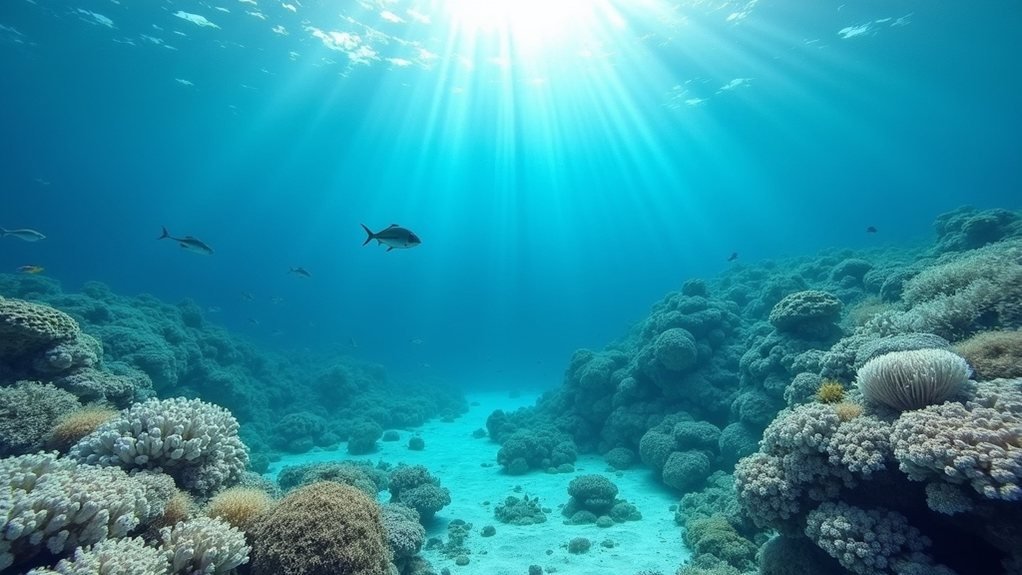

Marine heat waves are turning our oceans into “carbon toilets,” disrupting their ability to store carbon. These extreme temperature spikes, increasing MHW frequency by 34% since 1925, shift the ocean from a carbon sink to a potential source. It’s like a bank running out of savings, leading to higher CO2 levels. This impacts fish stocks, ecosystems, and economies reliant on healthy seas. Curious to find out how we might tackle this crisis?
Quick Overview
- Marine heat waves (MHWs) have increased ocean temperatures, weakening their ability to act as carbon sinks.
- MHWs disrupt carbon storage, transforming oceans from carbon sinks to potential CO2 sources.
- Increased surface organic matter fails to sink, resulting in carbon release by microbes back into the atmosphere.
- Disruption of marine ecosystems due to MHWs leads to biodiversity loss and compromised ecosystem services.
- Economic activities reliant on healthy oceans face significant challenges due to the impacts of MHWs on fisheries and tourism.
The Escalating Frequency and Intensity of Marine Heat Waves
As the ocean’s thermostat continues to crank up, it’s becoming increasingly clear that marine heat waves (MHWs) are not just a passing trend; they are here to stay, and they’re getting hotter. From 1925 to 2016, the frequency of MHWs soared by about 34%, with duration increasing by 17%. Today, extreme MHW days have tripled, averaging around 50 annually. In 2024, sea surface temperatures reached 0.6°C above the baseline, contributing to this alarming rise. Notably, the MHW frequency increased significantly in the North Sea, emphasizing the urgent need for comprehensive climate action. These devastating changes highlight the importance of natural solutions approach that can help mitigate climate impacts by restoring coastal ecosystems. Regions like the North Sea and Gulf of Maine are experiencing particularly severe MHWs, setting the stage for a warming ocean that’s anything but chill. This alarming trend is compounded by the fact that global warming accounts for almost half of marine heatwave occurrences, highlighting the critical need for immediate climate action.
Impacts on Carbon Uptake and Ocean Ecosystems
Marine heat waves have become the uninvited party crashers of our oceans, bringing along a suite of disruptive effects that change the very fabric of marine ecosystems and carbon dynamics.
These heat waves weaken the ocean’s carbon storage ability, transforming it from a carbon sink into a potential source of CO2. While organic matter production at the surface spikes, it fails to sink, allowing microbes to feast and release carbon back into the atmosphere. This disruption of carbon storage not only affects the immediate marine environment but also has far-reaching implications for global climate stability. Research shows that the biological carbon pump is overheating during these events, leading to an alarming accumulation of carbon-rich particles at depths of around 200 meters.
The loss of marine species diversity directly compromises the ecosystem services that healthy oceans provide to our planet and human communities.
With every heat wave, the delicate balance of ocean life and carbon cycling is upended, reshaping food webs and jeopardizing the planet’s climate goals.
Socioeconomic Consequences and Management Strategies
The ocean’s rising temperatures don’t just affect fish and coral reefs; they ripple through entire economies and communities, reshaping livelihoods and tourism sectors. Billions in economic losses stem from disrupted fisheries and aquaculture due to heatwaves, which can turn vibrant marine ecosystems into ghost towns. Marine heatwaves disrupt fisheries by affecting the abundance and health of fish stocks, leading to quick decisions required for sustainability. Notably, the global annual number of marine heatwave days has increased by 54% over the past century, which exacerbates these challenges. Tourism suffers as damaged coral reefs and beach strandings deter visitors. Sustainable fisheries practices offer a promising pathway for balancing human needs with ecosystem resilience in affected areas. To tackle this crisis, adaptive governance and robust forecasting systems are essential. Stakeholders need to stay informed and proactive, while global action to reduce warming is vital. It’s time to turn the tide, ensuring our oceans remain a source of life, not just a carbon toilet.