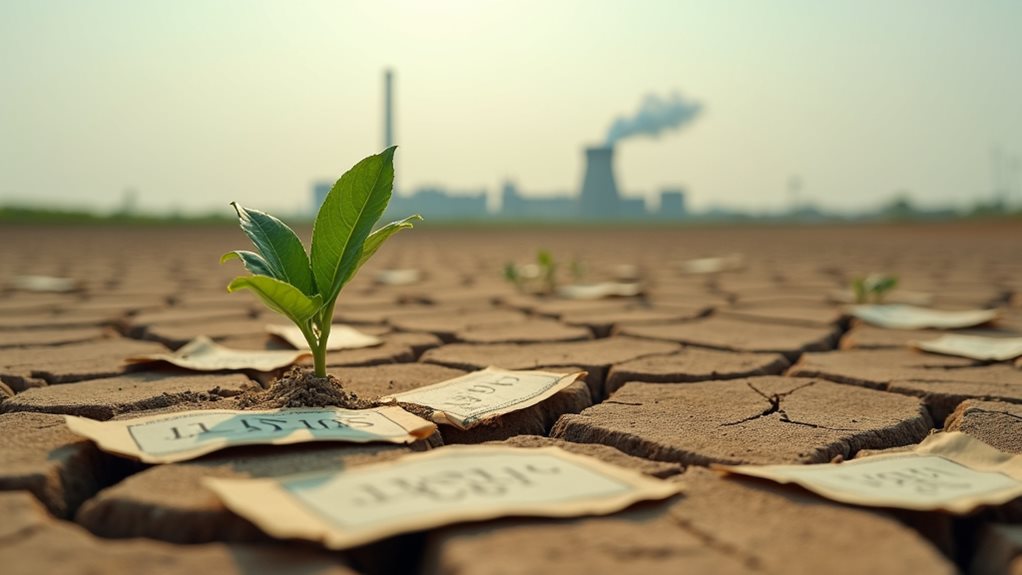

A recent Kyoto University study reveals a shocking truth: 87% of carbon offsets used by top companies are considered low-quality. This eye-opener shows that many offsets come from outdated projects, failing to meet high standards of emissions reduction. It’s like putting a Band-Aid on a leaky faucet! Companies often chase cheap credits, which undermines their climate pledges. As the carbon market faces these challenges, there’s plenty more to uncover about what this means for our planet’s future.
Low-Quality Carbon Offsets Exposed
In a revealing dive into the murky waters of the voluntary carbon market, a recent study from Kyoto University has cast a spotlight on the troubling trend of low-quality carbon offsets.
The research, published in *Nature Communications*, examined the practices of 20 companies that collectively accounted for more than one-fifth of all offsets retired from global registries over the past four years companies collectively account for more than one-fifth of all offsets retired worldwide.
Industries like oil, aviation, and automotive were scrutinized, leading to eye-opening findings that challenge the credibility of corporate climate claims.
Shockingly, a staggering 87% of the offsets used by these top corporate buyers were deemed low-quality.
A shocking 87% of carbon offsets used by major corporations are classified as low-quality.
Most of these credits originated from projects that were at least a decade old, raising concerns about their actual emissions impact.
It’s like relying on a ten-year-old cell phone to keep up with today’s tech trends—ineffective at best.
Many of these offsets failed to meet industry standards for credible decarbonization, meaning they often didn’t deliver the emissions reductions that project developers promised.
The study revealed that companies prioritized cheap offsets to keep costs down, undermining their own net-zero pledges.
This strategy is akin to opting for fast food instead of a nutritious meal—you might save a buck, but it won’t nourish your carbon footprint.
The predominant use of credits from older projects not only risked “double counting” but also showed a lack of genuine commitment to reducing emissions.
Many credits were tied to outdated renewable energy projects or forestry initiatives that wouldn’t have needed offset funding to succeed.
These quality issues have serious market implications, eroding public trust in corporate climate initiatives.
The study advocates for stricter standards and third-party verification, urging companies to shift focus from offsets to direct emissions reductions.
As researchers call for regulatory reforms, the hope is to restore integrity to the voluntary carbon market, transforming it from a marketing tool into a genuine path toward sustainability.
In addition, the research highlighted that buyer choices drive the problem of low-quality credits, rather than solely supplier practices.
The findings underscore the importance of well-regulated carbon markets that can effectively channel investments toward genuine emission reduction projects rather than questionable offsets.