
Gas prices are gearing up to exceed $3 per gallon, thanks to recent strikes in Iran that have shaken the global energy market. Analysts warn that prolonged tensions could push prices even higher. With crude oil costs on the rise, consumers can expect to feel the pinch at the pump. It’s like watching your favorite sports team under pressure—the stakes are high, and the action is intense! Stick around to see how these shifts might play out.
Quick Overview
- Brent crude prices have recently risen to around $73 a barrel, impacting gas prices significantly.
- Experts project that gas prices could rise to $3.10-$3.20 per gallon due to current geopolitical tensions.
- Seasonal demand and shifts toward summer blends will contribute to rising gas prices above $2.90 per gallon.
- Analysts note a more than 60% chance that gas prices will exceed the $3 mark if the situation escalates.
- Ongoing events, particularly in Iran, introduce uncertainty that may lead to unexpected spikes in gas prices.
How the Iran Strikes Impact Gas Prices
The recent strikes in Iran have sent ripples through the global energy market, kind of like when you accidentally drop your ice cream cone on a hot day—sticky, messy, and a bit shocking. These disruptions also spotlight the importance of integrating natural systems to help stabilize environmental impacts tied to energy production.
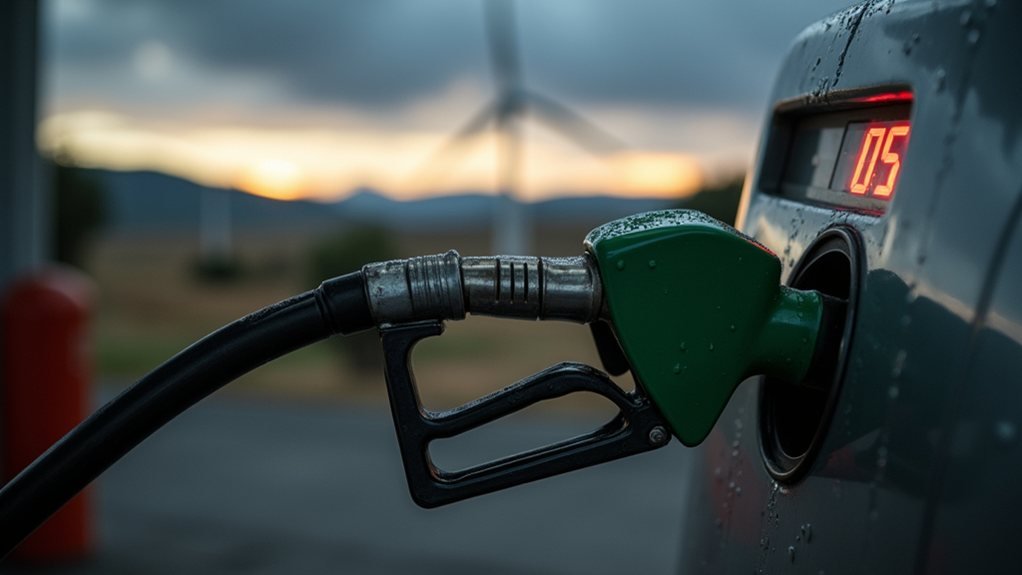
In the wake of these tensions, Brent crude skyrocketed to $73 a barrel, jolting gas prices. With projections suggesting a rise to $80 if hostilities persist, consumers are already feeling the sting at the pump. Current gas prices average around $2.98 per gallon, but experts predict an uptick towards $3.10-$3.20. If conflict escalates, we could see prices soar well above $3, making every trip to the station a hefty gamble.
Causes of Rising Gas Prices
Rising gas prices often feel like an uninvited guest showing up just when you thought the party was winding down. Factors like crude oil prices—dictating a hefty portion of the pump cost—play a big role. Increases in crude oil prices lead to higher gas prices, exacerbating the financial strain on consumers. Additionally, the burning of fossil fuels contributes to greenhouse gas emissions, which can indirectly influence energy policy and market stability. As the U.S. raid on Venezuela may create fluctuations in the oil market, it adds another layer of uncertainty for consumers at the pump.
Higher taxes and government regulations, especially in states like California, also add to the pain at the pump. Seasonal shifts can create a rollercoaster effect, with summer vacations driving prices up. Meanwhile, regional differences emerge, as refinery access varies considerably. So, while prices climb, keep in mind they’re influenced by a mix of demand dynamics, taxes, and those tricky seasonal fluctuations.
What You Can Expect for Fuel Costs?
As consumers gear up for trips and errands, the question on everyone’s mind is just how high fuel costs will climb over the next few weeks. Gas prices are expected to hover above $2.90, with more than a 60% chance of breaching the $3 mark. With seasonal shifts bringing pricier summer-blend gasoline, drivers might want to budget accordingly. Businesses and consumers alike are increasingly focused on carbon emissions reduction to help mitigate environmental impact and future costs. Additionally, natural gas production could influence fuel prices, as ongoing forecasts suggest growth in production that may help mitigate some price surges. Moreover, geopolitical events could spike prices unexpectedly, making even routine fills feel like expensive adventures. Analysts have noted the potential for a bearish engulfing pattern in natural gas prices, which could further impact fuel costs.