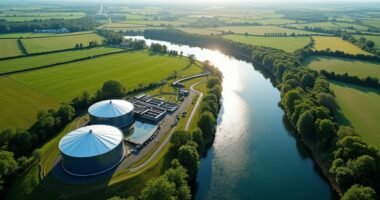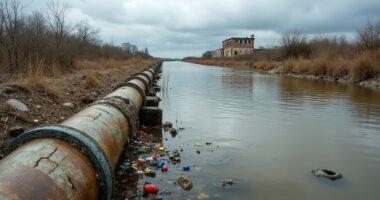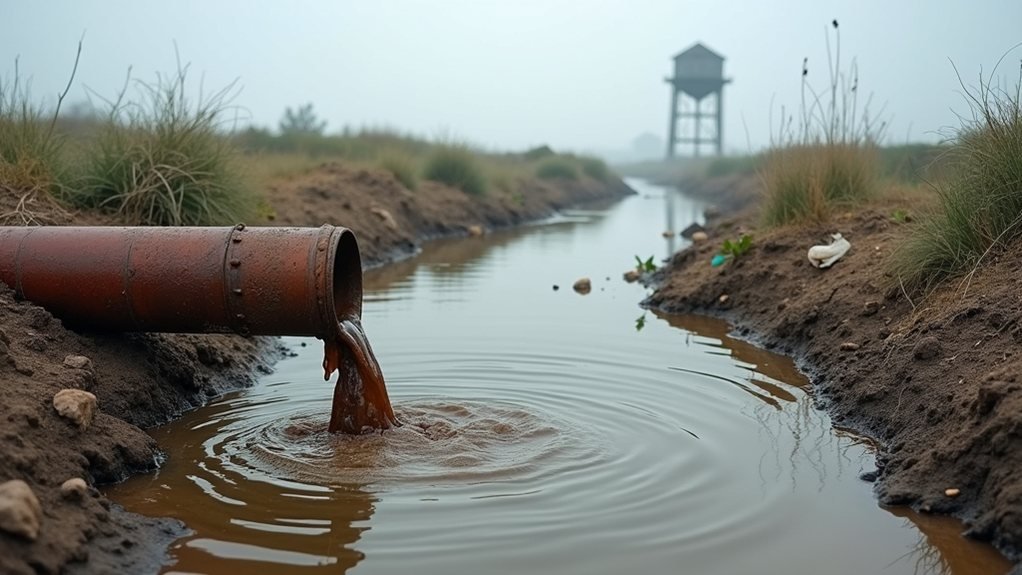

The UK’s water privatization experiment has turned out to be a cautionary tale. Instead of sparkling upgrades, Thames Water is drowning in £14 billion of debt, prioritizing shareholder returns over essential repairs. With over 100 prosecutions, their environmental track record resembles the Wild West with sewage spills becoming the unfortunate norm. Chemical chaos in rivers threatens both wildlife and health, resembling a horror story more than a reform success. Tap into more of the tangled tale ahead.
Quick Overview
- Numerous sewage spills from outdated infrastructure threaten public health and aquatic life in the UK.
- Chemical contaminants in rivers highlight environmental failures of water privatization, affecting wildlife and causing public health crises.
- Thames Water faces heavy penalties and criticism for prioritizing shareholder returns over necessary infrastructure improvements.
- Campaigns push for accountability and investment in infrastructure, targeting reduction in leakage and updating water systems.
- No UK rivers meet good chemical standards, showcasing water companies’ negligence and regulatory shortfalls.
The Failures of UK Water Privatization
How could a plan meant to streamline and innovate turn into such a notorious debacle? Enter UK water privatization: a vision of tapping fresh ideas and efficiency, now a swamp of woes.
Thames Water, for example, submerged in £14 billion debt while prioritizing shareholder returns over infrastructure. Picture Victorian-era sewage systems unchanged, like the internet running on dial-up. Over 100 prosecutions have been launched against Thames Water, with penalties amounting to £178 million mainly for environmental offences. One method for evaluating performance in privatized utilities is the use of sustainability metrics to assess environmental and social impacts throughout the supply chain.
These assets weren’t just stripped; they were leveraged like an overenthusiastic investor playing Monopoly. With sewage spills and outdated pipes, companies neglected necessary repairs. Additionally, there has been a continuous neglect in modernizing outdated sewage systems, leading to significant environmental and public health issues.
Dividends to shareholders flowed generously, yet essential investments dwindled. The result? Private gain, public pain—neatly packaged and unsustainable.
How Water Mismanagement Hurts Us
Water mismanagement in the UK isn’t just a leaky faucet; it’s a gushing waterfall of problems.
E. coli making a splash at your local river? That’s just the beginning.
Every English river is a chemical cocktail, with trifluoroacetic acid shaking things up – a real party crasher for fish.
Swim spots feel like petri dishes as sewage has its uninvited dips.
Meanwhile, Belfast Lough’s shellfish are dodging sewage like waterlogged dodgeballs.
With water reduction strategies, individuals can actively contribute to reducing the impact of sewage spills and chemical contamination.
The kicker? Wales records a sewage spill more often than a sneeze.
The improved quality of bathing waters in England, with 93% rated as ‘Excellent’, ‘Good’, or ‘Sufficient’, marks a significant step forward in tackling pollution.
The oversight in chemical regulation means no river in England achieves good chemical status, underscoring the critical need for proactive source control.
This water mismanagement isn’t a quirky plot twist—it’s a script for disaster on loop.
Campaigns and Solutions for Water Reform
Why settle for muddied waters when a clean flow is within reach? The UK water reform campaigns aim to transform chaos into clarity, like a fairy godmother with a plumbing license.
The newly unified regulator, eco-warriors in disguise, promises to hold polluters accountable while keeping household bills predictable. Picture £104 billion pouring into infrastructure like a rainstorm after a drought, tackling the scandal head-on. A new Performance Improvement Regime has been implemented to ensure rapid intervention for any underperforming companies, prioritizing transparency and accountability. To safeguard against future shortages, there’s also a robust focus on sustainable water management to optimize usage and replenish sources. As part of these efforts, there is a significant emphasis on water security, with ambitious leakage reduction targets set at 30% by 2032 and 50% by 2050.
Meanwhile, the Water Ombudsman steps in, ensuring justice flows smoothly. With efficiency initiatives and public demands for reform, there’s a fresh wave of accountability, plus a cheeky ban on unfair bonuses.
It’s clean water magic.