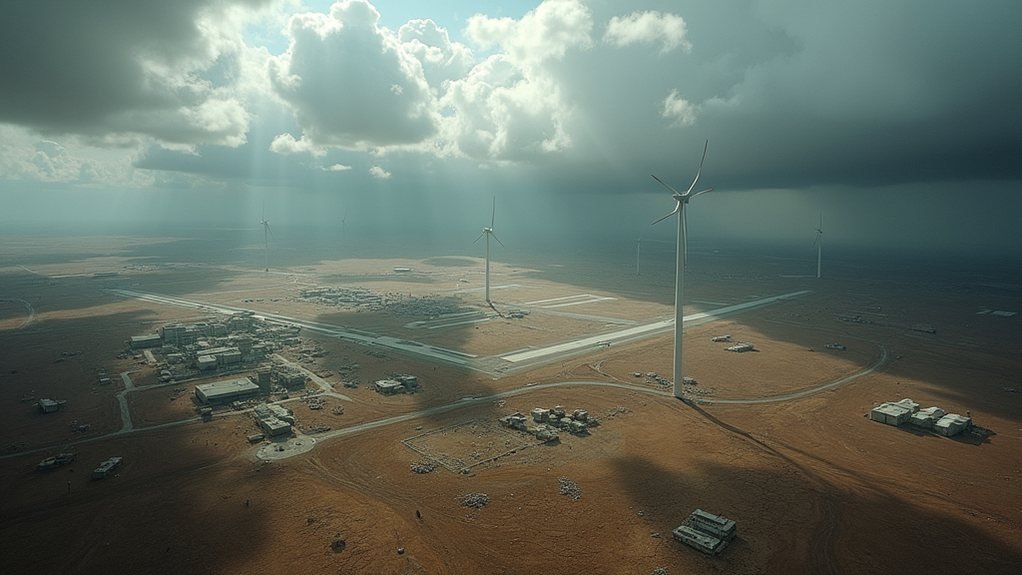

The U.S. military is no stranger to climate challenges; over half its bases now battle severe weather threats. Imagine this: 67% of key installations face risks of flooding, like an unwelcome water balloon fight. With rising temperatures leading to more heat-related illnesses, the financial dial could hit $387 billion in climate damages over the next 25 years. The military’s got strategies to boost resilience, proving that adapting to climate change is just as essential as combat readiness. Curious about their game plan?
Quick Overview
- Over half of U.S. military infrastructure is at risk from severe weather, including flooding and extreme temperatures.
- The Department of Defense may spend $387 billion on climate-related damages over the next 25 years.
- 67% of priority military installations are facing significant flooding threats, impacting their operational readiness.
- Rising temperatures are leading to increased heat-related illnesses among troops, jeopardizing their health and effectiveness.
- Integrating climate change considerations into military planning is essential for maintaining readiness and resource allocation.
How Vulnerable Are Our Military Bases to Climate Change?
How prepared are military bases to tackle the growing threats posed by climate change? The reality is sobering: over half of U.S. military infrastructure faces severe weather risks.
Flooding, wildfires, and extreme storms are not just inconvenient; they threaten operations and safety. For example, 67% of 79 priority installations are already grappling with flooding threats. Additionally, the Department of Defense survey shows that extreme weather affects military sites in every state. Furthermore, rising temperatures could crank up heat-related illnesses among troops. With projections of increased hurricanes and droughts, it’s like Mother Nature decided to throw a party—only she forgot to send the invitations. Moreover, the financial burden of climate change is expected to reach $387 billion over the next 25 years, which could strain military resources even further.
Flooding, wildfires, and extreme storms pose serious threats to military operations and safety, with 67% of key installations facing flooding risks.
Scientific evidence shows that increasing greenhouse gas concentrations are driving much of the observed warming, making global temperature rise a central challenge for planning and resilience.
The stakes are high, and military readiness depends on addressing these vulnerabilities head-on.
Understanding the Financial Impact of Climate Change on Defense Infrastructure
A staggering $387 billion—yes, you read that right—is the price tag the Department of Defense (DoD) is projected to shell out over the next 25 years to tackle climate-related damages and bolster resilience in military infrastructure.
Rising sea levels and extreme weather threaten essential installations like naval bases and airfields, with storm-related disruptions costing an eye-watering $7.5 billion annually. Rising military expenditure poses substantial risks to climate action initiatives, diverting resources that could otherwise be used to enhance resilience. In addition, recent floods and landslides in Brazil highlight the climate change impact, creating a pressing need for proactive disaster preparedness.
The irony? Investing in resilience now could save seven times the cost later—like paying for an umbrella before the storm, instead of after it soaks you to the bone. Studies show that strategic emissions reduction and resilience planning across sectors often yields net economic benefits over time.
Proven Strategies for Military Resilience Against Climate Threats
In the face of mounting climate challenges, the Department of Defense has initiated a mission to fortify its military installations against environmental threats. Strategies include the Army Climate Assessment Tool, which identifies climate risks, and Installation Climate Resilience Plans that address severe weather. By 2035, installations will feature microgrids for energy self-sufficiency and a fleet of hybrid vehicles will help cut fuel needs. Training programs guarantee soldiers are equipped for extreme conditions. Climate change implications are integrated into strategy, planning, acquisition, and supply chain processes. With ambitious emission reduction goals, the Army is not just preparing for the future; it’s charging into it, ready to tackle climate change like a well-trained soldier on a mission. The establishment of the Army Climate Change Working Group (ACCWG) further enhances the Army’s ability to assess and respond to climate-related challenges. This approach draws on climate risk guidance to align business and operational planning with resilience objectives.