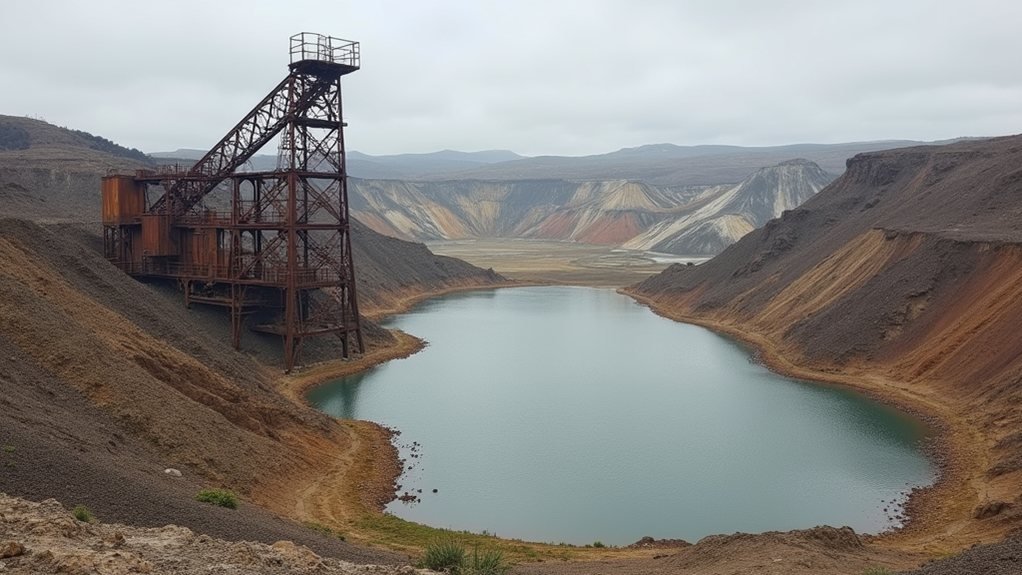

Abandoned mine sites are like financial black holes, with cleanup bonds often failing to cover the long-term costs. This leaves taxpayers in a lurch, footing a bill that balloons with environmental issues. Imagine signing up for a party, only to find out you’re hosting it alone! With cleanup costs projected to soar to $26.29 billion by 2050, sustainable solutions and innovative technologies offer a silver lining. Who knew remediation could be both a challenge and an opportunity?
Quick Overview
- Reclamation bonds for critical minerals often underestimate the long-term cleanup costs, leaving significant financial liabilities unaccounted for.
- Abandoned mines contribute to rising cleanup expenses, with total unreclaimed costs projected to reach $26.29 billion by 2050.
- Taxpayers disproportionately shoulder cleanup costs due to inadequate funding and responsible party identification for older mines.
- Environmental contamination from mining practices complicates remediation efforts, increasing costs and public safety concerns.
- Sustainable solutions and innovative technologies are essential to effectively manage long-term cleanup challenges associated with critical minerals.
Understanding the Financial Risks Associated With Abandoned Mine Sites
Maneuvering the financial landscape of abandoned mine sites can feel a bit like trying to read a treasure map that’s been scribbled over with a crayon—confusing and riddled with hidden pitfalls. Reclamation bonds often underestimate long-term costs, leaving a gaping hole in financial assurance. Modern regulations are in place, yet many older mines have no responsible parties or adequate coverage, forcing taxpayers to shoulder the financial burden. As environmental issues unfold, remediation costs balloon, like a surprise party nobody wanted. Evaluating the complete lifecycle impacts of mining operations could help regulators better anticipate and prepare for long-term environmental remediation needs. In the end, the treasure hunt for cleanup funding might just lead to a bottomless pit of expenses. The ongoing physical burden of these mines poses challenges for future generations as subsidence occurs when subterranean voids lack support, leading to ground surface collapse. Moreover, the contamination of soil and water tables with heavy metals and toxins like mercury and arsenic from these abandoned sites could exacerbate cleanup efforts and financial liabilities.
The Burden of Cleanup Costs for Abandoned Mines
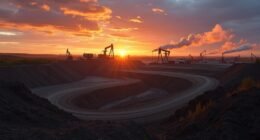
As the sun sets on the vast landscapes of the American West, a hidden burden looms—abandoned mines that, instead of shining a light on opportunity, cast shadows of financial despair.
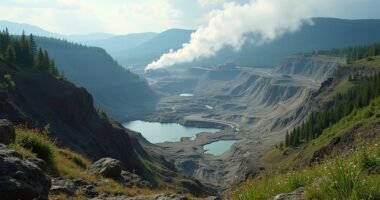
With over 141,000 identified, these sites threaten public safety and demand staggering cleanup costs, estimated at $20.9 billion and rising. Federal taxpayers are primarily responsible for these cleanup costs, compounding the financial strain on already tight budgets. Recent estimates suggest that the total unreclaimed costs could reach $26.29 billion by 2050.
States like Arizona face challenging bills, forcing tough choices between education and environmental remediation.
Following the waste hierarchy principles would help prevent such environmental disasters in the first place by prioritizing prevention over cleanup.
As federal agencies pour billions into cleanup efforts, the burden remains heavy.
Who knew mining could leave behind such a costly legacy? The reality is, these mines are less gold mines and more financial black holes.
Sustainable Solutions for Long-Term Mine Remediation
The tale of abandoned mines is not just one of financial burdens but also of opportunity—an opportunity to reshape the future of mining through sustainable solutions for long-term remediation.
Enhanced water evaporation technologies, like a high-speed jet for water, promise efficient cleanup by reducing wastewater while tailings reprocessing achieves a staggering 99% metal recovery. Additionally, effective management of tailings facilities is crucial to prevent environmental contamination during the remediation process. Implementing green building principles during mine restoration can significantly reduce the environmental footprint of remediation projects.
Meanwhile, carbon dioxide mineralization takes a clever twist on chemistry, recovering rare earth elements with minimal fuss.
Carbon dioxide mineralization cleverly recovers rare earth elements, showcasing innovative chemistry with minimal complexity.
Upgraded infrastructure and rigorous environmental monitoring guarantee that mine sites can be transformed from toxic wastelands into safe, productive landscapes, proving that cleanup can be both profitable and environmentally friendly.