
Congress has just passed a budget for the EPA that comes with some major deregulation moves. The cuts, totaling $8.8 billion, threaten essential programs like Superfund and safe drinking water initiatives. As funding disappears, so does a layer of protection against pollution. Imagine it like letting the fox guard the henhouse – more pollutants in our air and water. Stay tuned to dig deeper into what these changes really mean for everyone’s health and the environment.
Quick Overview
- Congress approved a 4% budget cut for the EPA, reducing funding to $8.8 billion, the lowest since 2012, impacting environmental programs.
- Major deregulation measures are anticipated, leading to increased air and water pollution and delaying critical vehicle emission standards.
- Significant reductions in funding for state revolving funds threaten safe drinking water and environmental enforcement efforts across multiple states.
- Environmental justice advocates warn that these budget cuts disproportionately affect marginalized communities, raising public health concerns.
- Legal challenges from environmental groups are expected as the balance between industry interests and community safety becomes increasingly precarious.
Overview of the New EPA Budget Cuts
As the dust settles on the latest budget negotiations, one might wonder how the Environmental Protection Agency (EPA) found itself facing significant budget cuts, akin to a once-vibrant garden now pruned back to its roots.
The EPA’s budget was slashed by 4%, totaling $8.8 billion for FY2026—its lowest since 2012 when adjusted for inflation. Cuts are seen as favorable to polluters, leading to increased air and water pollution. Additionally, the budget includes elimination of funding for the Department of Energy’s Office of Clean Energy Demonstrations, further undermining clean energy initiatives.
While advocates feared severe cuts, a bipartisan bill managed to soften the blow, avoiding the drastic 55% reduction initially proposed. [Still, funding for critical programs, like the Superfund and state water initiatives, now dangles precariously, leaving environmental stewards holding their breath for future blooms.]
Still, funding for critical programs, like the Superfund and state water initiatives, now dangles precariously, leaving environmental stewards holding their breath for future blooms. The new allocation highlights ongoing tension between environmental protection goals and budgetary constraints.
Effects of the New EPA Budget on Environmental Programs
With the EPA’s budget cuts now a reality, the impact on essential environmental programs is like a sudden winter frost on budding flowers, leaving many in the conservation community anxious about the future.
A staggering $2.46 billion reduction in state revolving funds jeopardizes safe drinking water, while the Superfund program’s $250 million cut stalls toxic site cleanups. In fact, over 50% of states have cut environmental agency budgets in the last 15 years, exacerbating the challenges faced by these programs.
A $2.46 billion cut to state funds endangers safe drinking water, while $250 million slashed from Superfund delays crucial toxic site cleanups.
Categorical grants slashed by $1 billion threaten state enforcement efforts, hampering pollution control. Additionally, the endangered species budget is at a 2004 low, leaving over 400 species in limbo. Fewer inspections and staff mean that the path to a cleaner environment now seems more intimidating than ever.
What Deregulation Means for Environmental Protections?
Although many may view deregulation as a necessary step toward economic growth, its implications for environmental protections can resemble a double-edged sword, cutting both ways.
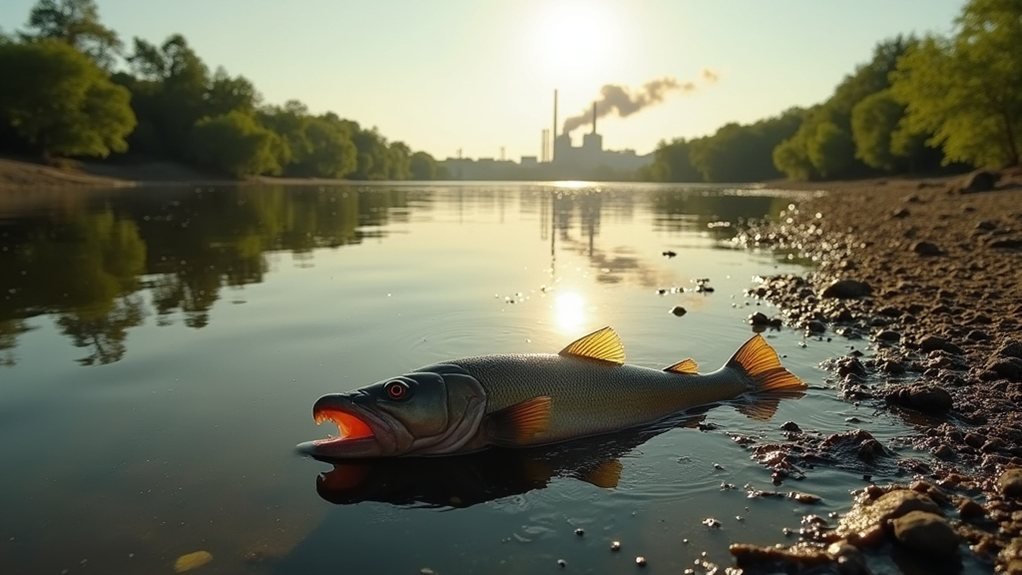
The recent EPA budget allows for increased pollutants in waterways, delays on vital vehicle emission standards, and a rollback on air quality regulations. EPA’s delayed wastewater standards have the potential to introduce an estimated additional 660 million pounds of pollutants into U.S. waterways annually. The rollback of protections is described as a calculated injustice against marginalized communities.
Imagine trading cleaner air for a slightly cheaper gas bill—sounds tempting, right? But with additional cancer risks and public health concerns lurking, the stakes are high.
As environmental groups gear up for legal battles, the balance between industry freedom and community safety hangs precariously in the balance. Choices made today echo tomorrow. Environmental justice is essential to understanding who bears the costs and who benefits from deregulation—and why the distribution of burden matters.