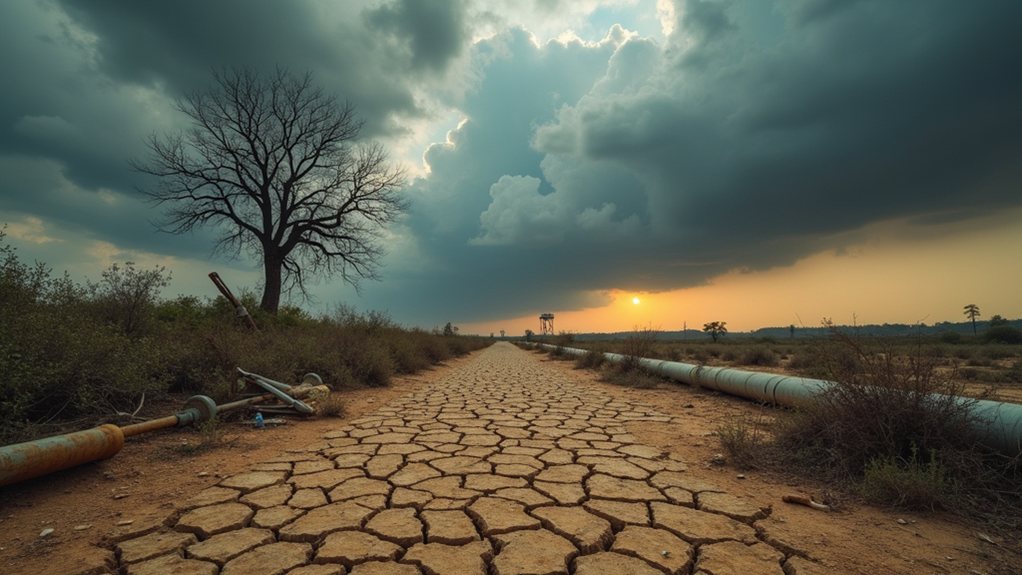

Time is running out for humanity to fight climate change. The carbon budget for staying below 1.5°C of warming is alarmingly tight—only three years at our current emission pace. With global emissions at a staggering 40 Gt CO₂ annually, it’s clear that fossil fuels and deforestation are our biggest foes. To avoid catastrophe, we need to pivot to cleaner energy and protect carbon sinks. Curious about what steps can be taken or the real stakes? Let’s explore!
Urgent Call to Action on Climate Change
In the race against climate change, the clock is ticking—and it’s not just a gentle reminder but more like an alarm bell ringing in your ear.
With only 130 gigatonnes (Gt) of CO₂ left in the carbon budget for a 50% chance of keeping global warming below 1.5°C, the urgency is palpable.
At the current annual emissions rate of about 40 Gt CO₂, this precious budget will vanish in a mere three years.
For those who like to play it safe, a 66% certainty requires even more caution—just 80 Gt CO₂ remain, which could be used up in less than two years.
It’s a wobbly tightrope walk, and every step counts.
The world emitted a staggering 53.6 Gt CO₂-equivalent annually from 2014 to 2023, with fossil fuels, deforestation, and industrial activities leading the charge.
The planet belched out a jaw-dropping 53.6 Gt CO₂-equivalent each year—fossil fuels and deforestation leading the charge.
Current projections suggest that by 2024, global temperatures might already be at 1.36°C, indicating that human-induced warming is escalating rapidly.
That’s right—climate change is not just knocking on the door; it’s practically moved in and is rearranging the furniture.
If the world exceeds that 1.5°C threshold, brace for a rollercoaster of extreme weather events—think hurricanes with a flair for drama and wildfires that rival Hollywood blockbusters.
The longer society delays action, the more costly it becomes to adapt to these changes, much like putting off a dental appointment only to discover a root canal is in order.
This decade is vital. The remaining carbon budget for 83% likelihood to stay under 1.5°C is only 30 Gt CO₂, highlighting the need for immediate action.
Nearly 200 countries have agreed to the 1.5°C target in the Paris Agreement, yet persistent high emissions from coal, oil, and gas use threaten to send this goal packing.
To preserve our carbon sinks and stave off climate disaster, a swift shift to cleaner energy, reforestation, and smart policies is essential.
Understanding and calculating your personal carbon footprint can empower individuals to take meaningful steps toward reducing emissions in their daily lives.
The message is clear: act now, or risk leaving future generations with a climate hangover they didn’t sign up for.