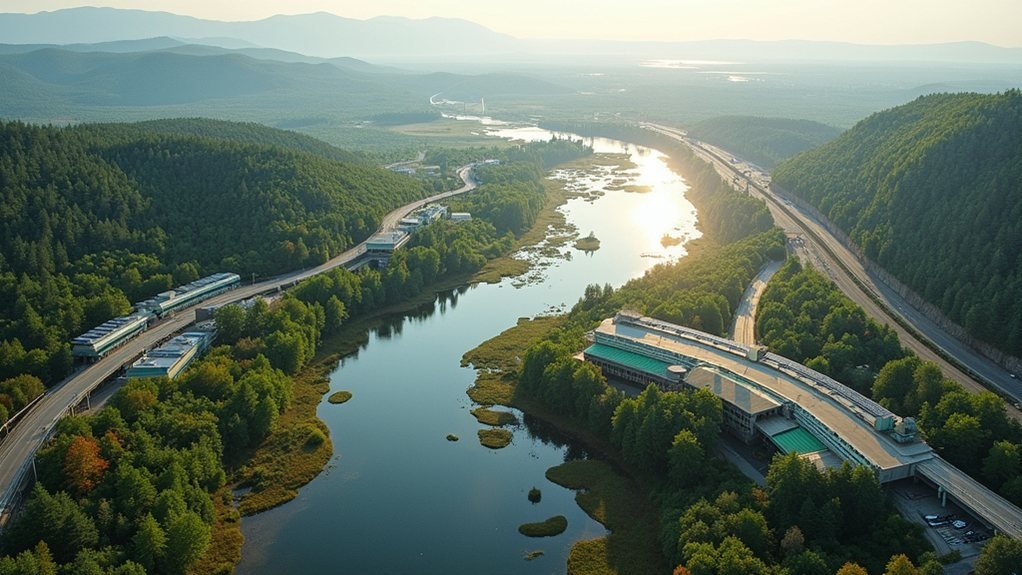

Canada is stepping up its game with proactive climate risk planning, essential for enhancing infrastructure resilience against the climate crisis. By investing in innovative strategies—like nature-based solutions that act like superheroes for ecosystems—Canada aims to protect vulnerable communities facing the worst impacts of climate change. Savvy planning not only saves money but also keeps healthcare costs in check. As the climate shifts, keeping an eye on these strategies reveals even more ways to bolster resilience and sustainability.
Quick Overview
- Proactive climate risk planning in Canada enhances infrastructure resilience and reduces repair costs associated with extreme weather events.
- Investment in low-carbon energy transitions ensures more robust responses to climate-related challenges, benefiting all communities.
- Collaborating with vulnerable communities allows for tailored resilience strategies addressing specific local needs and ensuring equitable resource distribution.
- Employing nature-based solutions, like constructed wetlands, mitigates flooding risks while promoting ecosystem health and infrastructure adaptability.
- Continuous adaptation strategies, backed by upgraded codes and assessments, are essential for managing the evolving impacts of climate change in Canadian infrastructure.
Why Proactive Climate Risk Planning Is Crucial
Proactive climate risk planning emerges as the unsung hero in the narrative of environmental resilience, akin to having an umbrella in the middle of a surprise downpour. Drawing on broader strategies to cut carbon emissions across sectors and energy systems, investments in low-carbon energy transitions can strengthen overall resilience.
Investing just one dollar in climate adaptation can yield over ten dollars in benefits, a deal too good to pass up!
Invest a dollar in climate adaptation, reap tenfold rewards—an opportunity you can’t afford to ignore!
By taking proactive steps, organizations not only bolster their defenses against extreme weather but also save significant costs on infrastructure repairs and healthcare expenses, which could balloon by $2 billion by 2030 without intervention. Low-income, Black, and Latino or Hispanic households are disproportionately impacted by climate-related disasters, highlighting the need for equitable planning in resilience strategies.
Resilience today means operational continuity tomorrow, making climate risk planning not just smart, but essential. Healthcare organizations must recognize that climate risks could lead to rising operational costs, further emphasizing the need for proactive measures.
Embrace the foresight!
Supporting Vulnerable Communities in Climate Adaptation
While climate change often paints a grim picture, it’s the vulnerable communities that really bear the brunt of its impact, like the silent players in a game of dodgeball, constantly dodging threats from rising sea levels and extreme weather. This perspective helps center decisions in environmental justice, ensuring benefits and burdens are shared more equitably.
Initiatives like the Climate-Resilient Coastal Communities Program and the Climate Change Preparedness in the North Program focus on these communities, particularly Indigenous and remote areas. By leveraging local knowledge and easing access to resources, they aim to reduce disparities and enhance resilience, particularly by promoting co-development of adaptation actions. Moreover, these programs align with adaptation funding to support decision-makers in implementing effective strategies tailored to local needs.
After all, adapting to climate change shouldn’t feel like climbing a mountain without a map—it should be a community effort.
Proven Strategies for Infrastructure Resilience in a Changing Climate
As communities grapple with the ever-evolving challenges posed by climate change, the quest for resilient infrastructure has never been more essential. To meet this challenge, strategies such as adaptive capacity—where infrastructure adapts quickly to changing conditions—are pivotal. The rise in atmospheric carbon dioxide levels can further exacerbate the urgency for such strategies. One effective measure to enhance resilience is reducing the risk of energy infrastructure-related ignitions, which can prevent catastrophic wildfires impacting communities. Using nature-based solutions like constructed wetlands can mitigate flooding while nurturing ecosystems. Additionally, understanding interdependencies between various sectors helps in minimizing cascading effects from failures. Investing in updated codes and thorough climate assessments guarantees infrastructures are future-proof. As Canada trends towards resilience, these proven strategies stand tall, proving infrastructure can adapt, survive, and thrive amid the unpredictable whims of our climate. This underscores the importance of water stewardship in planning for sustainable resource management.