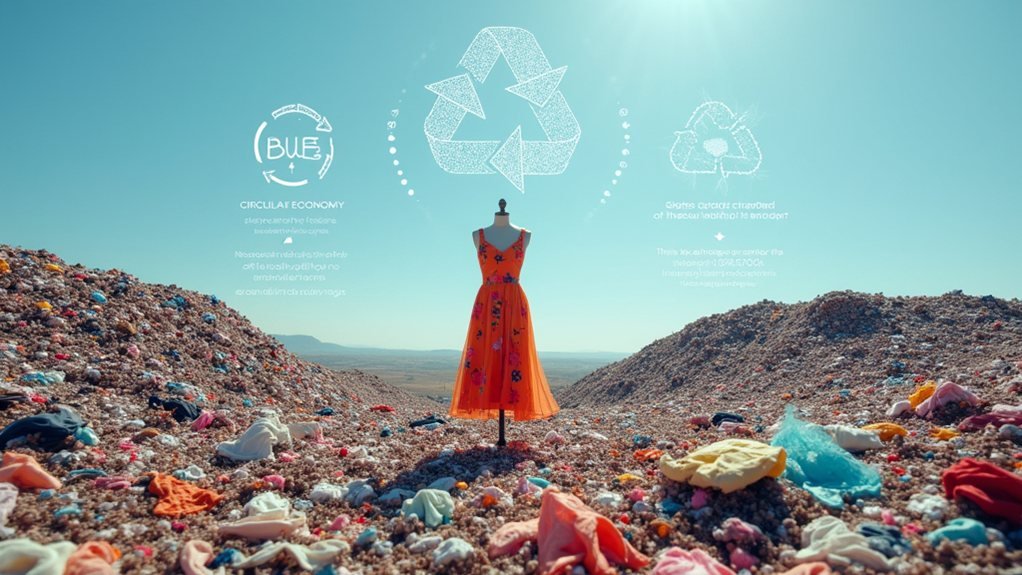

Fast fashion is like that friend who leaves a mess everywhere—85% of textiles end up in landfills, and it churns out more CO2 than aviation and shipping. Enter the circular economy, wearing a superhero cape, suggesting repairs, resales, and upcycling as rescue missions. Brands like Patagonia are riding this eco-wave by extending material lifespans, while California’s laws guarantee a cleaner fashion slate. Want to know how sneakers could be turned into tote bags? Stick around.
Quick Overview
- Circular economy promotes continuous material reuse to reduce fashion waste and challenge the fast fashion model.
- Brands adopt repair, resale, and upcycling strategies to extend clothing lifespan and decrease landfill contributions.
- Policies like California’s act push for increased textile recycling and responsible fashion waste management.
- Digital tracking systems provide transparency and encourage accountability in sustainable garment production.
- Innovation in textiles focuses on minimizing carbon footprints, transforming industry practices towards sustainability.
What’s Wrong With Fast Fashion and How a Circular Economy Can Help
Why, you might wonder, does fast fashion have such a grim reputation?
Imagine this: 85% of textiles worldwide make a one-way journey to dumps annually. Like a magician’s trick gone wrong, four times the clothes are produced compared to 20 years ago, yet vanish into landfills, puffing out more CO2 than both aviation and shipping. Most tales of garment production read like mystery thrillers with poorly paid workers and unsafe conditions affecting workers, consumers, and the environment negatively. Fast fashion contributes to 8-10% of global CO2 emissions, exacerbating the climate crisis.
Textiles vanish into landfills, emitting more CO2 than aviation and shipping combined.
Meanwhile, the majority of clothes are crafted from oil-derived plastics that deteriorate quicker than a paper umbrella in a monsoon. Unlike a circular economy model, which prioritizes continuous reuse of materials, fast fashion discards resources at every stage of a garment’s short life cycle. Fast fashion, it seems, might need a fresh wardrobe.
How Repair, Resale, and Upcycling Are Transforming Fashion
Fast fashion may have a reputation as the unruly teenager of the clothing industry, spilling garments into landfills faster than a broken conveyor belt. But repair, resale, and upcycling are shaking up its high-waste antics. Brands like Patagonia are donning superhero capes, transforming worn items and deploying repair phases like those preemptive dentist visits we all dread. By maximizing material lifespan, these eco-warriors cut down emissions and resource guzzling. Unwanted garments metamorphose into tote bags or accessories, shedding their youthful rebellion for a sustainable makeover. While most textile waste has limited repurposing destinations, efforts are being made to target the high volume of textile-based waste, paving the way for creative transformations. Consumers, armed with crafting skills from platforms like Pinterest, reshape wardrobes and curb textile waste. Community resources such as repair cafés offer assistance with clothing repairs, enabling individuals to mend their garments and contribute to an ongoing shift towards sustainable fashion practices. The fashion industry’s environmental footprint extends beyond waste, as water consumption and pollution from dyeing and finishing processes pose significant challenges to ecosystems worldwide.
How Are Policy and Innovation Changing Fashion?
Imagine the fashion industry as a grand, sprawling tapestry, constantly weaving new threads of sustainability and responsibility—thanks to some hefty nudges from policy and innovation.
California leads with its Responsible Textile Recovery Act, urging brands to recycle more than grandma at a garage sale. As brands implement recycling and reuse systems to comply with this new mandate, there is a push for more innovative approaches to reduce textile waste. Concocted with futuristic imaginations, digital tracking systems like CircularID are transforming garments into globe-trotting secret agents, ensuring transparency while quickening the pace toward low carbon emissions. Furthermore, next-gen textiles are at the forefront of this transformation, as they offer promising solutions to reduce the carbon footprint significantly across the fashion value chain.
From worker protection to cutting-edge material innovations, policies are the deepest pockets a fashion enthusiast could hope for. Much like packaging manufacturers navigating EPR legislation compliance, fashion brands are increasingly being held responsible for the end-of-life management of the products they place on the market. And you thought the biggest shakeup was flared jeans!