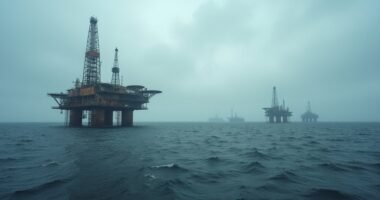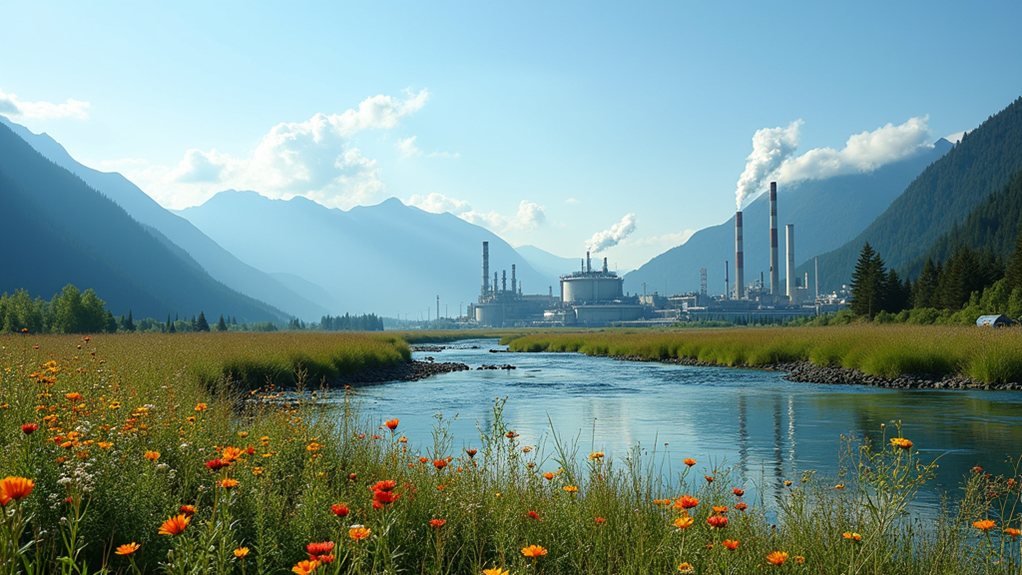

British Columbia’s LNG expansion raises eyebrows over its impact on emission goals. With plans for six terminals, the province could see a yearly emissions spike of 13 megatonnes, making climate commitments seem like trying to put out a fire with gasoline. While economic dollars flow in, serious concerns linger about habitat damage and ecological balance. The net-zero claims from Ksi Lisims LNG prompt skepticism, suggesting a deeper look into sustainability practices is needed. There’s much more to reflect on this topic.
Quick Overview
- Critics argue that British Columbia’s LNG expansion undermines climate goals by potentially adding 13 megatonnes of emissions annually.
- Economic benefits from LNG growth must not overshadow the environmental responsibilities of resource extraction practices.
- Ksi Lisims LNG’s net-zero emissions claims face skepticism, raising doubts about their long-term sustainability and climate impact.
- Comprehensive strategies are essential to prevent the dominance of LNG from derailing broader climate objectives in British Columbia.
- Future resource management policies must prioritize ecological integrity alongside economic growth for sustainable development.
How LNG Expansion Threatens BC’s Emission Goals
As the British Columbia government enthusiastically rolls out its plans for liquefied natural gas (LNG) expansion, one might wonder if there’s a hidden trickster behind the scenes pulling a classic magic act—making emissions disappear from one hand while manifesting them magnanimously from the other.
With six terminals in the works, LNG could add 13 megatonnes annually, erasing any hard-fought emission reductions. Experts grimly note that while the government estimates reductions elsewhere, the LNG juggernaut systematically undermines those gains.
It’s like trying to put out a fire with a garden hose while simultaneously fueling the flames—pointless chaos threatening a cleaner future. Addressing this crisis requires comprehensive strategies across sectors that balance economic development with meaningful climate action, rather than allowing one industry to dominate emission trajectories.
Why Economic Growth and Environmental Responsibility Must Balance
While the pursuit of economic growth often feels like a race with a breathtaking finish line, the path to get there shouldn’t involve dodging responsibility for the environment.
British Columbia’s LNG expansion generates impressive revenues, yet it shouldn’t come at the expense of ecological safety. As natural gas plays a pivotal role in reducing coal reliance globally, its extraction can impact local habitats.
Balancing economic benefits—like job creation and trade diversification—with environmental stewardship is essential.
Resource extraction industries can learn from sustainable forest management practices that demonstrate how to maintain biodiversity while still harvesting valuable commodities.
After all, a booming economy shouldn’t read like a recipe for disaster; it should taste like progress that’s also palatable to nature and future generations.
Are Net-Zero Claims for Ksi Lisims LNG Valid?
Before diving into the validity of Ksi Lisims LNG’s net-zero claims, it’s essential to scrutinize the ambitious promises wrapped within the project’s framework.
The project aims for net-zero emissions upon connecting to the BC Hydro grid, and it promises a reduction to 0.02 tonnes CO2e per tonne of LNG through hydropower.
However, skeptics question whether these claims withstand the pressures of expanding LNG operations. Critics argue that doubling down on LNG contradicts broader climate goals, raising eyebrows over the legitimacy of the net-zero vow.
Achieving genuine sustainability requires careful attention to materials selection, energy systems integration, and transparent performance metrics throughout the facility’s lifecycle.
Ultimately, while the aspirations are commendable, the context paints a more complicated picture of sustainability.