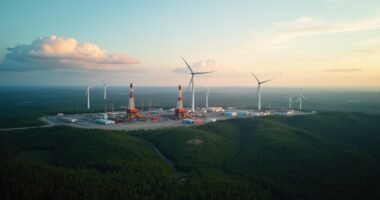

In 2026, North Sea oil and gas decommissioning costs are projected to hit a staggering £2.6 billion. That’s not just pocket change—it’s set to outstrip new investments by £400 million! The bulk of these costs will go toward plugging wells, a bit like patching cracks in a leaky boat. With over 500 wells waiting to be plugged and various challenges looming, the future looks tangled. Stick around to uncover how this affects investments and production!
Quick Overview
- Total projected decommissioning costs in 2026 are estimated at £2.6 billion, surpassing new oil and gas investments by £400 million.
- Well plugging will account for half of the total decommissioning costs, contributing significantly to financial pressures.
- Investment in the North Sea is expected to drop below $3.5 billion in 2026, marking the lowest level since the 1970s.
- Decommissioning costs may escalate to £58 billion by the early 2060s, raising concerns over the long-term viability of operations.
- Skilled worker shortages and regulatory hurdles complicate decommissioning efforts, affecting timelines and operational efficiency.
What Are the Total Decommissioning Costs in 2026?
As the sun sets over the North Sea, casting shimmering reflections on the waters that cradled countless oil rigs, one might wonder about the financial waves crashing onto the shores of decommissioning costs in 2026. Set to exceed new oil and gas investments by £400 million, total expenditures are projected at a staggering £2.6 billion, with well plugging forming half of these costs. Moreover, the total forecast cost for full decommissioning is projected at £44 billion (2024 constant prices). Effective waste handling during this process can benefit from following the waste management hierarchy to minimize environmental impact. Amid a backlog of over 500 wells and rising expenses, deferrals may balloon bills by £5.5 billion. As the oil giants prepare for this seismic shift, the numbers promise to be as turbulent as the North Sea itself. This comes at a time when U.K. upstream investment is anticipated to plunge to below US$3.5 billion, complicating financial planning for decommissioning efforts.
What Challenges Do North Sea Decommissioning Efforts Face?
While numerous challenges loom on the horizon for North Sea decommissioning efforts, operators must navigate a complex landscape that feels more like a high-stakes game of chess than a straightforward business process.
Fiscal uncertainties, including tax changes and the Energy Profits Levy, stifle progress. Compounding issues arise from supply chain constraints and the notorious North Sea weather, which restricts operations to summer months. Additionally, the target to plug 200 abandoned oil and gas wells annually creates further pressure on the industry. Furthermore, rising costs and supply chain constraints continue to affect financial viability, adding to the urgency of the situation. Incorporating sustainable practices into operational strategies could help mitigate some environmental concerns and waste during the process.
Fiscal uncertainties, combined with supply chain issues and challenging weather, hinder North Sea decommissioning efforts.
Plus, a shortage of skilled workers leaves companies scrambling. With legal hurdles prolonging timelines, the decommissioning saga drags on.
It’s a complicated puzzle, and finding solutions while minimizing environmental impact is no small feat.
How Will Decommissioning Affect Future Investments and Production?
The looming wave of decommissioning costs casts a long shadow over future investments and production in the UK North Sea, as operators grapple with the paradox of shrinking returns and ballooning expenditures. Evaluating the environmental impact throughout the lifecycle of decommissioned assets is becoming increasingly crucial for sustainable industry practices.
Investment is expected to plunge below $3.5 billion in 2026, the lowest since the 1970s, while costs for decommissioning could skyrocket to $58 billion by the early 2060s. Cash capital expenditure is forecasted around $160 million for 2026, with the looming Energy Profits Levy and a backlog of wells begging for attention, the North Sea’s production might just hang on, but for how long?
As operators hold their breath, the balance between profit and responsibility teeters precariously.